 14 citations
,
December 2003 in “International Journal of Cosmetic Science”
14 citations
,
December 2003 in “International Journal of Cosmetic Science” This review discusses the hair eclipse phenomenon in hair cycling and the potential roles of synchronizers and microinflammation in its occurrence, reporting no new empirical findings.
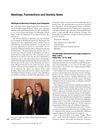 December 2006 in “International Journal of Dermatology”
 This article provides information on meetings, transactions, and society news in dermatology but reports no new research findings.
 December 2025 in “npj Systems Biology and Applications”
 This study found that cold exposure disrupts the circadian rhythm in cultured human cells by reducing oscillation amplitude, which is restored upon rewarming, while human hair follicle cells showed minimal amplitude sensitivity to temperature changes, suggesting an evolutionary advantage related to Hopf bifurcation dynamics.
 September 2012 in “Hair transplant forum international”
 This piece celebrates the 20th anniversary of the International Society of Hair Restoration Surgery, marking a significant milestone in its history.
 5 citations
,
November 2009 in “Revista médica de Chile”
5 citations
,
November 2009 in “Revista médica de Chile” This study confirms that scalp hair follicles in Chilean subjects exhibit seasonal variations, with a higher percentage of follicles in the telogen (resting) phase during the summer compared to the winter.
 January 1998 in “Dermatology”
 Various dermatology events and meetings were announced for 1998.
4 citations
,
December 2017 in “Journal of zoo and wildlife medicine” This study proposes that seasonal alopecia and reproductive changes in six female fossas at the San Diego Zoo may be linked to hormonal changes associated with reproductive activity.
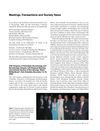 February 2009 in “International Journal of Dermatology”
 This article reports no new results; it is a publication of meetings, transactions, and society news from the International Journal of Dermatology.
11 citations
,
April 2020 in “Animals” This study reported that relocation in police horses was associated with elevated hair cortisol concentrations, possibly suggesting altered welfare due to changed surroundings, and that seasonal variations affected both cortisol levels and hair growth.
November 2025 in “Biocell” This article explores how the integrated stress response and senescence-associated secretory phenotype influence stem cell fate decisions, highlighting their dual roles in both protecting and disrupting stem cell integrity.

This study evaluated the stability of multiple active ingredients in TrichoSol™ for use in alopecia treatments, finding varying stability durations at room temperature—up to 180 days for some ingredients—supporting its use as a compounding vehicle in personalized therapies.
July 2004 in “Journal of the American Academy of Dermatology” December 2024 in “Institutional Repositories DataBase (IRDB)” In this study, the authors found that the shoulder guard hair of captive sika deer most accurately reflects dietary information during winter coat growth, useful for analyzing wild deer hair samples.
February 2005 in “Journal of the American Academy of Dermatology” 31 citations
,
December 2023 in “GeroScience” July 2025 in “Journal of Investigative Dermatology” January 2011 in “China Animal Husbandry & Veterinary Medicine” This study examined the effects of constant-release melatonin on the SOX21 gene in Inner Mongolia Cashmere goats, finding that it stabilized gene expression and reduced stress responses with notable expression changes except in March, April, and May.
July 2007 in “Hair transplant forum international” This meeting summary discusses the ISHR's focus on hair restoration, featuring Julius Caesar's image, but reports no new research findings.
 December 2025 in “Journal of Food Innovation, Nutrition, and Environmental Sciences”
 This study evaluated the effects of sun drying and solar drying on Chaya leaves, finding that solar drying better preserves chlorophyll and phytochemicals while maintaining comparable nutritional quality to sun drying, suggesting its adoption could improve shelf life and maintain quality in areas without refrigeration.
November 2022 in “Zenodo (CERN European Organization for Nuclear Research)” September 2024 in “Journal of the American Academy of Dermatology” Sun-protective behaviors increased, and sunburns decreased in both Hispanic and Non-Hispanic White individuals from 2005 to 2020.
8 citations
,
January 1991 in “Soviet physics. Doklady” This article suggests that testosterone therapy might be considered if other treatments fail, but emphasizes discussing potential risks and benefits with patients before prescribing.
2 citations
,
November 2001 in “Hair transplant forum international” This abstract describes the 2001 meeting of the Italian Society of Hair Restoration in Siracusa but reports no new research findings.
28 citations
,
October 1987 in “PubMed” This study found that treating Tradescantia stamen hair cells with LiCl disrupts mitotic progression, leading to metaphase arrest, which can be reversed by myo-inositol or CaCl2 addition.
1 citations
,
July 2014 in “The journal of investigative dermatology/Journal of investigative dermatology” This review discusses various topics from the 62nd Annual Montagna Symposium on the Biology of Skin, focusing on the diverse effects of light on skin biology, and reports no new clinical results.
 91 citations
,
August 2014 in “Development”
91 citations
,
August 2014 in “Development” This review discusses how circadian clocks may influence diverse physiological functions beyond their established role in daily timekeeping, but it reports no new experimental findings.
 2 citations
,
January 2024 in “Annals of Dermatology”
2 citations
,
January 2024 in “Annals of Dermatology” Winter-onset alopecia areata patients are more likely to regrow hair within a year compared to spring-onset patients.
November 2024 in “Journal of Investigative Dermatology” In this study, UVB irradiation increased mast cell degranulation only when skin was innervated, suggesting that the interaction between mast cells and nerve fibres may exacerbate solar elastosis by promoting dysfunctional dermal elastic fiber accumulation, but further research is needed for confirmation.
 September 2014 in “Hair transplant forum international”
 This article discusses the XV Congress of the Italian Society of Hair Restoration held in Ortigia and reports no clinical findings.
October 2022 in “Amplla Editora eBooks”