36 citations
,
July 1996 in “The journal of investigative dermatology/Journal of investigative dermatology” This research reports a new autosomal recessive mutation in mice, 'lanceolate hair', causing generalized alopecia and hair shaft abnormalities, which may serve as a model for Netherton's syndrome in humans.
372 citations
,
December 2004 in “Nature Genetics” 34 citations
,
November 1998 in “Journal of Investigative Dermatology” A common mutation in the hHb6 gene is linked to monilethrix, but other factors may also play a role.
2 citations
,
September 1998 in “Der Hautarzt” A gene mutation causes a rare hereditary hair loss, offering potential for new treatments.
18 citations
,
January 2018 in “BMC dermatology” This paper describes a case of epidermolysis bullosa simplex with muscular dystrophy associated with a novel PLEC mutation and diffuse alopecia, highlighting a potential genetic link that remains uncertain.
February 1999 in “The anatomical record” This study observed defects in hair cuticle cross-linking in some, but not all, mouse mutants with sparse or structurally unsound hair.
 17 citations
,
October 2006 in “Molecular and Cellular Endocrinology”
17 citations
,
October 2006 in “Molecular and Cellular Endocrinology” This study found that the L457(3.43)R mutation in the human luteinizing hormone receptor increases phosphodiesterase activity, reducing hormonal response despite elevated basal cAMP levels.
June 2005 in “Journal of Investigative Dermatology” A bull with a gene mutation was asymptomatic, synthetic retinoids cause hair loss, and new therapeutic targets were identified for skin diseases.
33 citations
,
September 2017 in “Journal of Investigative Dermatology” A mutation in the KRT25 gene causes woolly hair and hair loss.
January 1999 in “Journal of Investigative Dermatology” 3 citations
,
January 2013 in “Dermatology” This study identified novel compound heterozygous mutations in the hairless gene among a non-consanguineous Chinese family with congenital atrichia, illustrating phenotypic variations due to founder or modifier genes.
 5 citations
,
December 2017 in “The Journal of Dermatology”
5 citations
,
December 2017 in “The Journal of Dermatology” This report describes a unique case of Schöpf–Schulz–Passarge syndrome in a Taiwanese man linked to a previously unreported homozygous WNT 10A mutation, underscoring its role in ectodermal dysplasia.
412 citations
,
January 1998 in “Science” This study identified a missense mutation in the human hairless gene associated with a rare form of recessively inherited alopecia universalis, pinpointed on chromosome 8p12.
 11 citations
,
January 2020 in “BMC pediatrics”
11 citations
,
January 2020 in “BMC pediatrics” This case report identified two new SLC39A4 mutations in twin patients with acrodermatitis enteropathica, suggesting that different mutations in this gene may lead to varying clinical manifestations of the disorder.
4 citations
,
August 2013 in “Chinese Medical Journal” This study found that a mutation in the seventh exon of the KRT86 gene plays a major role in the pathogenesis of monilethrix in a Chinese family.
7 citations
,
September 2006 in “Molecular Carcinogenesis” This study observed that K5Cre +/+ transgenic mice develop a distinct phenotype characterized by wavy hair, curly whiskers, and an increased rate of papilloma malignant transformation.
This study suggests that the ANE syndrome mutation in yeast Nop4, analogous to human RBM28, disrupts protein folding and protein-protein interactions, contributing to ribosomal dysfunction.
15 citations
,
June 2012 in “British Journal of Dermatology” This study identified a novel KRT86 mutation associated with autosomal dominant monilethrix, expanding understanding of its genetic basis beyond known motifs.
20 citations
,
December 1999 in “Journal of Investigative Dermatology” Mutations in the hHb6 gene cause the hair disorder monilethrix.
 55 citations
,
November 2018 in “American journal of human genetics”
55 citations
,
November 2018 in “American journal of human genetics” This study identified five mutations in the gene LSS in individuals with unexplained hypotrichosis simplex, highlighting a potential role of mislocalized LSS proteins in disrupting hair follicle biology.
June 2010 in “Chinese Journal of Dermatology” This study found a novel R430Q gene mutation in hHb6, which may be linked to the hereditary hair disorder monilethrix in the examined family.
11 citations
,
November 2019 in “The FASEB Journal” In this study, a missense mutation in the MAP2 gene was found to be associated with reduced hair follicle density, leading to the hairless phenotype in pigs.
20 citations
,
July 2005 in “Experimental dermatology” This study found that the fuzzy mutation in mice is linked to both structural hair defects and accelerated hair follicle cycling, influencing the regulation of hair cycle phases such as catagen and anagen.
 11 citations
,
September 2012 in “The journal of investigative dermatology/Journal of investigative dermatology”
11 citations
,
September 2012 in “The journal of investigative dermatology/Journal of investigative dermatology” This study identified a missense mutation in the keratin 71 gene as the cause of autosomal dominant woolly hair/hypotrichosis in a Japanese family, marking the first human mutation in KRT71 linked to a hair disorder.
3 citations
,
January 2011 in “生物医学研究杂志:英文版” In this study, a novel heterozygous transition mutation in the KRT86 gene was identified, which may be pathogenic for monilethrix in a Chinese family.
July 2016 in “Cancer research” This study found that mutant cells in hair follicles can be tolerated or eliminated by surrounding normal tissue, suggesting the potential for wild-type cells to counteract oncogenic mutations.
 January 2002 in “Proceedings of The Japanese Society of Animal Models for Human Diseases”
 In this study, researchers observed distinct morphological differences in hair follicles of mutant mouse genotypes, influenced by the expression levels of keratin2-6g, which is essential for proper hair follicle development.
26 citations
,
April 2011 in “British Journal of Dermatology” This study identified novel mutations in the DSG4 gene in a Japanese patient with monilethrix, affecting protein interactions that may disrupt hair shaft structure.
 13 citations
,
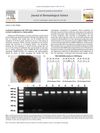
November 2009 in “Journal of Dermatological Science”
13 citations
,
November 2009 in “Journal of Dermatological Science” This article discusses various dermatological studies cited by previous authors and reports no new clinical results.
22 citations
,
February 2012 in “Journal of Investigative Dermatology” A specific gene mutation causes severe skin and nail issues and hair loss.