 21 citations
,
September 2004 in “Fertility and Sterility”
21 citations
,
September 2004 in “Fertility and Sterility” Amenorrhea, or the absence of periods, should be evaluated by age 15 or within five years of early breast development, and is most commonly caused by conditions like polycystic ovary syndrome and hypothalamic amenorrhea.
 3 citations
,
October 2024 in “Advances in Therapy”
3 citations
,
October 2024 in “Advances in Therapy” In this study, Chinese children with central precocious puberty receiving 6-monthly injections of triptorelin showed luteinizing hormone suppression and slowed development of sexual characteristics over 12 months, without severe adverse events, suggesting it may be an effective treatment option for this population.
 21 citations
,
April 2019 in “Clinical, cosmetic and investigational dermatology”
21 citations
,
April 2019 in “Clinical, cosmetic and investigational dermatology” This article reviews the causes and clinical presentation of pseudofolliculitis barbae, highlighting how genetic susceptibility and hair removal practices contribute to its development, but reports no new research findings.
 3 citations
,
January 2013 in “Annals of Tropical Medicine and Public Health”
3 citations
,
January 2013 in “Annals of Tropical Medicine and Public Health” In this study, adolescent females who were born via cesarean delivery, had at least one erupted wisdom tooth, or had central obesity were more likely to develop polycystic ovarian syndrome.
 1 citations
,
June 2021 in “bioRxiv (Cold Spring Harbor Laboratory)”
1 citations
,
June 2021 in “bioRxiv (Cold Spring Harbor Laboratory)” This study found that β-catenin stabilization in specific mammary epithelial lineages leads to cellular changes and the formation of hyperplastic lesions, revealing its role in initiating mammary neoplastic development.
 April 2024 in “International Journal of Advanced Multidisciplinary Research and Studies”
 This study outlines a multidisciplinary approach to investigate primary amenorrhea, emphasizing the necessity to consider medical history, physical examination, and potential hormonal or anatomical causes, and recommends early referral in cases of chromosomal abnormalities or persistent amenorrhea following the development of secondary sexual characteristics.
1 citations
,
December 2019 in “Frontiers in endocrinology” This study found that high prepubertal and pubertal androgen levels, originating from both adrenal and gonadal secretion, were negatively associated with adult height outcomes in males with Silver-Russell syndrome.
 11 citations
,
December 2018 in “Assay and Drug Development Technologies”
11 citations
,
December 2018 in “Assay and Drug Development Technologies” This review highlights the challenges in screening for steroid 5 alpha-reductase inhibitors and discusses significant variability in the effectiveness of finasteride and dutasteride, calling for standardized testing methods to develop safer, more specific inhibitors from herbal preparations.
3 citations
,
March 2024 in “Frontiers in Cell and Developmental Biology” This study observed that both prenatal androgen exposure and postnatal early-life environment influence the development of PCOS-like phenotypes and changes in the gut microbiota in prenatally androgenized offspring.
2 citations
,
April 2022 in “Annales d Endocrinologie” This review discusses therapeutic options for pubertal induction in congenital hypogonadotropic hypogonadism, focusing on recombinant gonadotropins, and highlights the need for larger randomized trials to determine optimal treatment strategies.
This review discusses the role of norepinephrine release and protein kinase C activation in the development of benign prostatic hypertrophy, suggesting potential targets for new therapies, but it reports no new clinical results.
 January 2001 in “Cambridge University Press eBooks”
 This article discusses polycystic ovary syndrome (PCOS), its symptoms, and links to insulin resistance and type 2 diabetes, but reports no new research findings; the authors emphasize recognition of features in youth.
 30 citations
,
December 2017 in “Medical Hypotheses”
30 citations
,
December 2017 in “Medical Hypotheses” This review evaluates dihydrotestosterone's role in androgenic alopecia and proposes a model suggesting that chronic scalp tension and inflammation contribute to hair follicle miniaturization, identifying fibrosis, calcification, and tension as treatment targets.
1 citations
,
December 2019 in “Canadian journal of ophthalmology” This study presents a case of a pubertal girl with type 1 diabetes who developed proliferative diabetic retinopathy shortly after diagnosis, suggesting the need for earlier screening in high-risk groups.
 June 2019 in “Pediatric Dermatology”
 This review discusses the pathogenesis and clinical presentations of alopecia in epidermolysis bullosa patients, noting diverse hair abnormalities and emphasizing the lack of a consensus on its natural history.
 1 citations
,
November 1996 in “Journal of Cutaneous Medicine and Surgery”
1 citations
,
November 1996 in “Journal of Cutaneous Medicine and Surgery” Hormones, especially androgens, play a key role in causing acne, and treatments like hormone control pills and hormone-blocking medications can help.
 January 2016 in “Springer eBooks”
 A 19-year-old male with delayed puberty was successfully treated for a condition that prevents normal hormone production.
 October 2010 in “Cambridge University Press eBooks”
 This review examines obesity's role in PCOS and reports that obesity treatment guidelines can likely be applied to women with PCOS without substantial changes.
54 citations
,
October 2010 in “Clinics in dermatology” This article reviews the impact of diet on acne, suggesting that dairy and high-glycemic foods may contribute to acne development, but it presents no new clinical findings.
 19 citations
,
August 2019 in “Expert Opinion on Therapeutic Targets”
19 citations
,
August 2019 in “Expert Opinion on Therapeutic Targets” This review discusses emerging targets for developing drugs to treat hair loss and reports no new clinical results; the authors emphasize the potential for therapies that regenerate hair follicles.
 March 2024 in “Ukraïnsʹkij žurnal dermatologìï, venerologìï, kosmetologìï”
 This review found that insulin resistance is a significant independent factor in the development of various inflammatory skin diseases, often linked with obesity and metabolic disorders, and suggests measuring HOMA-IR in affected patients.
 November 2014 in “John Wiley & Sons, Ltd eBooks”
 This review discusses hormones that affect acne and highlights a statistically significant link between a low-glycemic-load diet and reduced acne activity, but reports no new experimental findings.
55 citations
,
August 2003 in “Ultrasound in Obstetrics and Gynecology” This study suggests that ultrasound and color Doppler analyses may enhance the differential diagnosis of GnRH-dependent precocious puberty in girls with premature breast development or pubic hair growth.
 101 citations
,
April 1994 in “Baillière's clinical endocrinology and metabolism”
101 citations
,
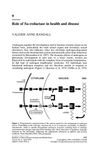
April 1994 in “Baillière's clinical endocrinology and metabolism” This review discusses the role of 5α-reductase enzymes in androgen action and related disorders, noting that their specific inhibitory drugs show promise for conditions like benign prostatic hypertrophy; it reports no new clinical results.
 January 2012 in “Anales (Reial Acadèmia de Medicina de la Comunitat Valenciana)”
 This study found that SRD5A2 expression is absent in one third of benign adult prostates and is associated with hypermethylation, suggesting potential personalization of treatment for prostatic diseases based on methylation status.

This article explores how natural and man-made factors shape architecture and environments for human activity in emergency situations, focusing on the unique conditions of the Republic of Kazakhstan. Results are not reported.
 103 citations
,
June 2007 in “Endocrinology and Metabolism Clinics of North America”
103 citations
,
June 2007 in “Endocrinology and Metabolism Clinics of North America” This article discusses treatment options for androgenetic alopecia, noting that medical interventions like finasteride and minoxidil can halt and partially reverse hair loss in mild to moderate cases, especially when combined with surgery.
research Acne
81 citations
,
January 2002 in “American journal of clinical dermatology” Hormonal treatments can help with acne, especially in women, by lowering androgen levels or blocking their effects.
 36 citations
,
October 2021 in “Frontiers in Endocrinology”
36 citations
,
October 2021 in “Frontiers in Endocrinology” This study highlights the importance of understanding the roles of hyperandrogenemia and insulin resistance in the development and progression of PCOS, emphasizing further research to clarify their mutual influence.
 23 citations
,
May 1984 in “Journal of the American Geriatrics Society”
23 citations
,
May 1984 in “Journal of the American Geriatrics Society” Benign Prostatic Hyperplasia may be caused by changes in how the body processes male hormones.