 January 2022 in “European Proceedings of Life Sciences”
 This article discusses the genetic polymorphisms affecting the antioxidant system and suggests that personalized detoxification plans and nutrition may be beneficial for patients with chronic diseases, but it reports no new clinical findings.
 April 2021 in “BMJ Case Reports”
 This case report discusses a rare instance of pseudolymphomatous folliculitis in a 19-year-old man, highlighting the challenge in diagnosing PLF due to its low clinical suspicion index and variable initial clinical diagnoses.
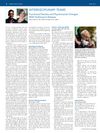
The interdisciplinary approach improved the quality of life for a Parkinson's patient and eased staff workload.
 December 2018 in “Meandros medical and dental journal”
 This case study describes a male patient with very late-onset trichotillomania, highlighting the condition's potential association with comorbid depression.

In this study, researchers developed isotretinoin-loaded Delonix polymeric nanoparticles that target hair follicles and found they effectively sustained drug release, reduced IL-6 production in vitro without inhibiting P. acnes, and may prevent isotretinoin-related skin irritation in vivo in Wistar rats.
 January 2018 in “Elsevier eBooks”
 The document concludes that alopecia has various forms, each with specific treatments, but no definitive cure for certain types like CCCA has been proven.
 November 2016 in “Elsevier eBooks”
 This chapter reviews genetic defects in female sexual differentiation, focusing on 46,XX disorders of sex development and the impact of genetic factors and sex steroids on development, but reports no new clinical findings.
 September 2016 in “Princeton University Press eBooks”
 The document concludes that understanding health requires considering evolutionary perspectives on reproductive fitness, and recognizing the complexity of factors like diet, testosterone, and sexual orientation.
 April 2016 in “Journal of Investigative Dermatology”
 This symposium reviewed various topics in stem cell research related to skin biology, including mechanisms of skin regeneration, tumorigenesis, and pathways influencing melanoma stem cell behavior, but it reported no new clinical results.
 January 2016 in “Georg Thieme Verlag eBooks”
 The document recommends personalized, culturally sensitive treatments to rejuvenate the aging Asian face, focusing on natural results and specific techniques for skin, hair, and facial features.
 July 2015 in “Cambridge University Press eBooks”
 The document concludes that careful history and physical exams are crucial for accurately diagnosing polycystic ovary syndrome and distinguishing it from other similar conditions.
 April 2015 in “Cambridge University Press eBooks”
 Many women experience sexual dysfunction, but few seek help, and better treatment and medical training are needed.
 April 2015 in “Andrology”
 This special issue contains abstracts from the ASA 40th Annual Meeting, providing an overview of various studies without reporting new primary results.
 April 2014 in “Significance”
 Unconventional home remedies can sometimes show surprising results.
 June 2012 in “Springer eBooks”
 Eating disorders can cause various hair problems, and while hair loss in these disorders is linked to metabolic syndrome, treatment focuses on specific medications and lifestyle changes for the syndrome.
 January 2012 in “heiDOK (Heidelberg University)”
 In this study, researchers observed that dormant TRP-2+ melanoma cells in bone marrow can interact with CD8+ T cells in tumor-bearing ret transgenic mice, potentially influencing immune responses.
 January 2010 in “Elsevier eBooks”
 The document concludes that different types of hair loss have specific treatments, and early diagnosis is crucial for preventing permanent hair loss.
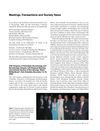 February 2009 in “International Journal of Dermatology”
 This article reports no new results; it is a publication of meetings, transactions, and society news from the International Journal of Dermatology.
 January 2008 in “Journal für Kardiologie (Krause & Pachernegg GmbH)”
 Healthy aging can be promoted through physical activity, lifestyle changes, and certain treatments.
 January 2006 in “Journal of Rural Medicine”
 This review discusses recent Japanese research on trichotillomania and compares it with international studies, reporting no new clinical results.
 September 2003 in “Journal of the Royal Society of Medicine”
 The document concludes that while some advocate for a patient voucher system, it may be unequal and current healthcare reforms should be given a chance, and it also recommends various medical books for their comprehensive coverage and advice on specific health issues.
 September 2003 in “Journal of the Royal Society of Medicine”
 The book has valuable information but is hard to read due to poor writing.
 September 2003 in “Journal of the Royal Society of Medicine”
 Doctors should set boundaries and seek outside help for family medical issues.
 September 2003 in “Journal of the Royal Society of Medicine”
 Understanding breast cancer requires considering both medical advancements and social influences.
 September 2003 in “Journal of the Royal Society of Medicine”
 Improving end-of-life care at home requires better coordination, communication, and support.
 September 2003 in “Journal of the Royal Society of Medicine”
 The book is a useful reference for forensic medicine with some areas needing expansion for multicultural relevance.
 September 2003 in “Journal of the Royal Society of Medicine”
 The book is a comprehensive guide for forensic practitioners and exam candidates.
 May 2003 in “Facial Plastic Surgery Clinics of North America”
 This review discusses the genetic and hormonal factors contributing to androgenetic alopecia in men and women, but reports no new clinical results; it highlights that the exact causes remain unknown.
 February 1999 in “Drugs in R & D”
 The document concludes that various drugs for men's health issues are in development, with treatments for sexual dysfunction and prostate conditions being the most advanced.
 January 1997 in “Elsevier eBooks”
 This chapter describes the functions and purposes of hair care cosmetics, including shampoos, hair growth promoters, and grooming products, without reporting new experimental findings.