March 2009 in “Encyclopedia of Life Sciences” This article reviews keratin disorders and highlights recent progress in therapeutic approaches, including a clinical trial for pachyonychia congenita using siRNA, but reports no new clinical findings.
 10 citations
,
March 2015 in “Journal of dermatology”
10 citations
,
March 2015 in “Journal of dermatology” This case report describes a 12-year-old boy with severe skin scaling due to novel compound heterozygous null truncation mutations in the TGM1 gene, resulting in loss of transglutaminase 1 activity.
 3 citations
,
January 2019 in “Journal of Dermatology”
3 citations
,
January 2019 in “Journal of Dermatology” This letter to the editor discusses the natural course of epidermolysis bullosa simplex with mottled pigmentation in a Japanese family but does not present new clinical results.
June 2026 in “British Journal of Dermatology” In this case report, researchers observed a Slovakian neonate with a rare EGFR genetic mutation who presented with severe neonatal dermatoses, ichthyosis, and multisystem complications, emphasizing the significance of genetic diagnosis for such complex conditions.
March 2024 in “International journal of molecular sciences” In this study, researchers identified three pathogenic de novo genetic variants contributing to epidermolysis bullosa simplex in young children, highlighting the complexity of genetic influences and underscoring the need for early genetic screening for accurate diagnosis and effective management.
2 citations
,
June 2013 in “Journal of Clinical Pathology” This article reviews the role of LMNA gene mutations, particularly in Hutchinson–Gilford progeria syndrome, but does not report new experimental findings.
5 citations
,
January 2011 in “Archives de Pédiatrie” This study illustrates the severe neonatal clinical presentation of Netherton syndrome, which can be fatal despite intensive care, highlighting a specific homozygous mutation (c.1431-12G > A) associated with lethal cases.
9 citations
,
August 2024 in “International Journal of Molecular Sciences” This review explores epidermolysis bullosa simplex subtypes caused by mutations in KRT5 or KRT14 and summarizes gene expression patterns and molecular mechanisms, without presenting new experimental results.
21 citations
,
September 2013 in “Pediatric Dermatology” This case report describes three patients with Netherton syndrome who experienced growth hormone deficiency and improved growth rates following growth hormone therapy.
14 citations
,
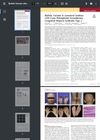
May 2017 in “Journal of Investigative Dermatology” This study reports a novel homozygous mutation in the DST gene causing a unique form of epidermolysis bullosa simplex with prurigo papules in a 39-year-old Syrian man.
 8 citations
,
April 2022 in “The journal of investigative dermatology/Journal of investigative dermatology”
8 citations
,
April 2022 in “The journal of investigative dermatology/Journal of investigative dermatology” This study identified biallelic variants in the LSS gene as a possible genetic cause of palmoplantar keratoderma-congenital alopecia syndrome type 2, highlighting the role of cholesterol synthesis in skin cornification.
40 citations
,
November 2021 in “International Journal of Molecular Sciences” This review highlights the role of keratin mutations in epidermolysis bullosa simplex and the resulting chronic inflammation, but it presents no new experimental findings.
297 citations
,
January 2002 in “Development” In this study, repressing β-catenin/Lef1 signalling in mouse epidermis led to progressive hair loss, dermal cysts, and spontaneous skin tumors with sebaceous differentiation, indicating altered keratinocyte differentiation and potential tumourigenic processes.
 5 citations
,
January 2023 in “Nature cell biology”
5 citations
,
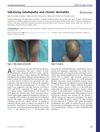
January 2023 in “Nature cell biology” This study found that endothelin produced by hair follicle progenitors activates contractions in dermal sheath cells, facilitating hair follicle regression in the growth cycle.
 July 2018 in “Kidney international”
 This case study describes a 9-year-old girl with a homozygous EGFR gene mutation, presenting with tubulopathy and chronic dermatitis, whose ongoing symptoms and management offer insights into this rare genetic condition.
6 citations
,
July 2021 in “Frontiers in Genetics” This study identified a new heterozygous missense variant in CST6 associated with autosomal dominant keratosis follicularis spinulosa decalvans in an Austrian family, affecting epidermal differentiation and hair formation.
 4 citations
,
December 2013 in “The Journal of Dermatology”
4 citations
,
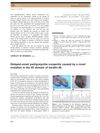
December 2013 in “The Journal of Dermatology” This letter to the editor discusses a case of delayed-onset pachyonychia congenita linked to a new mutation in keratin 6b but presents no new research findings.
 3 citations
,
May 2022 in “The journal of investigative dermatology/Journal of investigative dermatology”
3 citations
,
May 2022 in “The journal of investigative dermatology/Journal of investigative dermatology” In this study, researchers found that skin pigmentation alterations in a mouse model of Carney complex may be caused by specific dermal fibroblasts promoting melanogenic signaling.
57 citations
,
August 2002 in “American Journal Of Pathology” Cathepsin L deficiency causes hair and skin issues in mice.
 65 citations
,
June 2003 in “EMBO journal”
65 citations
,
June 2003 in “EMBO journal” This study reports that overexpressing the BMP antagonist noggin in mice inhibits eyelid opening by reducing apoptosis and delaying cell differentiation in the eyelid epithelium.
10 citations
,
July 2001 in “PubMed” This case report describes two patients with a likely new type of pachyonychia, characterized by nail thickening and severe generalized hypotrichosis, possibly linked to a mutation in a hard keratin.
42 citations
,
February 2000 in “Journal of Investigative Dermatology” This study found that Gelatinase A activity is linked to the absence of type VII collagen during human fetal skin development, indicating its role in remodeling the basement membrane zone.
July 2025 in “Journal of Investigative Dermatology” Nelfb is essential for dermal fat development and survival.
7 citations
,
April 2004 in “International Journal of Dermatology” This report describes a case of epidermolytic hyperkeratosis in a newborn and her mother, both possessing a specific KRT1 gene mutation known to cause this skin disorder.
69 citations
,
January 2015 in “Cell & tissue research/Cell and tissue research” Keratin mutations cause skin diseases and could lead to new treatments.
November 2024 in “Journal of Investigative Dermatology” In this study, UVB irradiation increased mast cell degranulation only when skin was innervated, suggesting that the interaction between mast cells and nerve fibres may exacerbate solar elastosis by promoting dysfunctional dermal elastic fiber accumulation, but further research is needed for confirmation.
 2 citations
,
August 2012 in “Journal of the American Academy of Dermatology”
2 citations
,
August 2012 in “Journal of the American Academy of Dermatology” This correspondence describes two patients with both epidermolysis bullosa simplex, Dowling-Meara type, and loose anagen hair syndrome, an association not previously reported in the literature.
This study suggests that disruptions in the Ran system related to nuclear transport may be a key factor in the development of cellular issues in Hutchinson Gilford Progeria Syndrome.
 12 citations
,
January 2016 in “Journal of Orofacial Orthopedics / Fortschritte der Kieferorthopädie”
12 citations
,
January 2016 in “Journal of Orofacial Orthopedics / Fortschritte der Kieferorthopädie” This study identified a novel mutation in the EDA gene, which may impair protein stabilization and be involved in the development of oligodontia and mild ectodermal dysplasia phenotypes.
January 2024 in “Frontiers research topics” This research abstract outlines the innovative approach of the Frontiers journal series, which aims to transform academic publishing by providing open access, interdisciplinary journals that employ a rigorous peer-review process to serve both scholarly communities and the public.