July 2024 in “Journal of Investigative Dermatology” ATR12-351 ointment safely delivers LEKTI protein to the skin, reducing enzyme activity in Netherton syndrome.
 July 2024 in “Russian Journal of Child Neurology”
 This study observed that among children with neurofibromatosis type 1 in Russia, selumetinib treatment led to a partial reduction in plexiform neurofibroma volume in 65% of cases, with 56% showing a long-term response without surgery; common side effects included skin rash and hair issues.
This study investigated the potential mechanisms of Curcuma aeruginosa in treating androgenetic alopecia and identified 66 bioactive compounds interacting with proteins involved in the disorder, suggesting its involvement in hormone response and specific signaling pathways.
 June 2024 in “International Research Journal of Modernization in Engineering Technology and Science”
 This study developed and evaluated a Neem, Tulsi, and Aloe vera-based anti-dandruff shampoo, finding it effective and safe, potentially offering a natural alternative to conventional antifungal shampoos for managing dandruff and maintaining scalp health.
 June 2024 in “The American journal of psychiatry”
 In this study by Sawada et al., the researchers developed a human striatal model using stem cells and postmortem samples, revealing accelerated neuronal maturation and specific gene expression changes linked to schizophrenia risk, which may inform future research on the disorder's developmental roots.
May 2024 in “International Journal of Cosmetic Science” This study found that using near-infrared optics, specifically in the second NIR window, allows for effective noninvasive evaluation of intra-hair damage caused by cosmetic treatments, demonstrating distinct damage types and changes in hair condition due to chemical or thermal processes.
 May 2024 in “Research Journal of Pharmacy and Technology”
 This study introduced new spectrophotometric methods to estimate Minoxidil in pharmaceutical forms, demonstrating its linearity across various buffers and solvents, and found these methods to be simple, economical, and effective according to ICH guidelines.

In this in-vitro study, neem leaf extract, combined with oils from Eucalyptus citriodora and Cymbopogon martini, inhibited dermatophyte growth responsible for tinea capitis, showing potential for developing a treatment formulation against the infection.
 April 2024 in “BMB Reports”
 This study used Cisd2 knockout mice models and found that these mice display premature aging characteristics and an increase in dysfunctional neutrophils, suggesting Cisd2's role in calcium homeostasis and neutrophil function via interactions with Calnexin and SERCA.
 April 2024 in “Journal of burn care & research”
 This study found that neck defect size was more relevant than total body surface area for predicting contracture recurrence after burn injury, suggesting increased attention to defect size in managing such cases.
 April 2024 in “Scientific reports (Nature Publishing Group)”
 In this study, a combined rosemary and neem extract outperformed ketoconazole and minoxidil in treating dandruff, scalp disorders, and promoting hair growth, demonstrating potent antifungal and anti-inflammatory properties in lab settings.
 March 2024 in “Tissue engineering. Part A”
 In this study, researchers observed that applying negative pressure to nude mice led to a significant increase in hair follicle growth and angiogenesis, suggesting potential for hair regeneration through mechanisms involving SOX-9, LHX-2, and β-catenin mediation.
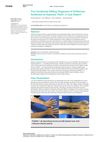
This study presents a rare instance of Netherton syndrome diagnosed incidentally in siblings of consanguineous parents, initially misdiagnosed as other skin conditions, emphasizing the need for careful evaluation in chronic skin cases to prevent misdiagnosis.

This study found that the transcription factor Meis2 is crucial for the maturation and innervation of sensory neurons responsible for light touch in mice, with its absence leading to reduced touch sensitivity.
 February 2024 in “Curēus”
 This case report describes an 83-year-old man who developed focal neurotoxicity, including paralysis and pain, in the area treated with topical 5-fluorouracil cream for actinic keratoses, suggesting a potential neurotoxic risk associated with the drug, especially in those with a specific genetic deficiency.
 February 2024 in “Brain research bulletin”
 This study observed that inhibiting androgenic activity during early postnatal development significantly decreased body weight in female rats by day 90, while affecting food intake and fat distribution in both sexes based on the inhibited testosterone metabolic pathway.
 February 2024 in “Curēus”
 In this study, researchers found that using regional nerve blocks (STN and SON blocks) for anesthesia in platelet-rich plasma treatment for hair regrowth resulted in significantly less pain and better analgesia compared to the more common ring block technique.
 February 2024 in “Psychoneuroendocrinology”
 This study observed that higher anxiety levels in pregnant individuals are negatively correlated with neonatal hair cortisol, suggesting that increased anxiety during pregnancy may affect fetal cortisol accumulation, which is important for fetal development and associated with birth outcomes and cognitive function.
 February 2024 in “Psychoneuroendocrinology”
 In this study, researchers found that higher levels of general and pregnancy-related anxiety during gestation were negatively correlated with neonatal hair cortisol levels, suggesting that increased maternal anxiety may alter fetal cortisol exposure, which is important for fetal development.
February 2024 in “Biomedicines” This study found that NKB placental mRNA expression was higher in women with PCOS, particularly in pregnancies with female offspring, suggesting its involvement in PCOS-related placental dysfunction.
 January 2024 in “International Research Journal of Modernization in Engineering Technology and Science”
 This study formulated a poly-herbal shampoo using ingredients like hibiscus, neem, and alo-vera and evaluated its cosmetic properties, reporting positive organoleptic and physico-chemical characteristics, with the potential for safe use as a hair cleansing and conditioning product.

This study investigated the effects of a YH complex, derived from Cinnamomum cassia and Astragalus membranaceus, on androgenetic alopecia in mice, finding that it promoted hair regrowth and improved hair follicle health by modulating hair cycle regulation and reducing apoptosis signaling pathways.
 January 2024 in “Biological Research”
 This study found that mesenchymal stem cell-derived exosomes reduced hearing and hair cell loss caused by neomycin in experimental models by modulating autophagy, which promoted cell survival and lowered oxidative stress and apoptosis, indicating potential for deafness treatment.

In this study, researchers found that NKB placental mRNA expression was higher in women with PCOS, particularly in pregnancies with female offspring, and that NKB expression varied with fetal gender, suggesting a role in PCOS-related placental dysfunction.
 January 2024 in “Archives of pathology & laboratory medicine”
 This study observed that adipose tissue infiltration and ESGC displacement in scalp biopsies were more frequently found in frontal fibrosing alopecia and may play a role in the development of scarring alopecia.

This research aims to evaluate 6-month changes in total and terminal hair density, with data quality assessed using Cochrane risk of bias tools, but does not report specific study results yet.
 January 2024 in “Indian Journal of Animal Research”
 In this study, Nerium oleander extract demonstrated high effectiveness in killing Sarcoptes scabiei var. cuniculi mites in vitro, achieving up to 100% mortality in 8 hours, suggesting potential as a therapeutic method for scabies in rabbits.
 January 2024 in “Materials chemistry frontiers (Online)”
 This study reviews recent advancements in near-infrared organic light-emitting diode (NIR OLED) technologies, focusing on their applications and the diverse luminescent materials used in their emissive layers.
 January 2024 in “JAAD case reports”
 Netherton syndrome can cause severe and chronic vulvovaginal symptoms that may improve with continuous oral contraceptives.
 January 2024 in “Dermatology Review”
 This publication reviews various treatment options for male androgenetic alopecia, including minoxidil, 5a-reductase inhibitors, tretinoin, botulinum toxin, microRNA, and osteopontin, highlighting the limited proven treatments and ongoing research to discover and optimize effective therapies.