 December 2013 in “Biomedical and biopharmaceutical research”
 This review discusses technological advances in liposome systems for drug delivery and reports no new clinical results; it highlights the clinical acceptance and market presence of liposomal products.
 January 2010 in “Actas Dermo-Sifiliográficas”
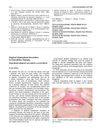
 A woman developed thick gums from everolimus treatment after a kidney transplant.
 June 2008 in “Springer eBooks”
 The document concludes that permanent hair loss conditions are complex, require early specific treatments, and "secondary permanent alopecias" might be a more accurate term than "secondary cicatricial alopecia."
 September 2002 in “Fertility and sterility”
 This study found that hirsutism is more frequent among female relatives of PCOS patients, suggesting a hereditary aspect of PCOS, while premature balding was not more common among male relatives.
 December 1989 in “The Journal of Dermatologic Surgery and Oncology”
 New techniques and findings in dermatologic surgery show improved pain management, safer liposuction, better hair transplantation, and effective treatments for skin conditions.
1 citations
,
November 2009  March 2026 in “Zenodo (CERN European Organization for Nuclear Research)”
 This publication presents a library of precision geometric medicines that reportedly kill harmful bacteria and fungi while sparing beneficial organisms, using a delivery system that targets pathogens specifically and avoids ecological harm.
January 2026 in “Methods in molecular biology” This paper discusses methods for distinguishing viable microbial communities in hair follicle dysbiosis studies and reports no new clinical results, suggesting potential improvements in sample analysis.
 March 2026 in “Zenodo (CERN European Organization for Nuclear Research)”
 This publication presents a library of geometric medicines designed to selectively target pathogenic bacteria and fungi with high precision while minimizing ecological harm, available for free on a non-commercial basis.
 8 citations
,
October 2022 in “Cold Spring Harbor perspectives in biology”
8 citations
,
October 2022 in “Cold Spring Harbor perspectives in biology” The document concludes that better understanding the wound microbiome can improve chronic wound care by preserving helpful bacteria and targeting harmful ones.
June 2025 in “Frontiers in Immunology” Sampling methods greatly affect skin microbiome data in acne studies.
72 citations
,
July 2022 in “Frontiers in Systems Biology” This review provides a comprehensive guide to the human microbiome and reports no new experimental results; it highlights the impact of modern lifestyles on microbial homeostasis and the necessity of conservation efforts.
 July 2000 in “Dermatologic Surgery”
 Many skin products get contaminated with bacteria, especially if they're in jars or previously opened.
July 2026 in “Frontiers in Bioengineering and Biotechnology” This mini-review reports that advances in microbioreactor technology, particularly with microfluidics, significantly enhance eukaryotic cell-based biomedicine by improving productivity, scalability, and reproducibility in applications like CAR T-cell manufacturing and organoid growth, though challenges in scalability and material selection remain.
 3 citations
,
August 2023 in “World Journal of Biology and Biotechnology”
3 citations
,
August 2023 in “World Journal of Biology and Biotechnology” This research underscores the critical role of the human microbiome in health, highlighting potential therapeutic benefits of interventions like fecal microbiota transplantation and probiotics for conditions linked to microbiome dysbiosis, such as metabolic disorders and inflammatory diseases.
 36 citations
,
June 2019 in “eLife”
36 citations
,
June 2019 in “eLife” This study introduces MicrobeFDT, a tool that clusters chemically similar compounds and links them to gut microbial enzymes and toxicities, demonstrating its utility by uncovering previously unknown metabolism of the cancer drug altretamine.
June 2026 in “Journal of Clinical Microbiology” This abstract reports no new research findings; it includes an educational image of microorganisms found in a skin biopsy.
August 2025 in “Journal of Clinical Medicine” This review found that in various dermatological diseases, skin microbiome diversity decreases, with an increased presence of pro-inflammatory strains, and suggests potential of prebiotic treatments as safer alternatives to antibiotics, though further research is needed to confirm efficacy.
11 citations
,
October 2024 in “International Journal of Molecular Sciences” This study observed that the cutaneous microbiome in psoriasis patients differs both qualitatively and quantitatively from healthy individuals, suggesting a potential link to psoriasis pathogenesis.
June 2020 in “Zenodo (CERN European Organization for Nuclear Research)” In this study, the authors observed that controlled microflora in gnotobionts leads to delayed maturation of T-dependent lymphocytes in the thymus, affecting cellular immunity reactions.
 5 citations
,
October 2022 in “Phenomics”
5 citations
,
October 2022 in “Phenomics” This review explores skin microbiome composition and its ecological interactions, highlighting the role of host and environmental factors in shaping the microbial community, but provides no new research findings.
6 citations
,
July 2025 in “Frontiers in Microbiology” This study observed that in patients with diabetic foot ulcers, an imbalance in skin microbiota, with increased pathogenic bacteria, contributes to infection and poor wound healing, and suggests that modulating microbiota composition might improve healing outcomes.
194 citations
,
October 2018 in “Microbiome” This study examined recent findings on the role of host-microbiome interactions in acne, highlighting that the skin's microbiome composition differs between acne-affected and healthy individuals and discussing emerging microbiome-based treatments.

This paper highlights the role of the skin microbiome in influencing skin and hair conditions, suggesting that understanding these microbial communities could aid in developing new probiotic or antibiotic treatments for disorders like alopecia and skin diseases.
114 citations
,
February 2023 in “International Journal of Molecular Sciences” This review discusses the relationship between skin microbiome changes and conditions such as ageing and skin disease, emphasizing the need for further research, but reports no new findings.
40 citations
,
July 2008 in “PROTEOMICS” This study introduced a bioengineered model that simulates acne's microenvironment in mice, enabling the exploration of host and P. acnes interactions and presenting a novel platform for anti-acne drug and vaccine screening.
January 2018 in “Florence Research (University of Florence)” This study identified significant differences in the fungal gut microbiota between melanoma and vitiligo patients compared to healthy controls and observed varying bacterial abundances associated with melanoma histopathology and vitiligo clinical parameters.
8 citations
,
March 2023 in “BMC Research Notes” This pilot study explored a new method using laser-capture microdissection and 16S rRNA gene sequencing to analyze the human scalp hair follicle microbiome more accurately, revealing region-specific variations in microbial diversity and abundance.
November 2025 in “Dermato” In this review, researchers synthesized contemporary findings about the human skin microbiome's influence on conditions like acne, aging, and hyperpigmentation, highlighting the potential of microbiome-informed strategies and treatments such as postbiotics and probiotics to improve dermatological outcomes.

This study discovered that androgenetic alopecia disrupts the scalp microbiome balance across the whole scalp, not just areas with hair loss, and introduced a microbial index for early detection and severity prediction.