 October 2021 in “QJM: An International Journal of Medicine”
 This study found that four sessions of Intense Pulsed Light treatment significantly improved signs of photodamaged skin in adult female patients, as demonstrated by patient satisfaction and 3D camera assessments.
 June 2021 in “Journal of Emerging Technologies and Innovative Research”
 This article discusses the hair nutrition and growth effects of rice water and hibiscus, but reports no clinical results; it aims to understand their role in hair care.
 May 2021 in “International journal of developmental research”
 This review discusses the role of sex hormones, particularly estrogen and progesterone, in melasma pathogenesis and suggests that progesterone in oral contraceptives may help prevent melasma by regulating melanocyte proliferation.

This study found that sericin dressing containing collagen hydrolysate significantly reduced wound healing time and improved scar quality compared to commercial dressing in split-thickness skin graft donor sites.
This study found that Heated radish extract potently suppressed melanin production in vitro and reduced wrinkle formation and collagen degradation in vivo, suggesting its potential as a skin whitening and antiaging product.
September 2019 in “Journal of Investigative Dermatology” This study observed that PCE-DP may improve skin pigmentation by increasing epidermal turnover and inhibiting melanin uptake and inflammation in human epidermal keratinocytes.
 April 2019 in “The journal of investigative dermatology/Journal of investigative dermatology”
 This study demonstrates that extracellular ATP induced by UV radiation promotes melanin production in human melanocytes, suggesting ATP-induced purinergic signaling may influence skin pigmentation.
April 2019 in “Institutional Repositories DataBase (IRDB)” This study demonstrated that human iPSC-derived melanocytes, when transplanted into mice, can reconstitute pigmented hair follicles and integrate into normal tissue, suggesting their potential as a cellular therapy for depigmentation.
This pilot study employed in-vivo multiphoton microscopy to visualize pigment-producing melanocytes in vitiligo patients, aiming to enhance understanding of treatment impacts and potentially improve transplantation therapies.
 September 2018 in “University of the Arts London Research Online (University of the Arts London)”
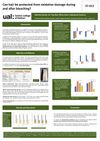
 This study assessed three materials—L-arginine, hydrolysed keratin, and cystine-silanol copolymer—ex vivo for their potential to reduce undesirable effects of hair bleaching, such as damage to hair proteins.
This study tested a natural hair dye made from papaya seed extract, celery leaf, and avocado, finding color change in animal hair but also noting tissue changes like hyperkeratosis.
 April 2018 in “The journal of investigative dermatology/Journal of investigative dermatology”
 This study found that electrical epilation in organ-cultured human scalp skin perturbs hair follicles by causing inflammation, impairing melanin production, and possibly inhibiting post-epilation hair re-growth.
 April 2018 in “Journal of Investigative Dermatology”
 This study found that dermal white adipose tissue surrounding human hair follicles enhances proliferation, pigmentation, and hair shaft elongation in an ex vivo setting.
 January 2018 in “Springer eBooks”
 This review discusses the factors affecting laser hair removal results and adverse events, emphasizing the need for more research to determine optimal treatment parameters; it reports no new clinical findings.
January 2018 in “대한본초학회지(본초분과학회지)” This study found that SHJ extract increased hair growth and melanogenesis in mice, suggesting potential use in cosmeceuticals for hair care.
August 2017 in “Journal of the Dermatology Nurses' Association” This article reviews the usage, efficacy, side effects, and alternatives of topical bimatoprost 0.03% for dermatological applications but does not present new clinical findings.
September 2016 in “Journal of Dermatological Science” Polarizing light microscopy can easily and reliably diagnose congenital keratinizing disorders like Netherton syndrome.
 July 2016 in “Indian journal of science and technology”
 In this study, researchers found that neonate hairs have a distinct microstructure with no medulla and smaller hair follicles compared to adult hairs.
 April 2016 in “The journal of investigative dermatology/Journal of investigative dermatology”
 This study found that Sox2 and BMP signaling may be key regulators of pigmentation and melanocyte migration, as suggested by experiments in mice, human biopsies, and cell co-cultures.
January 2016 in “Lithuanian University of Health Sciences” This study in a Lithuanian veterinary clinic observed diverse histomorphological skin changes in alopecic dogs caused by various rare diseases, including hyperkeratinization and pigmentation disorders.
October 2015 in “Cosmetic Dermatology” This article reviews the complexity of human hair follicles and the development of shampoos and conditioners tailored for different hair types, but it presents no new experimental findings.
This article reviews differences in hair characteristics between Asians and Caucasians, highlighting Asian hair's lower density and thicker dermis, and reports no new research findings.
April 2015 in “한국생물공학회 학술대회” Finasteride reduces melanin production in skin cells.
This study identified 92 novel regulators of melanogenesis, highlighting Aldehyde dehydrogenase 1A1 as a potential target for developing new treatments for hyperpigmentation disorders like melasma.
January 2015 in “Zhongguo haiyang yaowu” This study found that collagen oligopeptides from puffer skin may reduce skin melanin and increase hydroxyproline content in guinea pigs, suggesting potential skin whitening and anti-aging effects.
This study identified ALDH1A1 as a regulator of melanogenesis and suggests its inhibition, through agents like cyanamide, may be a promising therapeutic approach for treating hyperpigmentation disorders such as melasma.
 March 2014 in “Institutional Repositories DataBase (IRDB)”
 Skin-derived stem cells could help treat skin aging and pigmentation issues.
January 2014 in “한국미용학회지” This study observed that long-term UV-A exposure and semi-permanent dye treatment can cause significant structural damage to human hair, particularly affecting the cuticle and cortex layers.
This study found that 5% Adenophora Radix extract stimulated more hair follicles and shafts in a mouse model, suggesting potential as a hair loss prevention cosmetic.
January 2013 in “วารสารเภสัชศาสตร์อีสาน (Isan Journal of Pharmaceutical Sciences, IJPS)” This study found that Carthamus tinctorius floret ethanolic extract stimulated melanogenesis in B16F10 murine melanoma cells without cytotoxicity, suggesting its potential as a treatment for gray hair.