 July 2003 in “Journal of Cutaneous Medicine and Surgery”
 Treating psoriasis with UVB light three times a week is faster than twice a week, and certain medications and lifestyle factors affect psoriasis treatment outcomes.
 July 2003 in “Journal of Cutaneous Medicine and Surgery”
 Skin problems are common in Bangladesh due to arsenic, prompt treatment of diabetic foot ulcers is crucial, maternal transmission causes most neonatal herpes, treatments for pediatric vasculitis are effective, the chickenpox vaccine works, more frequent UVB therapy helps psoriasis, certain jobs increase hand dermatitis risk, monoclonal antibodies treat psoriasis well, lifestyle affects psoriasis, alefacept improves psoriasis, imiquimod cream partially clears basal cell carcinoma, and iron may not help chronic hair loss.
 July 2003 in “Journal of Cutaneous Medicine and Surgery”
 Blood pressure drugs can cause skin lupus, but it improves after stopping the drug. The glycoprotein D vaccine works against genital herpes in some women, and the HPV-16 vaccine reduces HPV-16 infection and related diseases. More frequent light therapy clears psoriasis faster. A cream called imiquimod effectively treats a type of skin cancer. Iron supplements don't necessarily help with chronic hair loss in women.
 July 2003 in “Journal of Cutaneous Medicine and Surgery”
 Some medications can improve skin conditions, while lifestyle factors like smoking and drinking may worsen them; treatments like monoclonal antibodies and imiquimod cream show promise for certain skin diseases.
 May 2004 in “Pediatric Dermatology”
 Atopic dermatitis may have genetic causes and can be treated with pharmacologic methods, glycerin creams, and controlling Staphylococcus aureus colonization.
7 citations
,
March 2018 in “Development” This review highlights how in vivo imaging can explore biological processes related to stem cell activity, behavior, and control, but it reports no new clinical results.
 16 citations
,
November 1992 in “Journal of International Medical Research”
16 citations
,
November 1992 in “Journal of International Medical Research” In this randomized study, ViviScal® significantly outperformed a fish extract in increasing non-vellus hair count and achieving clinical and histological improvement in young males with hereditary androgenic alopecia.
 33 citations
,
February 1999 in “The journal of investigative dermatology/Journal of investigative dermatology”
33 citations
,
February 1999 in “The journal of investigative dermatology/Journal of investigative dermatology” In this study, researchers found that overexpression of IGF-1 in transgenic mice stimulated increased vibrissa growth during the first neonatal hair cycle compared to their nontransgenic littermates.
13 citations
,
August 2007 in “Journal of Investigative Dermatology” Mouse hair can regrow in a special lab setup without serum.
May 2023 in “Journal of Drugs in Dermatology” This study reported that the novel topical serum REVIVV®, containing a blend of phytochemicals, significantly improved hair growth and reduced shedding in 150 participants with androgenetic alopecia after 8 weeks of use, while also being rated easy to use and prompting plans for continued use.
 April 2017 in “Journal of dermatology & cosmetology”
 In this controlled study, a 6-month treatment with the nutraceutical product ViviScal® reduced telogen hair fibers and increased total hair fibers in 83% of participants with Telogen Effluvium, who also reported improved hair and nail growth, skin appearance, and overall quality of life.
This study found that mouse vibrissa follicles in early anagen grew better than in other hair cycle phases, and growth was enhanced by removing the upper follicle third in vitro.
 August 2013 in “Pharmacy Today”
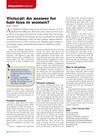
 In a recent study of 15 women with self-perceived hair loss, Viviscal supplementation was associated with an increase in terminal hairs and subjective improvement in hair characteristics.
October 2025 in “Frontiers in Medicine” This study confirmed known adverse events and identified new ones related to ixekizumab, offering preliminary safety insights for its clinical use, but noted limitations such as potential underreporting and confounding factors in the spontaneous adverse event reporting systems.
23 citations
,
February 2019 in “International Journal of Molecular Sciences” This study found that Activin B at 10 ng/mL may promote vibrissae follicle growth in mice by enhancing hair matrix cell proliferation and cell cycle progression via ERK signaling pathways.
February 2026 in “Biomaterials” BOOST is a promising, easy-to-use treatment for diabetic foot ulcers that improves healing by reducing inflammation and promoting blood vessel growth.
 January 1993 in “Inpharma Weekly”
 A new food supplement was highly effective in curing hair loss in young men.
1 citations
,
May 2023 in “bioRxiv (Cold Spring Harbor Laboratory)” In this study, researchers developed a custom-designed 3D-printed microscope stage insert for inverted confocal microscopes, enhancing the accessibility of long-term intravital imaging of live cell dynamics in live transgenic mice, particularly in the skin.
January 2008 in “Summit (Simon Fraser University)” This article describes viDA Therapeutics Inc.'s focus on developing new drugs for age-related conditions using their proprietary granzyme-based approach but reports no clinical outcomes, primarily discussing their funding and business strategy.
This pilot study employed in-vivo multiphoton microscopy to visualize pigment-producing melanocytes in vitiligo patients, aiming to enhance understanding of treatment impacts and potentially improve transplantation therapies.
28 citations
,
March 2019 in “Cellular Microbiology” This review discusses the advancements enabled by intravital microscopy in understanding host-parasite interactions in living animals and reports no new clinical results.
 4 citations
,
April 2018 in “Biotechnology Letters”
4 citations
,
April 2018 in “Biotechnology Letters” Human growth factor 20 can boost mouse whisker growth.
 November 2005 in “Hair transplant forum international”
 This article reviews methods such as stem cell implantation to enhance hair transplant donor supply but reports no new clinical findings.

This review discusses the dynamic behavior of immune cells in skin immune responses using intravital imaging in mice and reports no new clinical results.
 1 citations
,
March 2024 in “International Journal of Dermatology”
1 citations
,
March 2024 in “International Journal of Dermatology” This case report describes a therapy-resistant folliculitis decalvans patient who showed nearly complete response with increased hair density after treatment with CO2 laser-assisted photodynamic therapy.
1 citations
,
February 2018 in “bioRxiv (Cold Spring Harbor Laboratory)” This study describes a new imaging platform for the adult Drosophila midgut, facilitating real-time observation of cell behaviors and dynamics involved in organ renewal.
January 2026 in “International Journal of Cosmetic Science” This study identifies key attributes—luminosity, structural integrity, and vitality—that define hair vibrancy, providing insights to guide the development of hair products that align with consumer expectations.
23 citations
,
May 2013 in “Facial Plastic Surgery Clinics of North America” This article reviews autologous cell therapy for facial wrinkles, detailing the use of LaViv and its adverse events, but reports no new clinical results.
1 citations
,
June 2023 in “Journal of Visualized Experiments” This study introduces a customizable 3D-printed microscope stage insert for inverted confocal microscopes, improving accessibility and usability of intravital microscopy for observing cell dynamics in live mice.
 10 citations
,
November 2019 in “Cold Spring Harbor Perspectives in Biology”
10 citations
,
November 2019 in “Cold Spring Harbor Perspectives in Biology” This review discusses how recent advances in live imaging have revealed the dynamic and adaptable nature of stem cells during various biological processes, and reports no clinical results.