 March 2014 in “Journal of The American Academy of Dermatology”
 The document lists various dermatology topics, treatments, and diagnostic methods.

The document concludes that scientists created various steroids with different properties, including a more effective semi-synthetic vitamin D.
 September 2007 in “Dermatologic Surgery”
 This study found that using 3% hydrogen peroxide for surgical wound care during hair restoration surgery did not significantly impact the survival rate of hair grafts compared to normal saline.
 32 citations
,
December 2003 in “Planta”
32 citations
,
December 2003 in “Planta” This study found that hypaphorine alters cytoskeletal organization in Eucalyptus globulus root hairs, contributing to reduced root hair elongation by possibly disrupting vesicle delivery needed for growth.
 23 citations
,
March 1989 in “The Veterinary clinics of North America. Food animal practice”
23 citations
,
March 1989 in “The Veterinary clinics of North America. Food animal practice” This review discusses dermatological issues in llamas, detailing common findings, parasites, and disorders, but reports no new clinical results; it highlights the need for recognizing normal skin variations and discusses potential treatments like zinc therapy for certain conditions.
 March 2022 in “Marmara University Open Access System”
 This article critically examines the relationship between new media and digital games, emphasizing their cultural and historical contexts, but provides no new empirical findings.
 1 citations
,
February 2022 in “Veterinární Medicína”
1 citations
,
February 2022 in “Veterinární Medicína” This report presents the first successful management of minoxidil toxicosis in a cat, detailing the clinical progression and treatment plan used to resolve the condition.
 October 2024 in “Irish Journal of Medical Science (1971 -)”
 Continuous glucose monitoring and GLP-1 receptor agonists improve diabetes management, but personalized care and education are crucial.
 November 2023 in “Journal of Drugs in Dermatology”
 In this study, stabilized super-oxidized hypochlorous acid was used during and after hair transplant surgeries, reportedly reducing erythema and pruritus in over half of patients, with high compliance and no tissue necrosis observed.
1 citations
,
March 2004 in “Patty's Toxicology” This review discusses the uses and toxicological data of eleven unsaturated halogenated hydrocarbons, including dichloroacetylene, allyl chloride, hexachlorobutadiene, β-chloroprene, vinyl chloride, trichloroethylene, and perchloroethylene, but presents no new findings.
1 citations
,
March 2004 in “Patty's Toxicology” This article reviews the properties, uses, and toxic effects of eleven unsaturated halogenated hydrocarbons, highlighting the risks associated with compounds like dichloroacetylene, allyl chloride, and vinyl chloride, and reports no new experimental findings.
1 citations
,
January 1988 This study found that hair treatments applied after chlorination, especially bleaching and dyeing, more significantly altered surface properties and weight loss, while perming most strongly affected tensile properties.
 January 2024 in “Wiadomości Lekarskie”
 This study reports a successful combination treatment for phospho-organic compound poisoning, using standard therapy with atropine and toxogonin along with exogenous cholinesterases via blood transfusion, showing positive outcomes in patients whose endogenous cholinesterase levels dropped to 20%.
 September 2025 in “Journal of International Medical Research”
 In this case study, researchers documented chronic dermatitis and ulcerative lesions in a 70-year-old Syrian man following chlorine gas exposure during the conflict, highlighting the need for healthcare planning and registries to manage long-term effects in affected populations.
March 2019 in “Reactions Weekly” September 2015 in “Photodiagnosis and Photodynamic Therapy” 29 citations
,
December 1998 in “European Respiratory Journal” This study found that exposure to hair bleach aerosols containing persulphates and hydrogen peroxide induced airway hyperresponsiveness to acetylcholine in rabbits.
January 2010 in “DR-NTU (Nanyang Technological University)” This study found that exposure to chlorine significantly reduced tensile properties in human hair compared to normal, while dyeing only affected some properties but not all.
 16 citations
,
September 2018 in “Journal of Molecular Liquids”
16 citations
,
September 2018 in “Journal of Molecular Liquids” This study investigated a nanostructured system using PS-b-PAA diblock copolymer for incorporating the hydrophobic photosensitizer ClAlPc, finding it effective in causing cellular damage in Caco-2 cells under light while demonstrating no cytotoxicity without light, suggesting its potential use in photodynamic therapy.
 36 citations
,
October 2014 in “Langmuir”
36 citations
,
October 2014 in “Langmuir” This study concluded that bleach treatment partly transforms the hydrophobic top layer of human hair cuticles into a hydrophilic surface with clustered cysteic acid, visualized at the nano-scale using dynamic Chemical Force Microscopy.
 September 2025 in “ACS Applied Polymer Materials”
 This study reported that a composite hydrogel made with Chlorella-derived extracellular polysaccharide–selenium nanoparticles showed strong antibacterial and anti-inflammatory effects in vitro and significantly accelerated wound healing in vivo, offering potential for managing infected wounds and monitoring healing progression.
4 citations
,
January 2012 in “Human health handbooks” This study suggests that ferrous ferric chloride plays a role in regulating skin homeostasis by promoting the proliferation and differentiation of skin cells from a distance.
 19 citations
,
June 1999 in “Steroids”
19 citations
,
June 1999 in “Steroids” This study found that compound 10 inhibited testosterone conversion to DHT in hamster flank organs and seminal vesicles, whereas compound 11's inhibitory effect varied with dose, linked to halogen electronegativity differences.
 November 2022 in “Journal of Investigative Dermatology”
 This study developed a chalcone-based molecule that significantly increased tyrosinase inhibition and solubility, showing potential as a safe and effective skin depigmenting and antiaging agent, with supportive epigenetic and antioxidant properties observed in vitro.
 October 2023 in “Journal of the American Academy of Dermatology”
 This source reports that clascoterone cream has been approved in the U.S. for treating acne vulgaris in patients aged 12 and older, suggesting it works by competing with dihydrotestosterone at androgen receptors to mitigate acne's effects.
 September 2018 in “University of the Arts London Research Online (University of the Arts London)”
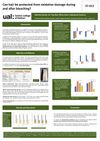
 This study assessed three materials—L-arginine, hydrolysed keratin, and cystine-silanol copolymer—ex vivo for their potential to reduce undesirable effects of hair bleaching, such as damage to hair proteins.
 January 2019 in “Applied Organometallic Chemistry”
 The compound (NH4)2Mn0.17Cu0.83Cl4.2H₂O has a specific structure, shows weak magnetism at low temperatures, and undergoes phase changes at high temperatures.
February 2023 in “Reactions Weekly”  1 citations
,
January 2017 in “Chinese Journal of Organic Chemistry”
1 citations
,
January 2017 in “Chinese Journal of Organic Chemistry” Using K2S2O8 as an oxidizing agent in a specific condition, we can make Finasteride with 96.3% yield and 99.6% purity. This method is also good for other compounds and is environmentally friendly.
March 2026 in “ACS Omega” This study reported that a novel hydrogel wound dressing, created using a Brachybotrys paridiformis polysaccharide derivative and chitosan, significantly accelerated wound healing and tissue regeneration in vivo, showing nearly complete healing by day 15 compared to controls.