19 citations
,
June 2020 in “General and comparative endocrinology” This study found that hair cortisol concentration is a promising stress indicator in cattle but not in pigs, where external factors and lower cortisol response may interfere with its validity.
July 2017 in “PPmP - Psychotherapie · Psychosomatik · Medizinische Psychologie” This study found that adolescent girls with anorexia nervosa had lower hair cortisol concentrations compared to healthy and psychiatric controls.
22 citations
,
January 2010 in “Clinical Medicine Insights Endocrinology and Diabetes” In this study, hair from forearms showed higher cortisol levels than hair from lower legs, suggesting a localized cortisol response in hair.
 5 citations
,
December 2004 in “Dermatology”
5 citations
,
December 2004 in “Dermatology” This review describes two cases of young women with primary amenorrhea and hyperandrogenemia, suggesting that adrenal tumors should be considered in patients with significantly elevated circulating testosterone levels.
This study found a weak negative correlation between inhaled corticosteroid dose and hair cortisol levels in children with asthma, suggesting that hair cortisol measurement may reflect adrenal function in these children.
January 2012 in “CINECA IRIS Institutial Research Information System (University of Genoa)” This study observed fluctuations in hair cortisol levels in rabbits, indicating their HPA axis activity responded similarly to surgical and environmental stressors, suggesting potential anthropomorphic evaluations of stress.
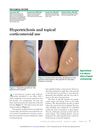 February 2022 in “Cleveland Clinic Journal of Medicine”
 This case report observed hypertrichosis on the left forearm of an 80-year-old woman, possibly linked to her previous use of the topical steroid betamethasone butyrate propionate for dermatitis.
24 citations
,
October 2018 in “Addiction Biology” This study found that alcohol dependence is associated with altered HPA axis functioning, with AD patients showing higher hair cortisol concentrations and reduced ACTH and cortisol levels, irrespective of childhood maltreatment history.
 2 citations
,
June 2020 in “AIDS”
2 citations
,
June 2020 in “AIDS” This case study describes a severe instance of iatrogenic Cushing's syndrome induced by gamma-hydroxybutyric acid, exacerbated by combined use of betamethasone and anabolic steroids, in an HIV-positive patient on cobicistat-containing therapy.
40 citations
,
March 2003 in “The journal of small animal practice/Journal of small animal practice” In this case study, medical management with trilostane improved clinical signs and normalized serum chemistry in a dog diagnosed with adrenal-dependent hyperadrenocorticism over 80 weeks of treatment.
 52 citations
,
October 2004 in “Veterinary dermatology”
52 citations
,
October 2004 in “Veterinary dermatology” This study found that 62% of neutered dogs with hair cycle arrest experienced partial to complete hair re-growth after melatonin treatment, but hair re-growth was not consistently linked to normal sex hormone levels.
 20 citations
,
July 2006 in “Veterinary dermatology”
20 citations
,
July 2006 in “Veterinary dermatology” This study found that hair regrowth in Pomeranians with hair cycle arrest treated with melatonin was not associated with a change in oestrogen receptor-α staining.
 January 2025 in “Seven Editora eBooks”
 In this study, the authors reported a case of alopecia X in a German Spitz dog and found that treatment with orchiectomy and melatonin resulted in partial hair regrowth and improved the dog's dermatological condition.
 October 2024 in “Journal of the Endocrine Society”
 In this case report, researchers described a postmenopausal woman with virilization symptoms who was diagnosed with a Leydig cell tumor in her ovary, and symptoms improved following tumor removal. The authors highlighted the diagnostic challenge of differentiating such cases from age-related hormonal changes.
May 2024 in “Lithuanian University of Health Sciences” This study, conducted on 17 dogs with hyperadrenocorticism in Germany, concluded that while common symptoms like polyuria and polydipsia were observed in all cases, clinical signs and blood parameters did not significantly correlate with diagnostic test results for the condition.
95 citations
,
September 1979 in “Acta Paediatrica” This study found that serum DHEA levels increase earlier and are higher in girls compared to boys through various stages of puberty, reflecting their earlier pubertal development.
15 citations
,
May 2021 in “Climacteric” This review discusses the characteristics, diagnostic challenges, and management options for postmenopausal hyperandrogenism but reports no new clinical results; it highlights the importance of distinguishing potential androgen-producing tumors or hyperandrogenic disorders.
 February 2025 in “Cureus”
 This case report describes a 37-year-old female with non-classical congenital adrenal hyperplasia who presented with severe acne, progressive hair loss, and primary infertility, managed with prednisolone.
 November 2022 in “Journal of the Endocrine Society”
 This case study suggests that genetic susceptibility to PCOS and rare syndromes, such as Trichorhinophalangeal syndrome Type 1, should be considered in young men with unexplained hyperandrogenism.
July 2022 in “International Medical Case Reports Journal” This report details a 6-year-old girl with adrenocortical cancer presenting with voice changes, weight gain, and excessive hair growth, successfully treated with surgery and medication, with symptoms resolved after 6 months.
 February 2026 in “Brazilian Journal of Implantology and Health Sciences”
 This integrative literature review revealed that chronic stress, characterized by elevated cortisol levels, negatively impacts hair follicle integrity and contributes to alopecia by promoting the premature transition from the growth phase to the resting phase of the hair cycle.
83 citations
,
July 1993 in “Journal of the American Veterinary Medical Association” This study found that surgical removal of adrenal glands resolved clinical signs of adrenocortical tumors and hyperplasias in ferrets, but cortisol levels were not excessively high.
1 citations
,
January 2018 in “ScholarWorks (Central Washington University)” In this study using a PCOS mouse model with added stress, researchers observed that combining corticosterone with dihydrotestosterone partially supported the hypothesis of behavioral changes, aligning with depression and anxiety-linked symptoms in women with PCOS.
February 2026 in “Psychoneuroendocrinology” Hair cortisol concentration partly reflects HPA axis regulation but doesn't capture all its complexities.
September 2024 in “Toxicology Letters” Cortisone and cortisol levels in pregnant women’s hair increase as labor approaches, indicating higher stress.
 17 citations
,
August 1967 in “JAMA”
17 citations
,
August 1967 in “JAMA” In this study, a plasma-fluorescent corticoid test effectively differentiated patients with adrenal insufficiency from those with normal adrenal function based on their response to corticotropin.
 1341 citations
,
January 2014 in “Cardiology Research and Practice”
1341 citations
,
January 2014 in “Cardiology Research and Practice” Managing metabolic syndrome needs both lifestyle changes and medical treatments.
 393 citations
,
November 2000 in “Archives of General Psychiatry”
393 citations
,
November 2000 in “Archives of General Psychiatry” This review discusses the neurobiology of sexual function and reports no new results; the authors cover multiple endocrine and neurotransmitter influences on sexual desire, arousal, and orgasm stages.
 284 citations
,
February 2008 in “Pediatrics”
284 citations
,
February 2008 in “Pediatrics” This review discusses the potential impact of endocrine-disrupting chemicals and body size on pubertal onset and progression, highlighting critical gaps and priorities for future research without presenting new clinical results.
 212 citations
,
May 2010 in “American Journal of Obstetrics and Gynecology”
212 citations
,
May 2010 in “American Journal of Obstetrics and Gynecology” This article suggests using only firm criteria to diagnose polycystic ovary syndrome in adolescents, due to the evolving nature of its features during this period.