 4 citations
,
March 2022 in “Journal of The American Academy of Dermatology”
4 citations
,
March 2022 in “Journal of The American Academy of Dermatology” Direct-to-consumer teledermatology is not effectively reaching underserved populations due to language, technology, and insurance barriers.
July 2026 in “Journal of the American Academy of Dermatology” Hispanic/Latinx people are underrepresented in alopecia clinical trials, and more inclusive research is needed.
 14 citations
,
December 2020 in “Journal of The American Academy of Dermatology”
14 citations
,
December 2020 in “Journal of The American Academy of Dermatology” This study observed a significant increase in telogen effluvium cases among people of color during the COVID-19 pandemic in NYC, notably affecting Hispanic/Latinx individuals.
1 citations
,
January 2026 in “JAMA Network Open” This study found significant racial and ethnic disparities in the incidence and psychological impact of chemotherapy-related alopecia, with Asian women experiencing the greatest burden, highlighting the need for personalized and culturally sensitive care.
September 2023 in “Journal of the American Academy of Dermatology” Hispanic and Black patients are underrepresented in alopecia areata clinical trials.
 12 citations
,
March 2021 in “Journal of Medical Internet Research”
12 citations
,
March 2021 in “Journal of Medical Internet Research” This study tested the feasibility of using multimodal recruitment strategies to assemble a diverse group of 438 women for a web-based survey on ovulation and menstruation health, finding that internet and community fair methods achieved higher enrollment and completion rates compared to clinic recruitment.

This study found that multimodal recruitment strategies successfully achieved target recruitment quickly and created a racially diverse cohort to study ovulation and menstruation health, with higher survey completion rates noted among participants recruited via the internet and community fairs than in clinics.
 1 citations
,
September 2021 in “CRC Press eBooks”
1 citations
,
September 2021 in “CRC Press eBooks” This chapter reviews trichoscopic-pathologic correlations in Frontal Fibrosing Alopecia and reports no new clinical results; the authors discuss genetics, clinical patterns, and unusual variants associated with this condition.
May 2025 in “International Journal of Women’s Dermatology” In this retrospective cohort study, researchers found that exposure to 5-alpha reductase inhibitors and spironolactone in female alopecia patients was not linked to an increased risk of developing malignant or benign gynecologic tumors when compared to minoxidil use.
 340 citations
,
September 2014 in “PLOS Genetics”
340 citations
,
September 2014 in “PLOS Genetics” This study found that while genetic ancestry affects physical appearance traits in Latin American populations, it accounts for only a modest portion of the observed variation.
 16 citations
,
March 2013 in “International Journal of Dermatology”
16 citations
,
March 2013 in “International Journal of Dermatology” This study found that infectious skin diseases were prevalent in immigrant Latino poultry processors and manual workers in North Carolina, with tinea pedis and onychomycosis being particularly common.
 215 citations
,
January 2011 in “Reproductive Biology and Endocrinology”
215 citations
,
January 2011 in “Reproductive Biology and Endocrinology” Among reproductive-aged women in Iran, this study found that the prevalence of PCOS varied significantly depending on the diagnostic criteria used, with estimates ranging from 7.1% to 14.6%.
 February 2024 in “Hormones”
 This study surveyed individuals seeking estrogen-based gender-affirming hormone therapy, revealing that improving life satisfaction and femininity are top treatment goals, and highlighting the need for trials aligned with community priorities.
 June 2013 in “D-Scholarship@Pitt (University of Pittsburgh)”
 This article discusses the development of an interactive workbook by OCCAM to help cancer patients communicate their use of complementary and alternative medicine with healthcare providers and reports no clinical results.
9 citations
,
February 2023 in “International Journal of Environmental Research and Public Health” In this study, researchers found that fungal infections and unspecified dermatitis were the most common skin conditions in a rural South Florida clinic, and only 20% of referred patients attended dermatology follow-ups.
December 2025 in “Journal of Inflammation Research” This study highlights ongoing inequities in access and outcomes for inflammatory skin diseases in Latin America and emphasizes the need for regional registries, harmonized clinical guidelines, and policy reforms to improve equitable dermatologic care.

This review reported that alopecia prevalence and psychosocial impacts vary significantly among migrant and ethnic minority communities due to diverse genetic, environmental, and cultural factors, highlighting needs for culturally competent care and stigma reduction to address disparities and improve access.
 December 2022 in “Dermatology and Therapy”
 This review discusses the unmet needs and barriers in managing alopecia areata in Latin America, highlighting access constraints and recommending coordinated efforts to improve patient outcomes with promising new treatments.
 19 citations
,
May 2005 in “Archives of Environmental & Occupational Health”
19 citations
,
May 2005 in “Archives of Environmental & Occupational Health” This study found that skin diseases were common among male Latino poultry-processing workers in North Carolina, with all workers diagnosed with at least one condition, affecting their quality of life.
 1 citations
,
April 2022 in “International Journal of Women's Dermatology”
1 citations
,
April 2022 in “International Journal of Women's Dermatology” This study suggests that curl pattern classification could help improve patient communication and risk stratification in hair loss disorders, but its clinical utility in dermatology needs further validation.
 October 2022 in “The Journal of Family Practice”
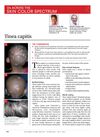
 This article describes cases of tinea capitis in young Black and Latina children, highlighting the condition's diverse presentations such as erythema, scaling, and subtle signs like comma hairs, but reports no new clinical results.
 9 citations
,
October 2014 in “Experimental and Clinical Endocrinology & Diabetes”
9 citations
,
October 2014 in “Experimental and Clinical Endocrinology & Diabetes” This study observed that acanthosis nigricans is highly prevalent in Latin American youths, especially at the knuckles, and may indicate early insulin resistance even in those with a normal BMI.
 4 citations
,
May 2020 in “bioRxiv (Cold Spring Harbor Laboratory)”
4 citations
,
May 2020 in “bioRxiv (Cold Spring Harbor Laboratory)” This study found that in Alcorcón, Spain, migrants from Sub-Saharan Africa, the Caribbean, and Latin-America had a higher risk of COVID-19 infection during the first wave compared to Spaniards.
 January 2023 in “Research Square (Research Square)”
 This study observed that in a large, diverse US adult population, skin of color was associated with a higher prevalence of alopecia areata, whereas lower prevalence was seen among those with lower education, income, and lacking health insurance.

This chapter reviews the prevalence, pathogenesis, and management of hair and scalp disorders but reports no new clinical findings.
 January 2026 in “Frontiers in Reproductive Health”
 Educational efforts can reduce harmful chemical exposure from hair products in pregnant Women of Color.
 21 citations
,
May 1988 in “Journal of The American Academy of Dermatology”
21 citations
,
May 1988 in “Journal of The American Academy of Dermatology” This article reviews the challenges of providing dermatology care in prisons and reports no new clinical findings, highlighting common skin conditions like tinea pedis, pruritus, and alopecia areata linked to stress and the environment.
 July 2008 in “Baylor University Medical Center Proceedings”
 Global oil use will rise, US corn-to-ethanol policy is flawed, and various social and economic issues need attention.
 359 citations
,
September 2017 in “European Journal of Epidemiology”
359 citations
,
September 2017 in “European Journal of Epidemiology” This article discusses the rationale, design, and significant findings of the long-running Rotterdam Study but reports no new clinical results.
 4 citations
,
September 2012 in “Clinical Pharmacology in Drug Development”
4 citations
,
September 2012 in “Clinical Pharmacology in Drug Development” This study reviewed the dosages of products approved in Japan from 2003-2010 and found that 28.1% were at different levels than in the U.S., with limited evidence suggesting different clinical responses.