 June 2024 in “Namık Kemal Tıp Dergisi”
 This study investigated whether individuals with psoriasis have higher MDS-16 scores and potentially more maladaptive daydreaming compared to healthy individuals.
4 citations
,
January 2024 in “Allergy” This study indicates that individuals exposed to PPD mount varying immune responses, with either tolerance, subclinical inflammation, or allergy, suggesting no true non-responders to PPD.
11 citations
,
December 2013 in “Clinical and experimental dermatology” This study reports a case of a child with congenital skin fragility, alopecia, and cardiomyopathy due to compound heterozygous mutations in the DSP gene causing desmoplakin deficiency.
 May 2011 in “Value in Health”
 This study found that the oral Janus kinase inhibitor CP-690,550 has a direct effect on reducing pruritus in patients with psoriasis, independent of clinician-assessed improvements in psoriasis severity.
 27 citations
,
May 2007 in “Archives of dermatological research”
27 citations
,
May 2007 in “Archives of dermatological research” In this study, alopecia areata patients treated with diphencyprone showed a significant increase in CD8 lymphocytes around hair bulbs, which may be associated with hair regrowth.
 5 citations
,
September 2020 in “Journal of Cosmetic Dermatology”
5 citations
,
September 2020 in “Journal of Cosmetic Dermatology” This study reported that weekly intramuscular dexpanthenol may improve quality of life and satisfaction with hair appearance in women with female pattern hair loss, with no side effects observed.
 January 2004 in “Online Publication Service of Würzburg University (Würzburg University)”
 This study found that women with PCOS displayed significantly higher activity of 5alpha-reductase, suggesting an additional role for liver and peripheral tissues in their androgen excess.
 August 2025 in “DS Reviews of Research in Life Sciences”
 In this study, women with polycystic ovary syndrome showed significantly higher levels of DHEA, IL-6, and TNF-α compared to healthy controls, indicating a possible link between these biomarkers and PCOS.
12 citations
,
January 2013 in “Indian dermatology online journal” This case report details a 21-year-old woman with dermatopathia pigmentosa reticularis, presenting with generalized reticulate hyperpigmentation, diffuse noncicatricial alopecia, onychodystrophy, palmoplantar keratoderma, and poorly developed dermatoglyphics.
15 citations
,
July 2021 in “Anais Brasileiros de Dermatologia” This report describes a rare case of alopecia areata-like psoriasis, associated with skin lesions, following the use of dupilumab in a patient with atopic dermatitis.
22 citations
,
March 1999 in “International Journal of Clinical Practice” This review discusses the use of topical immunotherapy for severe alopecia areata and resistant viral warts, highlighting diphencyprone's advantages and the need for careful handling to avoid staff sensitisation; it reports no new clinical results.
 13 citations
,
July 2014 in “The Journal of Dermatology”
13 citations
,
July 2014 in “The Journal of Dermatology” Dermoscopy helped diagnose discoid lupus erythematosus in two patients without needing skin biopsies.
 21 citations
,
June 2017 in “Journal of The American Academy of Dermatology”
21 citations
,
June 2017 in “Journal of The American Academy of Dermatology” This study reviewed existing articles to assess the efficacy of topical diphenylcyclopropenone immunotherapy for alopecia areata, but it did not report new clinical results.
 4 citations
,
November 2016 in “Journal of Cutaneous Pathology”
4 citations
,
November 2016 in “Journal of Cutaneous Pathology” This letter discusses three plasmacytoid dendritic cell-related parameters that may help differentiate lupus alopecia from lichen planopilaris, but it reports no new study results.
 March 1998 in “Journal of dermatological science”
 Diphencyprone initially increases mouse hair growth, then slows it, possibly due to changes in specific protein levels.
 12 citations
,
November 2003 in “Journal of the American Academy of Dermatology”
12 citations
,
November 2003 in “Journal of the American Academy of Dermatology” This study found hair regrowth in the majority of AA-affected mice and rats treated with diphencyprone, suggesting its potential utility for understanding human alopecia areata and the drug's therapeutic action.
June 2025 in “British Journal of Dermatology” In this case report, the temporal relationship between starting dupilumab treatment and the onset of psoriasis in an adult with atopic dermatitis suggests that dupilumab may contribute to psoriatic lesions, and dermatologists should consider psoriasis a potential adverse event of the medication.
 3 citations
,
July 2018 in “Elsevier eBooks”
3 citations
,
July 2018 in “Elsevier eBooks” This case report describes an elderly man with erosive pustular dermatosis of the scalp, who improved with potent topical corticosteroids followed by maintenance with topical tacrolimus.
 April 2023 in “Journal of Investigative Dermatology”
 This study found that PX-12 inhibited the NLRP3 inflammasome and reduced psoriasis-like symptoms in a mouse model, suggesting its potential as a treatment for psoriasis.
 June 2023 in “Journal of cosmetic dermatology”
 This study concluded that both DPCP alone and combined with PRP are effective and safe for treating severe alopecia areata, with no significant difference between the two treatment methods.
 August 2018 in “Journal of Investigative Dermatology”
 This case report describes the first known instance of dermatomyositis-related panniculitis in the neck and mediastinal region, effectively treated with corticosteroids, dapsone, and colchicine.
 2 citations
,
March 2023 in “Experimental neurology”
2 citations
,
March 2023 in “Experimental neurology” In this study, pregnenolone was found to dose-dependently reduce L-DOPA-induced dyskinesias in a rat model of Parkinson's disease, suggesting its potential as a therapeutic target for these dyskinesias.
13 citations
,
January 2010 in “Immunopharmacology and immunotoxicology” This study found that increased Bcl-2 protein expression after DPCP treatment was associated with hair regrowth in alopecia areata patients, suggesting its role in inhibiting apoptosis.
 13 citations
,
June 2020 in “International Journal of Dermatology”
13 citations
,
June 2020 in “International Journal of Dermatology” This review discusses erosive pustular dermatosis of the scalp, highlighting its wide variety of causes and multiple effective treatment options beyond high-potency topical steroids, and reports no new clinical results.
 January 2025 in “International Journal of Trichology”
 This study found that adding PRP to DPCP treatment for severe alopecia areata did not enhance effectiveness compared to DPCP alone.
 May 2025 in “The Journal of Rheumatology”
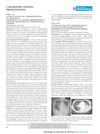
 This case report highlights a rare instance of diffuse alveolar hemorrhage in a patient with catastrophic antiphospholipid syndrome, emphasizing the importance of early recognition and multidisciplinary management.
9 citations
,
September 2019 in “Clinical Cosmetic and Investigational Dermatology” In this article, the authors reported that calcipotriol/betamethasone dipropionate aerosol foam significantly improved scalp psoriasis symptoms in three patients by reducing itching and improving flaky patches within a four-week treatment period, confirming its efficacy and enhanced skin penetration compared to older formulations.
September 2019 in “Journal of Investigative Dermatology” This study observed that PCE-DP may improve skin pigmentation by increasing epidermal turnover and inhibiting melanin uptake and inflammation in human epidermal keratinocytes.
June 2023 in “Clinical Cosmetic and Investigational Dermatology” This report describes a 60-year-old female with pretibial pruritic papular dermatitis who showed significant improvement of skin lesions after one month of treatment with oral pentoxifylline. The authors highlight the unique clinical and histological features of PPPD and propose pentoxifylline as a potential therapy.
71 citations
,
May 2019 in “Rheumatology” This study observed that PD-1+CXCR5-CD4+T peripheral helper cells are significantly elevated in patients with systemic lupus erythematosus and are correlated with disease activity indicators, suggesting their potential role in lupus pathogenesis.