1 citations
,
January 2016 in “Indian journal of clinical and experimental dermatology” This study found that female pattern hair loss is more common than previously thought among Indian women, with the most frequent pattern being diffuse hair loss over the vertex.
 1 citations
,
July 2015 in “The European research journal”
1 citations
,
July 2015 in “The European research journal” This case report describes reversible hair loss in a patient taking aripiprazole, suggesting this side effect may be common among psychotropic medications.
 1 citations
,
October 2013 in “BMJ”
1 citations
,
October 2013 in “BMJ” This case study reports a man with rapid hair thinning, whitening, and sparse beard, linked to an increased proportion of hair follicles in catagen or telogen phase and peribulbar lymphocytic infiltrate.
 1 citations
,
September 2013 in “Mayo Clinic Proceedings”
1 citations
,
September 2013 in “Mayo Clinic Proceedings” This case study identified low iron stores, potentially linked to heavy menstrual periods, as a trigger for diffuse nonscarring alopecia in a 31-year-old woman, leading to a diagnosis of telogen effluvium, for which iron supplementation was prescribed.
 1 citations
,
August 2011 in “Dermatology Reports”
1 citations
,
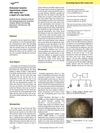
August 2011 in “Dermatology Reports” This case report describes a new family with autosomal recessive hypotrichosis simplex with woolly hair, suggesting the disorder may be underreported due to misdiagnosis.
 1 citations
,
January 2009 in “Journal of Clinical Dermatology”
1 citations
,
January 2009 in “Journal of Clinical Dermatology” This study reports that telogen effluvium prevalence after childbirth may be higher in women who are multiparous, have had a cesarean section, experienced greater weight gain, or gave birth after 38 weeks.
1 citations
,
September 2003 in “Praxis” This review discusses different types of hair loss, their potential causes, and advances in treatments, and reports no new clinical findings.
1 citations
,
February 2003 This study found that UVB radiation primarily causes hair protein loss, while UVA radiation mainly contributes to hair color changes, with no significant differences in mechanical properties observed between photooxidized and non-irradiated hair.
 1 citations
,
January 2003 in “Annals of Dermatology”
1 citations
,
January 2003 in “Annals of Dermatology” This study found that hair follicles on the anterior scalp may be more vulnerable to acute telogen effluvium than those on the occipital scalp.
 1 citations
,
October 2002 in “Dermatologic Surgery”
1 citations
,
October 2002 in “Dermatologic Surgery” This review summarizes expert opinions on the use of approved pharmacologic treatments alongside hair transplantation, highlighting their potential to enhance hair density and regrowth speed while reducing further hair loss, but reports no new clinical trial results.
 1 citations
,
January 1996 in “Springer eBooks”
1 citations
,
January 1996 in “Springer eBooks” Diet affects baldness; eat balanced, less animal fat, more fruits, vegetables, and cereals.
1 citations
,
January 1980 in “Side effects of drugs annual” This chapter reviews various adverse effects associated with vitamins, including hypercalcemia from high doses of vitamin A, hair loss from retinoid treatment, and complications with vitamin B6 in Parkinson's therapy, but reports no new clinical findings.
 1 citations
,
July 1965 in “Postgraduate medicine”
1 citations
,
July 1965 in “Postgraduate medicine” This article reviews common dermatologic diseases and their treatments, suggesting that physicians can effectively manage these conditions using general medical knowledge, but it reports no new clinical results.
 1 citations
,
May 1965 in “Medical Clinics of North America”
1 citations
,
May 1965 in “Medical Clinics of North America” Hair growth dysfunction involves various conditions with limited treatment options.
1 citations
,
February 1938 in “Archives of Dermatology” This piece presents a case study of a woman with diffuse alopecia, suggesting a potential link to a chronic focus of infection rather than acute fever.

This study found significant differences in facial heat distribution patterns among different types of alopecia, with androgenic, areata, and telogen types showing a T-type pattern, while seborrheic alopecia showed a diffused pattern.

This article reports that PRP therapy shows promise as a safe and effective non-surgical treatment for hair loss, suitable for those with early to moderate androgenetic alopecia.
July 2026 in “Scholars Journal of Medical Case Reports” This case study reports a rare coexistence of alopecia areata and lichen planopilaris in a 37-year-old woman and highlights the importance of targeting active scalp areas for biopsy to appropriately manage coexisting scarring and non-scarring alopecias, with distinct therapeutic priorities.
June 2026 in “Psychiatry Neurology and Medical Psychology” In this study, researchers found that women with mixed-genesis alopecia exhibited more significant psychological maladaptation and disturbances in self-attitude than those with metabolic alopecia, suggesting the importance of tailored psychotherapeutic approaches to improve their psychological adaptation and quality of life.
 June 2026 in “The Journal of Cosmetic Medicine”
 This narrative review reports that scalp micropigmentation offers immediate cosmetic improvements in hair density appearance, but does not promote actual hair regrowth and results vary based on the operator's skill.

This case report describes a 33-year-old Kashmiri woman with Woodhouse-Sakati syndrome who has a rare DCAF17 gene mutation, c.321+1G>A, providing further evidence for its role in the genetic basis of this neuroendocrine disorder.
May 2026 in “Journal of Cosmetic Dermatology” This study found that a nutritional supplement containing millet extract, pantothenic acid, L-cystine, and biotin significantly increased hair density, improved hair growth and appearance, and reduced hair loss by 59% in 112 healthy subjects with light diffuse hair loss over 12 weeks.
April 2026 in “Canadian Medical Association Journal” This study reported that androgenetic alopecia in women becomes more prevalent with age, with risk factors including heredity and endocrine disorders, and differs clinically from male-pattern hair loss by causing diffuse hair thinning rather than loss at the temples or crown.
 February 2026 in “Journal of the American Academy of Dermatology”
 In this study, researchers characterized the clinical features of ophiasis, an uncommon type of alopecia areata, and proposed a new subtype classification that may help predict treatment response and guide management, noting that ophiasis generally has a chronic and refractory nature.
 February 2026 in “Ciencia Latina Revista Científica Multidisciplinar”
 This review found a significant immunological link between diffuse alopecia areata and autoimmune thyroid disorders, particularly Hashimoto's thyroiditis, highlighting the importance of early recognition and thyroid function evaluation to improve clinical management and avoid diagnostic delays.
January 2026 in “Medico Research Chronicles” This case report documented that a young male with chronic dandruff and hair thinning experienced progressive improvement in scalp health, hair thickness, and psychological well-being after receiving individualized classical homeopathic treatment, highlighting a positive response where conventional remedies failed.
January 2026 in “SHILAP Revista de lepidopterología” In this study, researchers highlight the importance of correcting selenium and zinc deficiencies as part of a comprehensive management strategy for patients with autoimmune thyroiditis complicated by alopecia, as these elements play key roles in thyroid hormone biosynthesis and hair follicle function.
The authors discussed the potential benefits of Urtica dioica and Serenoa repens for hair health, but emphasized that more concrete evidence and standardized formulations are necessary for reliable therapeutic use.
 December 2025 in “Cureus”
 This study found that women with telogen effluvium had significantly lower serum ferritin levels compared to healthy controls, suggesting an association between iron deficiency and this form of hair loss.
 December 2025 in “Russian Journal of Skin and Venereal Diseases”
 This study found that in patients with non-cicatricial alopecia, hair follicles and their sheaths were thinner compared to controls, especially in cases of alopecia areata and telogen effluvium, with notable thinning beginning in the subcutaneous fat tissue.