20 citations
,
March 2019 in “Case Reports in Dermatology” This report describes two cases where patients developed alopecia while undergoing treatment for psoriasis with IL-17 inhibitors, suggesting an unexpected paradoxical reaction.
 20 citations
,
November 2005 in “Journal of Investigative Dermatology Symposium Proceedings”
20 citations
,
November 2005 in “Journal of Investigative Dermatology Symposium Proceedings” This study found that IFN-γ plays a critical role in T cell activation and the pathogenesis of alopecia areata in C3H/HeJ mice.
 19 citations
,
March 2003 in “Journal of Investigative Dermatology”
19 citations
,
March 2003 in “Journal of Investigative Dermatology” This study found that mechlorethamine restored hair growth in mice with alopecia-areata-like disease by eliminating infiltrated lymphocytes and inhibiting certain pro-inflammatory cytokines in treated skin areas.
18 citations
,
February 2023 in “eLife” This study indicates that innate lymphoid cells-type 1 may provoke alopecia areata by disrupting hair follicle immune privilege and inducing characteristic lesions, challenging the view that alopecia areata is purely an autoantigen-dependent, T cell-driven condition.
 18 citations
,
January 2017 in “Annals of dermatology/Annals of Dermatology”
18 citations
,
January 2017 in “Annals of dermatology/Annals of Dermatology” This study found that Th17 lymphocytes may play a more crucial role than cytotoxic T cells in the development of alopecia areata due to their infiltration around the hair bulb/bulge, which exacerbates hair loss as histopathological grade worsens.
17 citations
,
July 2019 in “Lupus Science & Medicine” In this study, gene expression analysis of plucked hair follicles from scalp lesions was sufficient to differentiate chronic discoid lupus erythematosus from psoriasis and healthy controls, suggesting a non-invasive diagnostic potential.
15 citations
,
January 2022 in “Immune Network/Immune network” This review summarizes the pathophysiology and immune mechanisms of inflammatory skin diseases like psoriasis and atopic dermatitis, highlighting the therapeutic potential of targeted immunotherapies, but reports no new clinical results.
 15 citations
,
May 2016 in “Archives of Dermatological Research”
15 citations
,
May 2016 in “Archives of Dermatological Research” This study found significantly higher levels of the protein ULBP3 in patients with alopecia areata incognita compared to other hair loss conditions and healthy controls, suggesting ULBP3's potential as a diagnostic marker for AAI.
 14 citations
,
March 2014 in “Journal of The American Academy of Dermatology”
14 citations
,
March 2014 in “Journal of The American Academy of Dermatology” In this study, symmetrical acrokeratoderma was observed to frequently occur alongside ichthyosis vulgaris, with no specific therapy available for the condition.
13 citations
,
August 2017 in “Journal of Cellular Physiology” In this study, researchers found that in mouse models of alopecia areata, the expression of immune-regulating molecules PD-L1 and PD-L2 in dermal fibroblasts is increased by activated T cells, potentially indicating a lack of negative immune control in affected skin.
13 citations
,
March 2000 in “Veterinary Dermatology” This study characterized a novel form of mural folliculitis in dogs, resembling human pseudopelade, marked by persistent alopecia, lymphocyte infiltration, and severe follicular atrophy without effective treatment response.
12 citations
,
September 2022 in “Frontiers in Genetics” This study identified seven genes that may serve as biomarkers for diagnosing skin cutaneous melanoma by analyzing the relationship between UV exposure, ferroptosis, and the cancer's pathology.
 12 citations
,
November 2003 in “Journal of the American Academy of Dermatology”
12 citations
,
November 2003 in “Journal of the American Academy of Dermatology” This study found hair regrowth in the majority of AA-affected mice and rats treated with diphencyprone, suggesting its potential utility for understanding human alopecia areata and the drug's therapeutic action.
11 citations
,
February 1990 in “PubMed” This study found that zinc treatment in alopecia areata patients may increase CD8+ cells, suggesting its effectiveness could be due to immunomodulation.
11 citations
,
October 2021 in “Orphanet journal of rare diseases” This study found that patients with RASopathies have lower serum IgA and CD8 levels compared to controls, indicating a potential risk for developing autoimmune disorders.
 11 citations
,
April 2020 in “Journal of The American Academy of Dermatology”
11 citations
,
April 2020 in “Journal of The American Academy of Dermatology” This commentary reviews the evidence for microinflammation's role in pattern hair loss and suggests that further studies with age- and sex-matched controls are needed to substantiate the findings.
11 citations
,
June 2017 in “Mathematical Medicine and Biology A Journal of the IMA” This mathematical model of alopecia areata illustrates how inflammatory autoimmune responses interrupt the anagen phase of hair growth, and may help evaluate treatments and identify new therapeutic targets.
 11 citations
,
January 2017 in “Oxidative medicine and cellular longevity”
11 citations
,
January 2017 in “Oxidative medicine and cellular longevity” This study found that antroquinonol inhibited CD8+ T cell proliferation and reduced proinflammatory cytokine secretion in vitro, while also ameliorating H2O2-induced depigmentation and resisting reductions in hair follicle length, skin thickness, and tyrosinase expression in mice.
 11 citations
,
April 2015 in “EBioMedicine”
11 citations
,
April 2015 in “EBioMedicine” This research highlights that JAK inhibitors, such as baricitinib, may effectively reverse symptoms of alopecia areata by targeting specific immune pathways, though safety and efficacy require further investigation.
10 citations
,
April 2017 in “Journal of Investigative Dermatology” The gut microbiome affects the development of alopecia areata.
 10 citations
,
September 2014 in “European Journal of Dermatology”
10 citations
,
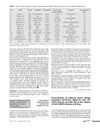
September 2014 in “European Journal of Dermatology” This case report describes a 29-year-old woman with longstanding alopecia areata who experienced improvement in her scalp hair loss after 7 years of topical treatment with squaric acid dibutylester.
 9 citations
,
February 2022 in “Nature communications”
9 citations
,
February 2022 in “Nature communications” This study identified KRT82 as a significant Alopecia Areata risk gene, finding that rare damaging variants are linked to elevated immune cell infiltration around hair follicles in affected individuals.
 8 citations
,
December 2008 in “Journal of The American Academy of Dermatology”
8 citations
,
December 2008 in “Journal of The American Academy of Dermatology” This case report describes the first known instance of fixed drug eruption linked to finasteride, confirmed through an oral challenge test that reproduced symptoms at the same skin site.
8 citations
,
January 2002 in “Piel” Postmenopausal women may experience frontal hairline and eyebrow loss due to cicatricial fibrosis.
 7 citations
,
November 2007 in “Annales de Dermatologie et de Vénéréologie”
7 citations
,
November 2007 in “Annales de Dermatologie et de Vénéréologie” A man was diagnosed with a rare form of lupus after showing unique skin symptoms that responded well to treatment.
 7 citations
,
May 2020 in “Trends in molecular medicine”
7 citations
,
May 2020 in “Trends in molecular medicine” This study explored the immune environment of the hair follicle's bulge region and suggested that its unique signaling may prevent melanoma formation by lacking necessary proinflammatory signals for full oncogenic transformation, indicating potential strategies for melanoma prevention by replicating this immune-privileged environment.
6 citations
,
January 2021 in “Journal of Cosmetic Dermatology” This study found that combining follicular unit extraction with topical calcipotriol betamethasone dipropionate showed the best repigmentation results in treating stable nonsegmental vitiligo.
 6 citations
,
April 2017 in “Experimental dermatology”
6 citations
,
April 2017 in “Experimental dermatology” This study found that B6.CD80CD86−/− mice developed autoimmune-like alopecia with nearly 100% incidence by 40 weeks, making them a promising model for studying human alopecia areata.
6 citations
,
May 2013 in “The Journal of Dermatology” This case study suggests that autoimmunity involving cytotoxic CD8+ T cells may link alopecia areata and human T-cell lymphotropic virus-1-associated myelopathy in adult T-cell leukemia/lymphoma patients.
 5 citations
,
September 1989 in “Journal of The American Academy of Dermatology”
5 citations
,
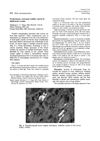
September 1989 in “Journal of The American Academy of Dermatology” This article reports that cocaine injections can lead to skin lesions containing talc crystals at the sites of injection.