1 citations
,
April 2025 in “Phycology” In this review, researchers highlight recent findings on the cosmeceutical applications of phlorotannins from brown seaweeds, emphasizing their promising bioactive properties since 2020.
 April 2025 in “Medical Science”
 This review of existing clinical studies suggests that the ketogenic diet may help women with PCOS improve insulin sensitivity, reduce hyperandrogenism, and lose weight, although its long-term safety and hormonal impact require further investigation.
 January 2024 in “Biotechnology advances”
 This review highlights the importance of selecting high-quality bioassays in discovering bioactive compounds from marine sources, emphasizing their role in evaluating safety and efficacy during pharmaceutical, food supplement, and cosmetic development.
1 citations
,
August 2025 in “Seeds” This review examines the potential of Cucurbitaceae seeds, such as those from watermelon, melon, and pumpkin, as sustainable and innovative ingredients in cosmetics, highlighting their rich bioactive composition and benefits for skin and hair, despite challenges like environmental instability and low permeability.
22 citations
,
December 2020 in “mSphere” This study identified a fungal sulfotransferase enzyme, FgSULT1, from *Fusarium graminearum*, expanding the sulfotransferase superfamily and offering new biocatalytic methods for producing bioactive sulfates.
 21 citations
,
June 2022 in “Molecules”
21 citations
,
June 2022 in “Molecules” This review discusses the phytochemistry and pharmacological activities of Perilla frutescens, detailing its bioactive compounds and their potential health benefits, but reports no new clinical results.
16 citations
,
April 2025 in “Foods” This study highlights the diverse applications of *Perilla frutescens* in traditional medicine, cuisine, and industrial settings, noting its significant antioxidant and antimicrobial properties in experimental models, as well as research efforts to enhance its bioactive content and ensure safety and standardization.
13 citations
,
August 2020 in “Nutrients” This study found that GS-KG9 and GS-E3D, bioactive ginseng extracts, reduced BBB disruption and neuronal apoptosis in the hippocampus of diabetic rats, suggesting potential therapeutic effects for diabetic patients.
5 citations
,
January 2025 in “Pharmaceuticals” This review highlights the potential of Coffea arabica as an active ingredient in skincare, noting its bioactive compounds from leaves and beans show promising anticellulite, anti-inflammatory, antioxidant, and anti-aging properties, with unique phenolic concentrations in leaves offering enhanced skin benefits.
4 citations
,
August 2025 in “Molecules” This study highlights the potential of medicinal plants like Rubus vulgaris and Plantago major as sources for skin disorder treatments due to their bioactive compounds' antioxidant, anti-inflammatory, and antimicrobial effects.
 4 citations
,
July 2023 in “Legume Research - An International Journal”
4 citations
,
July 2023 in “Legume Research - An International Journal” This review integrated findings on the nutritional, pharmacological, and techno-functional properties of Leucaena seeds, highlighting their potential benefits and challenges for human nutrition, particularly due to the presence of the antinutrient mimosine, which can cause adverse effects.
 4 citations
,
December 2009 in “Elsevier eBooks”
4 citations
,
December 2009 in “Elsevier eBooks” This review discusses the nutritional and medicinal benefits of breadfruit and highlights challenges in promoting its consumption, but reports no new empirical findings.
 December 2025 in “CyberLeninK (CyberLeninka)”
 This study evaluated the phytochemical composition of Tamarix aphylla (L.) Karst., revealing the presence of bioactive compounds like alkaloids, flavonoids, and phenolics, which may contribute to its various medicinal properties.
 November 2025 in “Frontiers of Agricultural Science and Engineering”
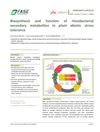
 This study observed that rhizobacterial strain RT3 significantly improved drought tolerance in lettuce by increasing survival rates and fresh biomass after rewatering, with metabolites such as proline and glycine enhancing stress resilience.
June 2024 in “Regenerative Therapy” This review highlights the potential of exosomes as a novel therapeutic approach for skin diseases and aging, due to their stability, transportability, and ability to carry various bioactive compounds to target cells.
 May 2021 in “Austin journal of pharmacology and therapeutics”
 This study explores the medicinal and environmental applications of Physalis species, highlighting the wound healing properties of Physalis angulata L. and the antibacterial and antitumor activities of its fruit extracts.
January 2019 in “International Journal of Plant Animal and Environmental Sciences” This study found that a 50% ethanol extract from marine green alga Chlamydomonas sp. W80 exhibited several bioactive properties, including skin lightening and hair growth promotion effects, with potential implications for bioenergy and high-value coproducts.
 773 citations
,
August 2017 in “International Journal of Molecular Sciences”
773 citations
,
August 2017 in “International Journal of Molecular Sciences” This article reviews the potential advantages of secretome derivatives from human uterine cervical stem cells in MSC therapy and notes the need for regulatory standards to ensure safety and efficacy.
 1 citations
,
October 2022 in “International Journal for Research in Applied Science and Engineering Technology”
1 citations
,
October 2022 in “International Journal for Research in Applied Science and Engineering Technology” This review discusses the diverse applications of algae in non-energy sectors, including pharmaceuticals, food ingredients, pigments, and cosmetics, and reports no new experimental results.
 271 citations
,
May 2019 in “Cells”
271 citations
,
May 2019 in “Cells” This review discusses the therapeutic potential of MSC-derived secretomes for treating degenerative and inflammatory diseases, reporting no new clinical results but highlighting their proposed mechanisms and advantages over direct MSC transplantation.
216 citations
,
February 2022 in “Nanomaterials” This review discusses the potential of electrospun gelatin-based nanofiber dressings for wound healing and skin regeneration, detailing their properties, enhanced functionalities through crosslinking and bioactive components, and their application in treating challenging wound types like burns and diabetic wounds.
57 citations
,
May 2021 in “Molecules” This review explores the chemical composition and biological activities of essential oils from selected aromatic roots, highlighting their potential for various industries, though more research is needed to standardize their bioactive components.
 38 citations
,
January 2013 in “Analyst”
38 citations
,
January 2013 in “Analyst” This study identified the main secondary metabolites in Ziziphus jujuba seeds and confirmed that UPLC-MS/MS and GC-MS effectively demonstrate their pharmaceutical quality.
 31 citations
,
January 2017 in “Phytotherapy Research”
31 citations
,
January 2017 in “Phytotherapy Research” This review reports on the traditional and ethnopharmacological uses of Ziziphus jujuba Mills, noting its increasing global popularity for treating various ailments, but highlights that its acceptance into the European Pharmacopoeia remains unresolved due to scientific and regulatory challenges.
27 citations
,
April 2023 in “Pharmaceuticals” In this review, Ziziphus lotus was reported to have multiple traditional uses and demonstrated various pharmacological properties in lab and animal studies, with over 181 identified bioactive compounds; however, clinical trials are needed to confirm its efficacy as a medicinal agent.
 26 citations
,
May 2021 in “International Journal of Molecular Sciences”
26 citations
,
May 2021 in “International Journal of Molecular Sciences” In this review, researchers examined the physiological benefits of Cheonggukjang, a salt-free fermented soybean paste, highlighting its various health-promoting components that may contribute to improved heart health, diabetes management, and cancer prevention, among other benefits.
 24 citations
,
August 2018 in “Journal of Ayurvedic and herbal medicine”
24 citations
,
August 2018 in “Journal of Ayurvedic and herbal medicine” In this review, the authors summarize the phytochemistry, pharmacology, and medicinal uses of Hibiscus rosa sinensis, highlighting its various benefits such as hypotensive and anti-inflammatory effects, while noting the need for more research on its specific mechanisms and potential toxicities.
 19 citations
,
April 2024 in “Journal of Umm Al-Qura University for Applied Sciences”
19 citations
,
April 2024 in “Journal of Umm Al-Qura University for Applied Sciences” This review explores the diverse roles of rosemary, covering its nutritional and medicinal uses, cosmetic and pharmaceutical applications, and evaluates various extraction methods, with a focus on sustainable practices and commercial prospects.
13 citations
,
November 2023 in “International Journal of Nanomedicine” This review explores the potential of nanofiber scaffolds as an advanced intervention in peripheral nerve regeneration, detailing their fabrication, cellular interactions, controlled bioactive agent release, clinical translation prospects, emerging trends, and biocompatibility considerations for treating peripheral nerve injuries.
13 citations
,
February 2023 in “Biology” This review highlights the potential of cell-free therapies, particularly cell extracts, in addressing radiation-induced salivary gland damage from head and neck cancer treatment, emphasizing their practicality and safety compared to traditional therapies despite incomplete understanding of their bioactive components.