28 citations
,
November 2020 in “Polymers” This study found that crosslinking buffalo gelatin with different methods can modify its properties and potential as a skin substitute, though double-crosslinking may increase immunogenicity slightly.
 2 citations
,
April 2018 in “Natural Product Communications”
2 citations
,
April 2018 in “Natural Product Communications” This review summarizes the bioactive compounds and pharmacological functions of Cynomorium songaricum Rupr., emphasizing its potential in developing health-related products, and notes that further research is needed.
 1 citations
,
November 2023 in “Naunyn-Schmiedeberg's archives of pharmacology”
1 citations
,
November 2023 in “Naunyn-Schmiedeberg's archives of pharmacology” This review focused on the bioactive compounds and pharmacological properties of Lawsonia inermis (henna) and found that it contains various beneficial compounds with potential therapeutic applications, such as antioxidant and anti-inflammatory effects, indicating a need for further investigation into its medical benefits.
 October 2025 in “Interdiciplinary Journal and Hummanity (INJURITY)”
 This study characterized bioactive compounds in extracts from six Kalimantan herbal plants, confirming traditional medicinal uses with findings such as triterpenoids and several potent compounds with antimicrobial and cardiovascular benefits, laying groundwork for potential therapeutic applications and conservation efforts.
 120 citations
,
April 2009 in “Food Chemistry”
120 citations
,
April 2009 in “Food Chemistry” This review examines the pharmacological evidence and bioactive compounds in Hibiscus plants, supporting their potential importance for developing treatments for chronic and degenerative diseases, though more research is needed.
 5 citations
,
February 2020 in “European Food Research and Technology”
5 citations
,
February 2020 in “European Food Research and Technology” This study provides a detailed profile of bioactive polyphenols in various parts of the baobab fruit, highlighting its potential as a health-promoting food or supplement.
 61 citations
,
January 2018 in “Cosmetics”
61 citations
,
January 2018 in “Cosmetics” This review highlights the potential of coffee silverskin's bioactive compounds in combating skin aging and related conditions, suggesting it as a promising natural ingredient for cosmetics due to its antioxidant, anti-inflammatory, and anti-aging properties.
 5 citations
,
October 2025 in “International Journal of Nanomedicine”
5 citations
,
October 2025 in “International Journal of Nanomedicine” This review discusses the role of traditional Chinese medicine and bioactive materials in chronic wound healing and reports no new clinical results.
 September 2025 in “Journal of Phytonanotechnology and Pharmaceutical Sciences”
 This comprehensive review reports on the therapeutic potential and bioactive components of licorice (Glycyrrhiza glabra Linn), highlighting its diverse pharmacological properties and health benefits but also noting associated toxicity and adverse effects in medicinal and food applications.
 2 citations
,
January 2024 in “Journal of Pharmacognosy and Phytochemistry”
2 citations
,
January 2024 in “Journal of Pharmacognosy and Phytochemistry” The study highlights Teak's (Tectona grandis) diverse applications beyond high-quality timber, emphasizing its bioactive compounds' pharmacological potential in cancer treatment and other uses across traditional medicine, cosmetics, and biodiesel production.
 September 2025 in “International Journal of Biology Pharmacy and Allied Sciences”
 In this review, the authors examined the bioactive compounds in rosemary, noting its potential anti-inflammatory, antimicrobial, wound-healing, and anticancer activities, and highlighted its use in traditional medicine and cosmetics for conditions such as aging, baldness, and sun damage.
 13 citations
,
September 2012 in “Critical Reviews in Food Science and Nutrition”
13 citations
,
September 2012 in “Critical Reviews in Food Science and Nutrition” This review discusses the functional and nutraceutical importance of wheat straw, emphasizing its bioactive compounds and potential benefits, and reports no new experimental findings.
 August 2025 in “Fabad Journal of Pharmaceutical Sciences”
 This review highlights the potential medicinal benefits of Cuscuta reflexa, a parasitic plant known for its bioactive compounds, while emphasizing the need for further research to fully understand its therapeutic mechanisms and integrate its use into mainstream medicine.
 March 2024 in “Journal of medicinal plants studies”
 This review comprehensively examines the Hibiscus rosa-sinensis plant, detailing its distribution, physical and chemical properties, bioactive compounds, ethnomedicinal uses, and potential toxicity, providing a broad understanding of its characteristics and health implications.
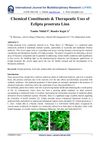 January 2024 in “International Journal For Multidisciplinary Research”
 This review examines existing studies on Eclipta prostrata, highlighting its diverse bioactive compounds and potential therapeutic benefits in traditional medicine, and underscores the need for further research to fully develop its medicinal promise.
 February 2026 in “Journal of Regenerative Medicine and Biology Research”
 This study explores the potential roles of exosomes in anti-aging applications, highlighting their ability to modulate inflammation, promote tissue regeneration, and transfer bioactive molecules to rejuvenate aging tissues and reverse cellular dysfunction.
 6 citations
,
September 2012 in “Clinical Interventions in Aging”
6 citations
,
September 2012 in “Clinical Interventions in Aging” This study found that honokiol inhibits enzymes related to testosterone degradation in vitro, suggesting its potential as a lead compound for developing antiaging bioactive ingredients for men.
 1 citations
,
February 2025 in “Journal of Biomedical Research & Environmental Sciences”
1 citations
,
February 2025 in “Journal of Biomedical Research & Environmental Sciences” This review explores the diverse health benefits and pharmacological properties of mushrooms, highlighting their potential use in cosmetics for antioxidant, anti-aging, and anti-hair loss effects due to their bioactive compounds.
 1 citations
,
June 2023 in “Ethnobotany research and applications”
1 citations
,
June 2023 in “Ethnobotany research and applications” This review examined the medicinal properties of the Ziziphus plant species, highlighting their traditional use in treating various conditions and their bioactive compounds with potential anticancer, antimicrobial, and anti-diabetic effects. The authors concluded that Ziziphus species, particularly jujube, have promising pharmacological activities warranting further investigation.
 January 2026 in “Food and Feed Research”
 This review highlights the traditional medicinal uses, phytochemical composition, and pharmacological properties of Musa paradisiaca, noting its applications in treating diarrhea and other conditions, and identifying key bioactive compounds with antimicrobial, antioxidant, and other bioactivities through in vitro and in vivo studies.
 February 2024 in “International Journal of Scientific Research in Science and Technology”
 This literature review outlines the traditional uses, nutritional composition, and bioactive compounds of pomegranate plants, highlighting their varied pharmacological actions such as antibacterial, antiviral, anticancer, and antioxidant effects, and discusses the peel's chemical composition and toxicology.

This review of Lawsonia inermis L., or henna, details its bioactive compounds and historical uses in Unani medicine, including treatment for various conditions like ulcers and jaundice, while highlighting its potential for wound healing, hepatoprotective, and other effects, though further research is needed.
 December 2023 in “Asian Journal of Pharmaceutical Research and Development”
 This research suggests that phytoestrogen-rich herbal extracts may help reduce hyperandrogenism, insulin resistance, and ovarian weight while promoting ovulation in polycystic ovarian syndrome, indicating potential for discovering new bioactive compounds.
5 citations
,
November 2024 in “Biomedicine & Pharmacotherapy” This study developed a carbohydrate chitosan-based biomaterial combined with a novel peptide to promote the chondrogenic differentiation of human adipose-derived stem cells, suggesting potential clinical applications for cartilage regeneration.
2 citations
,
September 2025 in “Frontiers in Nutrition” This review reports that various bioactive compounds in Aloe vera demonstrate significant anti-inflammatory, antioxidant, antibacterial, and immunomodulatory effects, supporting its validated use in treating metabolic disorders, gastrointestinal recovery, dermatological conditions, and wound healing due to its nutritional and therapeutic properties.
46 citations
,
October 2025 in “Journal of Nanobiotechnology” This review examines the potential of plant-derived exosome-like nanovesicles in dermatology, highlighting their bioactive properties and discussing challenges to their clinical application, but does not provide new clinical results.

This review summarizes the composition, bioactive functions, and potential industrial applications of rice bran polysaccharides, focusing on how extraction methods and modifications impact their biological activities.
 18 citations
,
December 2021 in “Foods”
18 citations
,
December 2021 in “Foods” This study explores the potential of seaweeds as a source of bioactive compounds for food, cosmetics, and medical applications, while highlighting concerns about toxic element accumulation and suggesting purification and nanoencapsulation techniques to enhance safety and stability.
 26 citations
,
December 2016 in “Pharmacology & Therapeutics”
26 citations
,
December 2016 in “Pharmacology & Therapeutics” This review discusses the paracrine properties of cardiac stem cells and pericytes in regenerative medicine for ischaemic diseases and reports no new clinical results.
 February 2025 in “International Journal of Advanced Research in Science Communication and Technology”
 This review highlights the potential benefits of fenugreek seed-based oils for hair health, suggesting they may enhance scalp health and hair growth while reducing conditions like dandruff and hair loss.