
Custom skincare can be made based on genes, fewer cats in Lublin have FeLV/FIV than national average, and studies also looked at small water bodies, river pollution, guppy growth, toxins in biochars, palm oil issues, and pumpkin seed oil for hair strength.

In this study, women with polycystic ovary syndrome showed higher scores in character strengths like hope and judgement compared to those without PCOS.

This study demonstrated that cryogelation of human hair keratin allows the development of 3D scaffolds with tunable properties, supporting cell adhesion and proliferation for potential biomedical applications.
 7 citations
,
January 2018 in “Materials Today: Proceedings”
7 citations
,
January 2018 in “Materials Today: Proceedings” This study found that reinforcing epoxy with short human hair fibers and glass micro-spheres improved its wear resistance, suggesting potential applications in products like brake shoes and pads.
 11 citations
,
February 2019 in “Frontiers in Physiology”
11 citations
,
February 2019 in “Frontiers in Physiology” This review explores the complex interrelationships among different properties of natural hair fibers and underscores the need for a holistic taxonomy to improve data interpretation across disciplines, but it reports no new experimental results.
 379 citations
,
May 2016 in “Cochrane library”
379 citations
,
May 2016 in “Cochrane library” This review concluded that corticosteroids improve muscle strength and function in boys with Duchenne muscular dystrophy over short-term periods, but evidence on prolonging walking ability remains insufficient, and side effects are common.
 45 citations
,
December 2006 in “Biopolymers”
45 citations
,
December 2006 in “Biopolymers” This study found that permanent waving treatment induces structural changes in the cortex proteins of white human hair, significantly reducing its tensile strength without altering the S-S band intensity.
 36 citations
,
April 2013 in “Cell and Tissue Research”
36 citations
,
April 2013 in “Cell and Tissue Research” Bone-marrow and epidermal stem cells help heal wounds differently, with bone-marrow cells aiding in blood vessel formation and epidermal cells in hair growth.
 11 citations
,
July 2021 in “Sustainability”
11 citations
,
July 2021 in “Sustainability” In this study, researchers found that replacing natural aggregates with animal bones and human hair with increased microroughness may improve the mechanical strength and durability of concrete.
8 citations
,
July 2019 in “The journal of investigative dermatology/Journal of investigative dermatology” This study found that the tensile strength of curly hair is influenced by two main components, with springiness (toe region) contributing significantly, unlike in noncurly hair where it is negligible.
 4 citations
,
April 2019 in “Cosmetics”
4 citations
,
April 2019 in “Cosmetics” In this study, the bending stiffness of human hair was linked to the varying proportions of para-like versus ortho-like cortical cells within the hair fiber.
 3 citations
,
September 2020 in “Journal of cosmetic dermatology”
3 citations
,
September 2020 in “Journal of cosmetic dermatology” This study found that coconut oil significantly increased the tensile strength of twisted hair fibers due to its ability to penetrate the hair core, in contrast to mineral oil.
 1 citations
,
March 2019 in “International Journal of Cosmetic Science”
1 citations
,
March 2019 in “International Journal of Cosmetic Science” In this study, researchers developed a regression model that reasonably predicts consumer-perceived hair breakage using various parameters such as hair smoothness, detangling forces, extensional strength, and hair density among Indian women.
This study observed that treating human hair with NaOH led to partially removed cuticles, resulting in better fiber cohesion and mechanical properties similar to wool, unlike bleach or formic acid treatments, which weakened the fibers.
 August 2021 in “Han'gug miyong haghoeji/Journal of the Korean society of cosmetology”
 This study found that using natural polyphenol cross-linkers like tannic acid and green tea extract during perm treatments improved perming efficiency, wave maintenance, and hair protection compared to a control group.
 October 2012 in “Advanced Materials Research”
 This study found that temperature significantly affects the mechanical properties of rabbit hair fibers, with increased tensile strain and decreased breaking strength in humid conditions.
 January 2025 in “International Journal of Advanced Research in Science Communication and Technology”
 This systematic review highlights the potential of herbal shampoos, formulated with ingredients like Neem, Bhringraj, and Aloe Vera, to promote hair growth and reduce dandruff, while also discussing modern techniques and challenges in their development and evaluation.
 106 citations
,
April 2010 in “ACS Nano”
106 citations
,
April 2010 in “ACS Nano” This study found that about 80% of known fullerene-binding proteins rank in the top 10% of scorers for C60 docking sites, confirming the accuracy of the predictive model used.
 29 citations
,
December 1998 in “Seminars in Cutaneous Medicine and Surgery”
29 citations
,
December 1998 in “Seminars in Cutaneous Medicine and Surgery” This review examines recent approvals and emerging treatments for androgenetic alopecia, discussing newly approved drugs like Propecia and Rogaine Extra Strength 5%, but without presenting new clinical results.
 26 citations
,
January 2020 in “Przegląd Menopauzalny”
26 citations
,
January 2020 in “Przegląd Menopauzalny” This review discusses the role of androgens in menopausal women's health, highlighting symptoms of both hyperandrogenemia and androgen deficiency, but reports no clinical results.
 18 citations
,
February 2015 in “Acta Crystallographica Section D: Structural Biology”
18 citations
,
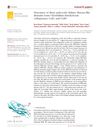
February 2015 in “Acta Crystallographica Section D: Structural Biology” This study reports that Ca 2+ binding alters the dynamics and surface properties of PKD-like domains in Clostridium histolyticum collagenases, enhancing their stability and potentially aiding in collagen-targeting vehicle development.
10 citations
,
February 2018 in “Royal Society Open Science” This study found that a shampoo containing quaternized wheat protein hydrolysate can effectively improve hair recovery by smoothing and compacting damaged hair surfaces, thanks to modifications that enhance protein adherence and disulfide bond formation at pH levels typical in hair care products.
8 citations
,
May 2020 in “International journal of biological macromolecules” In this study, researchers evaluated the binding of keratin-associated proteins and α-keratins to human hair fibers, finding that chemical preactivation significantly enhanced binding to natural hair, while perming altered binding characteristics and increased penetration depth.
 5 citations
,
November 1992 in “Current problems in dermatology”
5 citations
,
November 1992 in “Current problems in dermatology” This review discusses the role of glucocorticoids in treating severe inflammatory disorders and highlights their potential adverse effects, recommending dosage management to minimize these risks; no new clinical results are reported.
 4 citations
,
January 2017 in “Biological & pharmaceutical bulletin”
4 citations
,
January 2017 in “Biological & pharmaceutical bulletin” This study found that inhibiting arachidonate 12-lipoxygenase (ALOX12) may enhance hair cuticle maturation by increasing S100A3 protein citrullination and promoting cuticular differentiation in isolated human hair follicles.
 July 2026 in “bioRxiv (Cold Spring Harbor Laboratory)”
 In this study, researchers found that the efflux of calcium in root hairs of Arabidopsis thaliana, particularly through the ER-localized ACA2 and ACA7, is crucial for modulating cytoplasmic calcium signals and enabling proper root hair growth, with disruptions leading to impaired elongation.
January 2026 in “Dermatologic Therapy” This study found that elevated tissue RBP4 levels correlate with disease severity in alopecia areata and decrease after effective baricitinib treatment, while the rs3758539 polymorphism is linked to disease susceptibility but not to treatment response.
 April 2024 in “Journal of pharmacy & pharmacognosy research”
 This study used in silico analysis to identify 4-[2-(4-nitrophenyl)ethylcarbamoyl]benzenesulfonyl as a potential inhibitor of the EGFR mutant associated with NSCLC, highlighting the need for further in vitro and in vivo validation.
11 citations
,
January 2024 in “Regenerative Biomaterials” This research reported that a newly developed dually crosslinked gelatin-alginate-based hydrogel scaffold enhances mechanical strength, promotes corneal tissue regeneration, and reduces scarring in rabbit models, suggesting potential applications in corneal tissue engineering.
 6 citations
,
August 2014 in “Spectroscopy Letters”
6 citations
,
August 2014 in “Spectroscopy Letters” This study reported that the calculated and experimental electronic and vibrational properties of minoxidil were in good agreement, providing detailed insights into its molecular structure and thermal behaviors.