41 citations
,
March 2016 in “The Journal of Clinical Endocrinology & Metabolism” This study suggests that patients with STSD show a different pattern in androgen activation compared to healthy controls, potentially due to increased 5α-reductase activity and absent prepubertal serum DHEA surge.
 23 citations
,
May 2019 in “Expert Opinion on Therapeutic Patents”
23 citations
,
May 2019 in “Expert Opinion on Therapeutic Patents” This review discusses AR-modulating agents developed between 2012 and 2018, highlighting challenges with ligand-binding domain antagonists and proposing nonconventional approaches targeting other domains as promising strategies.
 June 2025 in “Current Issues in Molecular Biology”
 In this laboratory study, Cucumis melo var. makuwa leaf extract significantly reduced DHT-induced apoptosis in human dermal papilla cells by modulating androgen receptor activity and gene expression, suggesting potential as a therapy for androgenetic alopecia.
 3 citations
,
July 2018 in “JAAPA”
3 citations
,
July 2018 in “JAAPA” This article reviews how to identify and manage androgenic alopecia caused by hormonal contraceptives but reports no new clinical findings.
 22 citations
,
November 2011 in “Journal of Analytical Toxicology”
22 citations
,
November 2011 in “Journal of Analytical Toxicology” This review discusses the relevance of human androgen receptor action in sports doping and examines the potential of cell-based biological assays for detecting androgenic anabolic steroid use, without presenting new research findings.
April 2026 in “ACS Applied Materials & Interfaces” In this study, researchers developed a probiotic-based microneedle system combining Weissella cibaria and clascoterone to target androgenetic alopecia, which in a mouse model improved hair density, vascular regeneration, and reduced inflammation, suggesting a promising treatment approach.
 October 2023 in “Facial Plastic Surgery”
 This study discusses current treatments for androgenetic alopecia like minoxidil and finasteride and highlights emerging therapies including regenerative medicine and low-level laser therapy due to some patients not responding well to standard options.
 22 citations
,
January 1995 in “The American Journal of Medicine”
22 citations
,
January 1995 in “The American Journal of Medicine” This article reviews the negative effects of androgenic disorders and highlights that newer oral contraceptives with less androgenic progestins may reduce these effects and improve compliance, but it reports no new results.
 21 citations
,
February 2019 in “Experimental Dermatology”
21 citations
,
February 2019 in “Experimental Dermatology” The authors conclude that optimizing hair shaft production and appearance may best be achieved by integrating biological, chemical, and physical intervention strategies.
 21 citations
,
October 2017 in “Journal of Investigative Dermatology”
21 citations
,
October 2017 in “Journal of Investigative Dermatology” This review discusses recent advances in understanding the molecular landscape of the dermal papilla, particularly focusing on Blimp1's role in hair follicle development and potential therapeutic targets for hair regeneration, but presents no new clinical results.
 6 citations
,
January 2021 in “International Journal of Molecular Sciences”
6 citations
,
January 2021 in “International Journal of Molecular Sciences” This study suggests that finasteride treatment in male rats can lead to changes in liver carbohydrate metabolism and may result in metabolic disruptions and liver steatosis in their offspring.
 4 citations
,
June 2025 in “Medeniyet Medical Journal”
4 citations
,
June 2025 in “Medeniyet Medical Journal” This review explores the role of the TMPRSS2 gene in facilitating SARS-CoV-2 infection and its potential as a therapeutic target in COVID-19 and other respiratory infections, highlighting challenges in developing selective inhibitors.
January 2026 in “Dermatologic Therapy” This review highlights a disconnect between mechanistic insights and physiological relevance in preclinical models of hair loss disorders and suggests a shift toward more human-relevant systems could enhance translational research, despite limitations in existing models like transgenic mice and xenografts.
 January 2018 in “Elsevier eBooks”
 This article discusses the hypothalamus-pituitary-testis axis in androgen production and spermatogenesis but presents no new research findings.
 August 2012 in “Pharmaceutical Medicine”
 The document concludes that various medications and treatments can have significant, sometimes adverse, effects on health outcomes.
 October 2021 in “Cosmoderma”
 This review summarizes existing knowledge on diffuse and patterned alopecia, emphasizing recent advancements in treatment beyond FDA-approved options, but it reports no new clinical findings.
 16 citations
,
January 2003 in “Nuclear Receptor Signaling”
16 citations
,
January 2003 in “Nuclear Receptor Signaling” Androgens and SARMs play a role in body mass, frailty, skin health, and hair growth, and are used in treating prostate cancer, acne, and hair loss, with potential for new uses and improved versions in the future.
 18 citations
,
April 2001 in “Bioorganic & Medicinal Chemistry Letters”
18 citations
,
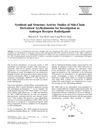
April 2001 in “Bioorganic & Medicinal Chemistry Letters” This study identified the N-(iodopropenyl) derivative 13 as a promising candidate for development as a radioiodinated androgen receptor ligand due to its binding affinity.
 15 citations
,
October 2017 in “Dermatologic Clinics”
15 citations
,
October 2017 in “Dermatologic Clinics” This abstract discusses advancements in hair transplantation technology, highlighting the role of robotics and follicular unit extraction/grafting in achieving excellent clinical outcomes, with adjuvant treatments like platelet-rich plasma, lasers, and stem cells potentially improving the durability and appearance of results.
 11 citations
,
August 2009 in “Expert Opinion on Drug Discovery”
11 citations
,
August 2009 in “Expert Opinion on Drug Discovery” This review discusses current challenges in selective androgen receptor modulator discovery and preclinical evaluation and reports no new results, emphasizing the need for basic research to improve safety and selectivity.
 8 citations
,
January 2003 in “JEADV. Journal of the European Academy of Dermatology and Venereology/Journal of the European Academy of Dermatology and Venereology”
8 citations
,
January 2003 in “JEADV. Journal of the European Academy of Dermatology and Venereology/Journal of the European Academy of Dermatology and Venereology” This study describes three female cases of androgen-dependent diseases in myotonic dystrophy, suggesting that peripheral androgen response, rather than serum levels, may drive such conditions.
 4 citations
,
April 1999 in “Dermatologic Clinics”
4 citations
,
April 1999 in “Dermatologic Clinics” Androgens, like DHT, affect hair growth and treatments like finasteride may help.
 402 citations
,
August 2011 in “Cancer research”
402 citations
,
August 2011 in “Cancer research” This study found that castration-resistant prostate cancers resistant to CYP17A1 inhibitors may still depend on steroids and could respond to therapies targeting de novo intratumoral steroid synthesis.
 1 citations
,
November 2008 in “Acta crystallographica”
1 citations
,
November 2008 in “Acta crystallographica” This study reports the crystallization of the human androgen receptor's ligand-binding domain with nonsteroidal ligands, which may aid in understanding the differences in binding compared to steroidal ligands.
 19 citations
,
October 2017 in “The FASEB Journal”
19 citations
,
October 2017 in “The FASEB Journal” This study established an androgen-responsive human organ culture model using hair follicles, demonstrating that women's intermediate facial follicles grow more hair in response to men's higher androgen levels.
 114 citations
,
March 2018 in “PLOS Medicine”
114 citations
,
March 2018 in “PLOS Medicine” This study found that women with polycystic ovary syndrome have higher rates of nonalcoholic fatty liver disease, with androgen excess contributing to the risk.
 82 citations
,
May 2016 in “Best Practice & Research in Clinical Obstetrics & Gynaecology”
82 citations
,
May 2016 in “Best Practice & Research in Clinical Obstetrics & Gynaecology” This article outlines the clinical features, evaluation, and treatment strategies for androgen excess in polycystic ovary syndrome, highlighting important diagnostic and management approaches but reporting no new research results.
 14 citations
,
September 2015 in “Expert Opinion on Therapeutic Targets”
14 citations
,
September 2015 in “Expert Opinion on Therapeutic Targets” This review discusses potential treatments for androgen excess in polycystic ovary syndrome and reports no new findings, emphasizing the importance of individualized antiandrogenic management to minimize side effects.
 1 citations
,
September 2012 in “Expert Review of Endocrinology & Metabolism”
1 citations
,
September 2012 in “Expert Review of Endocrinology & Metabolism” This review discusses the clinical implications of female androgen deficiency and evaluates treatment options, emphasizing the need for cautious use of replacement therapy in women with severe deficiency and matching symptoms.
 December 2023 in “Frontiers in endocrinology”
 This review explores the role of hyperandrogenism, including adrenal-derived 11-oxygenated androgen, in the development of polycystic ovarian syndrome and discusses potential therapeutic strategies targeting androgen excess, without reporting new clinical results.