 1 citations
,
September 2023 in “Journal of the American Academy of Dermatology”
1 citations
,
September 2023 in “Journal of the American Academy of Dermatology” This abstract introduces baricitinib as an approved treatment for adults with severe alopecia areata in the US, Europe, and Japan, but does not report any specific study results or findings.
 January 2024 in “Clinical and Experimental Dermatology”
 In this study, baricitinib treatment over an average of 18.5 months resulted in a 72% reduction in alopecia severity scores among patients aged 65 or older, with mild adverse effects and no severe complications reported.
 3 citations
,
March 2017 in “Regulatory toxicology and pharmacology”
3 citations
,
March 2017 in “Regulatory toxicology and pharmacology” In this study, aleglitazar and its metabolite M6 were evaluated for safety in non-clinical settings, revealing organ-targeting effects common to PPAR agonists but no significant tumor increase in rat carcinogenicity studies, supporting progression to Phase 3 clinical trials.
May 2025 in “Immunotherapy” This study observed that patients with alopecia areata taking ritlecitinib reported higher satisfaction with hair growth after 24 and 48 weeks compared to those taking a placebo, aligning with improvements in hair growth noted by doctors.
July 2026 in “Journal of the American Academy of Dermatology” 7 citations
,
July 2023 in “Immunotherapy” Ritlecitinib works well and is safe for treating alopecia areata.
 12 citations
,
November 2006 in “Journal of thoracic oncology”
12 citations
,
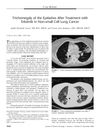
November 2006 in “Journal of thoracic oncology” This case report describes a patient with non-small cell lung cancer who experienced trichomegaly (excessive eyelash growth) as a side effect of erlotinib treatment without developing typical skin rash.
 November 2025 in “SKIN The Journal of Cutaneous Medicine”
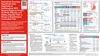
 This phase 3 trial found that over 50% of adolescents with severe alopecia areata achieved successful hair regrowth after 52 weeks on baricitinib 4-mg, with no new safety concerns reported compared to existing safety profiles.
 5 citations
,
February 2024 in “Clinical Pharmacokinetics”
5 citations
,
February 2024 in “Clinical Pharmacokinetics” This study found that modeling and simulation effectively informed decision-making and dose selection for ritlecitinib in treating alopecia areata, supporting an accelerated drug development strategy.
June 2026 in “British Journal of Dermatology” In this study, real-world data of 31 patients using ritlecitinib for severe alopecia areata showed that 51% achieved significant hair regrowth after one year, with no serious adverse events reported, emphasizing the importance of considering treatment duration for response.
 234 citations
,
September 2004 in “Clinical cancer research”
234 citations
,
September 2004 in “Clinical cancer research” In this Phase II study, BAY 43–9006, taken orally for renal cell carcinoma, stabilized disease in 30% of patients, with 40% responding positively, although the targets remain unclear.
1 citations
,
September 2015 In this report, two cases of non-small cell lung cancer treated with gefitinib showed unexpected hair growth, suggesting a potential new application of EGFR-TKIs for alopecia.
1 citations
,
January 2025 in “CPT Pharmacometrics & Systems Pharmacology” In this study, the researchers evaluated the exposure-response relationship of ritlecitinib on eyebrow and eyelash regrowth and concluded that the established models justify selecting a 50 mg dose for patients with severe alopecia areata, while highlighting differing efficacy among evaluation methods.
 3 citations
,
March 2023 in “JAAD case reports”
3 citations
,
March 2023 in “JAAD case reports” This study describes three cases where patients with recalcitrant alopecia areata achieved complete hair regrowth on the scalp after treatment with upadacitinib, suggesting it may be beneficial for similar cases, especially those with comorbid atopic dermatitis.
March 2025 in “Journal of Investigative Dermatology”  9 citations
,
June 2014 in “Nutrition and Cancer”
9 citations
,
June 2014 in “Nutrition and Cancer” This study found that hydro-alcoholic Eclipta alba extract may have anticancer and multidrug resistance-reversal effects in animal models, suggesting potential as an adjunctive agent in tumor chemotherapy.
 15 citations
,
January 2014 in “Medicinal chemistry”
15 citations
,
January 2014 in “Medicinal chemistry” This study conducted molecular docking and ADME property analysis on 144 newly designed isatin analogs, suggesting they exhibit lead-like properties for targeting EGFR enzymes.
7 citations
,
January 2009 in “BMJ Case Reports” This report describes a rare case of a non-small-cell lung cancer patient experiencing hair changes after prolonged gefitinib treatment, potentially linked to EGFR inhibition, with limited understanding of its cause.
 1 citations
,
January 2024 in “NPJ breast cancer”
1 citations
,
January 2024 in “NPJ breast cancer” This study, using modified Delphi panels, provided consensus recommendations for managing alpelisib-induced hyperglycemia and rash, advising prophylactic metformin starting for certain risk groups and the use of nonsedating H1 antihistamines and topical steroids for initial rash management.
 April 2024 in “Journal of pharmacy & pharmacognosy research”
 This study used in silico analysis to identify 4-[2-(4-nitrophenyl)ethylcarbamoyl]benzenesulfonyl as a potential inhibitor of the EGFR mutant associated with NSCLC, highlighting the need for further in vitro and in vivo validation.
In this study, a strong positive correlation was found between clinician-reported and patient-reported measures for assessing eyebrow and eyelash hair loss in patients with severe alopecia areata, indicating high agreement during treatment with baricitinib over 52 weeks.
58 citations
,
March 2019 in “Frontiers in Pharmacology” This study found that wedelolactone from Eclipta prostrata L. significantly reduced lung inflammation and fibrosis in mice with bleomycin-induced pulmonary fibrosis, suggesting potential therapeutic benefits through AMPK activation.
 November 2023 in “Dermatologica sinica/Zhōnghuá pífūkē yīxué zázhì”
 In this case report, upadacitinib was used to treat a 21-year-old female with severe alopecia areata, resulting in significant hair regrowth; however, rapid hair loss recurred soon after discontinuing the drug, illustrating its potential efficacy as well as the risk of relapse upon stopping treatment.
2 citations
,
September 2023 in “Journal of the American Academy of Dermatology” Baricitinib is a safe and effective treatment for severe alopecia areata.
 3 citations
,
June 2023 in “Journal of cosmetic dermatology”
3 citations
,
June 2023 in “Journal of cosmetic dermatology” This study reported improvement in an 11-year-old boy with refractory alopecia areata after 4 months of treatment with oral abrocitinib, a JAK1 inhibitor, suggesting it may be a potential alternative for pediatric patients unresponsive to conventional therapies.
 93 citations
,
May 2010 in “European Journal of Cancer”
93 citations
,
May 2010 in “European Journal of Cancer” This phase II trial found that BI 2536 demonstrated limited antitumor activity across five solid tumor types, with no confirmed objective responses observed.
7 citations
,
November 2023 in “JAAD Case Reports” This study highlights the recent FDA approval of baricitinib as the first on-label treatment for severe alopecia areata, whereas previous treatments were off-label therapies like systemic steroids and immunosuppressants.
July 2026 in “Journal of the American Academy of Dermatology” November 2024 in “Skin Appendage Disorders” This review provides insights and guidelines for clinicians and patients on assessing the risks and benefits of ritlecitinib for adolescents with alopecia areata, emphasizing shared decision-making and management strategies.
14 citations
,
January 2025 in “Journal of Dermatological Treatment” In this multicenter retrospective study, 61.5% of Italian patients with severe alopecia areata achieved significant hair improvement after 52 weeks of treatment with baricitinib, with no major safety issues reported, indicating long-term effectiveness in a real-world setting.