 59 citations
,
January 2002 in “Dermatology”
59 citations
,
January 2002 in “Dermatology” This study suggests the existence of a new subtype of alopecia, called 'acute diffuse and total alopecia of the female scalp (ADTAFS)', characterized by acute, diffuse hair loss primarily in women and a rapid recovery.
April 2025 in “Sabuncuoglu Serefeddin Health Sciences” This study highlights the public health significance of androgenic-anabolic steroid use disorder, emphasizing health risks, societal effects, and the need for routine AAS analyses in forensic autopsies, especially in athlete deaths.
March 2023 in “Oxford University Press eBooks” 
This study reports on a new semantic annotation approach used to identify substances in MEDLINE abstracts responsible for adverse drug reactions, with promising performance shown by a prototype system.
1 citations
,
November 2003 in “Humana Press eBooks” This article discusses the use of atomic force microscopy for examining human hair surfaces in dermatology, cosmetics, and forensic science, but presents no new research findings.
January 2017 in “The American Pharmacists Association eBooks” January 2017 in “The American Pharmacists Association eBooks” January 2026 in “Elsevier eBooks” June 2026 in “The Journal of Sexual Medicine” This study found that psychiatric adverse drug reactions were more frequently reported with finasteride than with dutasteride, but it remains unclear if there is a causal relationship.
 December 2024 in “Brazilian Journal of Health Review”
 This article reviews the general, pathophysiological, diagnostic, and therapeutic aspects of alopecia frontal fibrosante, highlighting its irreversible nature and the importance of early diagnosis, but it reports no new clinical results.
This study found that the Arabidopsis thaliana protein Formin 2 localizes to plasmodesmata and is crucial for regulating their permeability by anchoring actin filaments, which affects virus susceptibility.
 2 citations
,
August 2021 in “Journal of Clinical Psychopharmacology”
2 citations
,
August 2021 in “Journal of Clinical Psychopharmacology” This case report describes an 8-year-old girl with ADHD who experienced reversible eyebrow alopecia after initiating atomoxetine treatment, with no further occurrences when the medication was reintroduced.
 December 2025 in “Journal of Pakistan Association of Dermatologists”
 This case report highlights a rare instance of erosive pustular dermatosis of the scalp in a patient on afatinib, underlining the importance of early recognition and management of this adverse effect.
 2 citations
,
May 2025 in “Frontiers in Pharmacology”
2 citations
,
May 2025 in “Frontiers in Pharmacology” In this study, analysis of FDA data revealed a substantial risk of dermatologic adverse events with aromatase inhibitors, especially anastrozole and exemestane, highlighting the importance of dermatologic monitoring during such therapies.
January 2005 in “Psychoneuroendocrinology” In this study, finasteride altered the expression of nine proteins in the rat nucleus accumbens, suggesting new therapeutic targets and mechanisms for its effects on neuropsychiatric conditions.
April 2004 in “Medisch-Farmaceutische Mededelingen” Finasteride may help reduce prostate cancer risk.
August 2023 in “Journal of Investigative Dermatology” In this meta-analysis, researchers found that oral dutasteride may stabilize or improve frontal fibrosing alopecia in patients, but results varied widely, and further controlled studies are needed to confirm its effectiveness as a treatment option.
 April 2018 in “Journal of Investigative Dermatology”
 This study suggests that weekly oral finasteride may be a promising alternative to isotretinoin for treating nodulocystic acne, showing substantial improvements with lower incidence of sexual dysfunction.
1 citations
,
April 2017 in “Journal of Investigative Dermatology” Abatacept may help some people with alopecia areata regrow hair.
43 citations
,
November 2009 in “Archives of dermatology” This study found that alefacept showed no significant improvement in treating severe alopecia areata compared to placebo over a 24-week period.
32 citations
,
February 2018 in “Spectrochimica acta. Part A, Molecular and biomolecular spectroscopy” This study successfully used ATR FT-IR spectroscopy to uniquely identify or differentiate human hairs by detecting specific spectral features associated with individual hair characteristics and cosmetic residues on hair surfaces.
10 citations
,
May 2020 in “International Journal of Molecular Sciences” This study suggests that human hair follicles may serve as a model for molecular analysis of ABCA4 gene splice-site variants, facilitating research into the pathogenicity of ABCA4 retinopathies.
6 citations
,
January 2004 in “Der Hautarzt” 
This study indicates that finasteride use may lower bladder cancer incidence, while androgen suppression therapy improves recurrence-free survival but not other survival outcomes in bladder cancer patients.
 39 citations
,
July 2015 in “British Journal of Dermatology”
39 citations
,
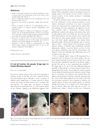
July 2015 in “British Journal of Dermatology” This article discusses the pseudo 'fringe sign' in frontal fibrosing alopecia, highlighting that it is not solely related to traction, and it reports no new clinical results.
This glossary abstract does not present new research findings but provides definitions of medical and anatomical terms relevant to various procedures and conditions.