11 citations
,
December 2024 in “Wound Repair and Regeneration” In this study, researchers created the WRAHPS Guidelines to standardize the reporting of preclinical wound healing studies, aiming to improve transparency, enable comparative analysis, and support the development of human clinical trials for wound healing disorders.
 6 citations
,
March 2009 in “Journal of the European Academy of Dermatology and Venereology”
6 citations
,
March 2009 in “Journal of the European Academy of Dermatology and Venereology” This study found no increased frequency of the TNF2 allele in Mexican patients with adverse cutaneous drug reactions mediated by delayed hypersensitivity, suggesting its lower relevance compared to findings in Caucasian populations.
1 citations
,
September 2010 in “UEF eRepo (University of Eastern Finland)” This study provides insight into AR-mediated gene activation and the molecular mechanisms of prostate cancer progression and drug resistance, identifying potential avenues for developing new therapies.
 2 citations
,
January 2011 in “Elsevier eBooks”
2 citations
,
January 2011 in “Elsevier eBooks” This book reviews the various types of acne and acneiform conditions, as well as their treatment options, with expert insights from multiple fields.
 20 citations
,
March 2020 in “Journal of Asthma”
20 citations
,
March 2020 in “Journal of Asthma” This review discusses the challenges in diagnosing and managing asthma in older adults and reports no new results; the authors emphasize the importance of addressing comorbidities and potential medication adverse events.
July 2026 in “Journal of the American Academy of Dermatology” CRT is more effective than oral minoxidil alone for treating hair loss.
3 citations
,
January 2007 in “Korean Journal of Pediatrics” This case study reported that zinc supplementation improved skin lesions and diarrhea in a 4-month-old breast-fed infant with transient acrodermatitis enteropathica, even though her serum zinc level was nearly normal.
 November 2014 in “Hair transplant forum international”
 This article features a profile of the ABHRS/IBHRS as part of a series on regional societies and reports no new clinical findings.
 August 2025 in “BMJ Open”
 In this randomized controlled trial, researchers are assessing the efficacy and safety of acupoint catgut embedding combined with topical 5% minoxidil in treating androgenetic alopecia among 70 men, with primary outcomes focusing on changes in hair count after 24 weeks of treatment.
48 citations
,
August 1998 in “Journal of the American Academy of Dermatology” This review discusses the structural differences between black and white skin, noting that black skin has more compact stratum corneum, larger melanosomes, and increased transepidermal water loss.
1 citations
,
June 2006 in “Experimental dermatology” In this study, researchers identified similar presence of various nicotinic and muscarinic AChRs in lesional and normal epidermis, suggesting that tobacco-delivered nicotine may exacerbate acne inversa by interacting with endogenously produced acetylcholine.
 June 2023 in “British journal of dermatology/British journal of dermatology, Supplement”
 This case report identified a distinct pattern of scarring alopecia with folliculocentric noncaseating granulomas, linked with granulomatous dermatitis in the breast, as a potential cutaneous manifestation of rheumatoid arthritis.
 1 citations
,
August 2021 in “Journal of The American Academy of Dermatology”
1 citations
,
August 2021 in “Journal of The American Academy of Dermatology” This study evaluates the effectiveness and safety of 2-mg and 4-mg doses of baricitinib in patients with alopecia areata who have lost at least 50% of their scalp hair, comparing outcomes between those with early and late onset of the disease.
17 citations
,
January 2015 in “JOURNAL OF CLINICAL AND DIAGNOSTIC RESEARCH” This report presents a case of Cronkhite-Canada syndrome in an elderly Indian male, adding to the approximately 450 cases documented worldwide, but introduces no new results about the condition.
11 citations
,
April 1997 in “International Journal of Dermatology” This article discusses using topical tretinoin with intralesional triamcinolone acetonide for alopecia areata in northern Saudi Arabia, but it reports no new clinical findings.
 46 citations
,
November 1995 in “The Journal of Dermatology”
46 citations
,
November 1995 in “The Journal of Dermatology” This study found that immunotherapy with DNCB or DPCP showed better therapeutic effects than intralesional triamcinolone acetonide for patients with bald areas greater than 50 cm², including alopecia totalis and universalis.
 2 citations
,
October 2022 in “The journal of investigative dermatology/Journal of investigative dermatology”
2 citations
,
October 2022 in “The journal of investigative dermatology/Journal of investigative dermatology” This study found that Aire‒/‒ mice spontaneously developed persistent AA-like lesions, highlighting a potential role for AIRE in hair follicle biology and pathogenesis of alopecia areata.
 11 citations
,
September 2011 in “British Journal of Dermatology”
11 citations
,
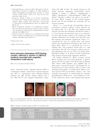
September 2011 in “British Journal of Dermatology” New ABCA12 gene mutations were linked to a skin condition with scaling and hair loss, and a treatment helped with hair loss in a related case.
 2 citations
,
May 2023 in “JAAD Case Reports”
2 citations
,
May 2023 in “JAAD Case Reports” This article discusses the lack of information on central centrifugal cicatricial alopecia's manifestations in Black men and reports no new clinical findings; the authors emphasize the need for further study in this population.
March 2025 in “International Journal of Trichology” This literature review found that Janus kinase inhibitors may help achieve remission in patients with refractory primary neutrophilic cicatricial alopecias, though data is limited to small case series and reports.
 1 citations
,
July 2025 in “SKIN The Journal of Cutaneous Medicine”
1 citations
,
July 2025 in “SKIN The Journal of Cutaneous Medicine” In this study, ritlecitinib 50-mg showed clinically meaningful efficacy, with improvements in the Severity of Alopecia Tool score observed in patients with alopecia areata over a 3-year period, demonstrating long-term benefit in both clinician- and patient-reported outcomes.
April 2017 in “The Journal of urology/The journal of urology” This Cochrane review reports that 5-alpha reductase inhibitors may slightly reduce urological symptoms and acute urinary retention risk compared to placebo, with a possible small reduction in surgical intervention need compared to alpha blockers.
September 2025 in “Value in Health” January 2010 in “Actas dermo-sifiliográficas/Actas dermo-sifiliográficas” Chemical relaxers may cause scarring alopecia in black women.
This study outlines treatment strategies for autoimmune alopecia areata, detailing that while mild cases may resolve on their own, severe cases often require intervention, with new JAK inhibitors like baricitinib and ritlecitinib emerging as promising treatments for those not responding to traditional therapies.

Men with CCCA often face delayed diagnosis and severe hair loss, highlighting the need for earlier recognition and treatment.
 7 citations
,
September 2017 in “Pharmacoepidemiology and Drug Safety”
7 citations
,
September 2017 in “Pharmacoepidemiology and Drug Safety” This study observed a strong overall reduction in the use of CPA/EE in the Netherlands, despite similar proportions of users with acne or other hyperandrogenic conditions before and after the referral procedure.
 September 2013 in “Hair transplant forum international”
 This article discusses the formation and membership of the British Association of Hair Restoration Surgeons and reports no clinical findings.
 23 citations
,
March 1994 in “Fertility and sterility”
23 citations
,
March 1994 in “Fertility and sterility” This study found that oral contraceptives effectively suppressed hyperandrogenemia in most patients with hyperandrogenic-insulin-resistant acanthosis nigricans syndrome, though GnRH-a therapy was beneficial for those not responding initially.
 March 2025 in “Pediatric Rheumatology”
 This study found that clinicians frequently prefer cyclophosphamide over rituximab for induction therapy of childhood-onset systemic lupus erythematosus and ANCA-associated vasculitis, following a high-dose regimen recommended by the NIH.