15 citations
,
April 2011 in “The journal of investigative dermatology/Journal of investigative dermatology” This study found that A(3)B(5) downregulates melanin production and suppresses melanoma cell growth by promoting proteasomal degradation of TRP-2.
26 citations
,
October 2019 in “JNCI Cancer Spectrum” This clinical study observed that in patients with advanced breast cancer and BRCA1/2 mutations, talazoparib provided significantly better progression-free survival, objective response, clinical benefit, and patient-reported outcomes compared to physician’s choice chemotherapy, despite common side effects like anemia and fatigue.
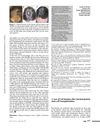 May 2018 in “European Journal of Dermatology”
 Adjusting the medication tacrolimus resolved a boy's red nail beds after a stem cell transplant.
5 citations
,
July 2017 in “International journal of endocrinology and metabolism/International journal of endocrinology and metabolism.” This study described the clinical and genetic features of two Iranian siblings with hereditary vitamin D resistant rickets, identifying a specific VDR gene mutation contributing to their symptoms.
June 2026 in “JAAD Case Reports” 13 citations
,
April 1994 in “Baillière's clinical endocrinology and metabolism” This review discusses inherited forms of vitamin D-dependent rickets and explains their genetic and metabolic causes but reports no new clinical findings.
July 2013 in “Revista da Universidade Vale do Rio Verde” In this study on short-term flutamide treatment in mice, no significant changes were observed in estrous cycle phases, but further research is needed to explore potential reproductive effects.
 June 2026 in “Frontiers in Immunology”
 In this case report, a 57-year-old man with severe atopic dermatitis, vitiligo, and alopecia areata showed rapid and significant improvement after treatment with the JAK1 inhibitor upadacitinib, suggesting its potential as an effective monotherapy for these co-existing conditions when conventional therapies fail.
 8 citations
,
August 2009 in “Pediatric transplantation”
8 citations
,
August 2009 in “Pediatric transplantation” This report presents a case where a patient with Omenn syndrome, complicated by cytomegalovirus infection, was successfully treated using reduced intensity conditioning allogeneic HSCT from a sibling donor.
 68 citations
,
April 2014 in “Journal of Molecular Endocrinology”
68 citations
,
April 2014 in “Journal of Molecular Endocrinology” This review summarizes existing knowledge on androgen receptor activity in breast cancer and reports no new clinical findings, with emphasis on therapies targeting androgen signaling in specific BC subtypes.
This study found that holding abatacept infusions for four weeks or longer before elective hip or knee arthroplasty did not reduce the risk of post-operative infections or readmissions.
1 citations
,
November 2023 in “SKIN The Journal of Cutaneous Medicine”  December 2005 in “Endocrine-related cancer”
 This case report describes a 57-year-old woman's virilizing adrenal tumor effectively treated with the antiandrogen cyproterone acetate, which led to symptom reversal and tumor resolution.
5 citations
,
April 2025 in “Journal of the European Academy of Dermatology and Venereology” The EADV Task Force on Hair Diseases reviewed existing literature and clinical experience to propose diagnostic and therapeutic recommendations for managing folliculitis decalvans, highlighting oral antibiotics, glucocorticosteroids, isotretinoin, and various systemic and topical therapies as key options for managing inflammation and preventing further hair loss.
 November 2023 in “European medical journal. Dermatology”
 This summary from the EADV Congress, chaired by Ulrike Blume-Peytavi and Sergio Vaño-Galván, provided an overview of diagnosing and treating alopecia, but specific results and conclusions from the session were not reported in the abstract.
 March 2005 in “Journal of the American Academy of Dermatology”
 Bexarotene 1% topical gel helped some patients with alopecia areata regrow hair.
 1 citations
,
October 2025 in “Frontiers in Immunology”
1 citations
,
October 2025 in “Frontiers in Immunology” In this study, researchers analyzed adverse events linked to avacopan using FDA data, finding no high-priority safety concerns but identifying five potential new adverse events, including alopecia, primarily among American patients, and noting a higher risk of liver dysfunction in Japanese patients.
 3 citations
,
March 2014 in “Annals of Hepatology”
3 citations
,
March 2014 in “Annals of Hepatology” This case report describes irreversible alopecia universalis following discontinuation of Peg-IFN/RBV treatment for chronic hepatitis C, highlighting potential autoimmune side effects of interferon-based therapies.
 17 citations
,
April 2004 in “Acta Clinica Belgica”
17 citations
,
April 2004 in “Acta Clinica Belgica” This study found that ultraviolet light-enhanced visualization can detect subtle skin changes linked to carotene and vitamin A deficiency, which improved with dietary correction in deficient individuals.
May 2010 in “OPAL (Open@LaTrobe) (La Trobe University)” This research discusses potential cancer vaccine strategies using cell-based and DNA vector-based approaches, and suggests targeting the v3 splice variant of thioredoxin reductase 1 to inhibit cancer cell motility and metastasis formation.
March 2002 in “Hair transplant forum international” This article discusses the FDA approval of dutasteride for benign prostatic hypertrophy and explores its potential role in treating androgenetic alopecia but reports no new clinical findings.
February 2017 in “Cancer Research” In this study involving women undergoing taxane-based chemotherapy, a twice-daily topical application of BPM31543 was well-tolerated and showed potential in reducing severe hair loss, prompting further investigation at higher doses.
 3 citations
,
September 2020 in “Molecular Brain”
3 citations
,
September 2020 in “Molecular Brain” This study reports that Elvitegravir, a drug currently approved for other uses, shows potential as a neuro- and mitoprotective agent by attenuating mitochondrial damage caused by NMDA receptors in primary mouse cortical neurons.
36 citations
,
January 2010 in “Journal of Pediatric Endocrinology and Metabolism” This study identified a novel nonsense mutation in the VDR gene in two patients with hereditary vitamin D resistant rickets and alopecia, leading to resistance to 1,25-dihydroxyvitamin D3.
 1 citations
,
February 2024 in “JEADV. Journal of the European Academy of Dermatology and Venereology/Journal of the European Academy of Dermatology and Venereology”
1 citations
,
February 2024 in “JEADV. Journal of the European Academy of Dermatology and Venereology/Journal of the European Academy of Dermatology and Venereology” In this research, the authors reported that long-term treatment with the JAK1/JAK2 inhibitor baricitinib effectively maintains hair regrowth in patients with severe alopecia areata and may gradually improve outcomes for partial responders over 104 weeks, without increasing side effect incidence.
 January 2023 in “International Journal of Contemporary Pediatrics”
 This case study describes a 5-year-old boy with vitamin D dependent rickets type 2, motor delays, and alopecia totalis who showed improved biochemical parameters with calcium and calcitriol treatment.
 2 citations
,
August 2021 in “The Journal of Urology”
2 citations
,
August 2021 in “The Journal of Urology” This study reported that seminal vesiculoscopy combined with transurethral resection of ejaculatory ducts and balloon dilation effectively resolved hematospermia and improved symptoms in a patient whose condition was unresponsive to medical treatments.
 April 2012 in “The Journal of Urology”
 This case-control study found that men with earlier onset androgenetic alopecia, particularly frontal balding, may have an increased risk of prostate cancer in a multiethnic veterans cohort.
9 citations
,
October 2014 This chapter hypothesizes that vitamin D signaling in the skin may suppress UV radiation-induced epidermal tumor formation, reviewing potential mechanisms without reporting new clinical results.
 March 2020 in “QJM: An International Journal of Medicine”
 In this study, significant improvements in Androgenetic Alopecia were observed with both PRP and SVF therapies, with SVF showing greater effectiveness in increasing terminal and vellus hair counts.