December 2020 in “Lasers in Surgery and Medicine”
 In this study, using a 1064 nm picosecond Nd:YAG laser effectively removed undesirable scalp micropigmentation in four patients within 1–3 treatment sessions, with no unexpected adverse events reported.
1 citations
,
July 2024 in “Journal of lasers in medical sciences” This case study reports that treating a female patient with facial partial unilateral lentiginosis using a 532-nm Nd:YAG fractional picosecond laser resulted in significant improvement in pigmentation without notable side effects, indicating it may be an effective and well-tolerated treatment option.
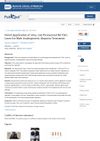
In this pilot study, researchers found that fractional picosecond laser therapy may promote hair regrowth in men with mild-to-moderate androgenetic alopecia, with significant improvements in expert assessments and patient satisfaction observed over a four-month period, though further research is needed to confirm these findings.
19 citations
,
August 2018 in “Journal of the American Academy of Dermatology” In this study, the researchers found that the picosecond pulsed alexandrite laser (PSAL) may be as effective and safe as the Q-switched alexandrite laser (QSAL) for treating freckles in Chinese patients.
 April 2023 in “Journal of Investigative Dermatology”
 In this study, Nd:YAG picosecond lasers using fractional micro-lens array were found to have a comparable effect to ablative fractional Er:YAG lasers in treating atrophic acne scars, with better safety profiles but slightly less patient satisfaction.