 December 2013 in “Appetite”
 This study identified a nonfunctional Itpr3 gene in BTBR mice, attributed to a 12-bp deletion, which likely causes their simultaneous hair loss and taste perception deficits.
 6 citations
,
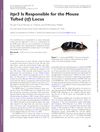
October 2012 in “Journal of Heredity”
6 citations
,
October 2012 in “Journal of Heredity” This study identified the Itpr3 gene as responsible for the tufted hair loss phenotype in the BTBR mouse strain.
 19 citations
,
May 2012 in “The journal of investigative dermatology/Journal of investigative dermatology”
19 citations
,
May 2012 in “The journal of investigative dermatology/Journal of investigative dermatology” This study found that mice lacking the type 3 IP(3) receptor in their hair follicles experienced repetitive hair loss and regrowth, indicating disrupted hair-cycle regulation potentially linked to specific signaling pathways.
 5 citations
,
February 2019 in “bioRxiv (Cold Spring Harbor Laboratory)”
5 citations
,
February 2019 in “bioRxiv (Cold Spring Harbor Laboratory)” This study found that in a mouse model of Leigh syndrome, rapamycin alters brain proteome and may extend survival by targeting protein kinase C.
 26 citations
,
December 2020 in “Nature metabolism”
26 citations
,
December 2020 in “Nature metabolism” Martin-Perez et al. show that rapamycin's beneficial effects in a mouse model of Leigh syndrome are linked to the downregulation of protein kinase C.