42 citations
,
September 2002 in “The Journal of Comparative Neurology”
This study found that in the dorsal horn's lamina III, most afferent boutons form synapses with presynaptic boutons immunoreactive for GABA and/or glycine, influencing sensory pathways.
This study suggests that hair-follicleafferentaxons can be presynaptically inhibited by boutons containing the enzyme glutamic acid decarboxylase, which is linked to the synthesis of γ-aminobutyric acid.
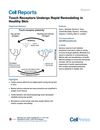
This study reveals that somatosensory neurons in mouse skin exhibit structural plasticity during hair-follicle regeneration, which may temporarily impair the reliability of encoding gentle touch.
43 citations
,
November 1988 in “The Journal of Comparative Neurology”
This study examined the sensory innervation of hairfollicles in the furry skin of rat hindlimbs, finding significant differences among hair types in their innervation patterns and densities.
Hairfollicle stem cells remain in bald individuals, but progenitor cells do not, raising questions about hair regrowth claims by Pelage. PP405 is discussed as a potential treatment, with skepticism about its effectiveness compared to existing treatments like Minoxidil and Finasteride.
Hairfollicles are mostly dormant but can be reactivated with treatments like minoxidil, finasteride, and microneedling. A new drug, PP405, shows promise for hair regrowth but may not be available until 2027-2028.
The conversation discusses using hairfollicle dermal papilla exosomes for hair loss treatment. It inquires about purchasing options for this treatment.
Hairfollicle cloning is claimed to be possible but not widely available due to potential safety issues, such as cancer risks. Current treatments like finasteride and dutasteride are not effective for everyone, and there is frustration over limited access to these medications.
Hairfollicle regeneration through stem cell rearrangement is discussed, focusing on bioengineered cellular structures rather than traditional hair transplants. Treatments mentioned include Minoxidil, finasteride, and RU58841.
Hair transplantation moves DHT-resistant follicles from a donor area (back and sides of the scalp) into thinning or bald areas. The transplanted hair is generally permanent, though surrounding native hair can keep thinning.