9 citations
,
July 2020 in “JAMA dermatology” This study explored dermatoscopic and histopathologic findings of central centrifugal cicatricial alopecia beyond the vertex scalp, suggesting that dermatoscopy might serve as a less invasive diagnostic tool for subclinical disease.
 1 citations
,
December 2021 in “Annals of the College of Medecine”
1 citations
,
December 2021 in “Annals of the College of Medecine” This study found that yellow dots, black dots, exclamation mark hairs, broken hairs, and nail changes observed through dermoscopy are related to the severe form of alopecia areata.
 66 citations
,
November 2011 in “Journal of The American Academy of Dermatology”
66 citations
,
November 2011 in “Journal of The American Academy of Dermatology” This study concluded that a polarized-light handheld dermatoscope attached to a digital camera is a practical and useful tool for diagnosing different types of alopecia.
 10 citations
,
March 2014 in “International Journal of Dermatology”
10 citations
,
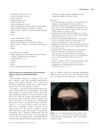
March 2014 in “International Journal of Dermatology” This report describes a case of postoperative pressure-induced alopecia in a 5-year-old girl following liver transplantation, suggesting that scalp dermatoscopy may help differentiate this condition from alopecia areata.
September 2025 in “Journal of Clinical Medicine” This study found that patients with vitiligo and alopecia areata had significantly higher serum granulysin levels compared to healthy controls, indicating a potential pathogenic role and suggesting that elevated levels may serve as a biomarker for monitoring disease activity, particularly in active vitiligo cases.