This study evaluated amphiphilic self-assembling peptides as drug delivery systems and found they effectively ensured prolonged release and therapeutic efficacy for timolol in glaucoma and for chemotherapy agents in cancer treatment, with significant tumor size reduction observed in animal models.
 39 citations
,
April 2019 in “Journal of Biomaterials Science, Polymer Edition”
39 citations
,
April 2019 in “Journal of Biomaterials Science, Polymer Edition” This review discusses recent research and applications of RADA16 and RADA16-based peptide scaffolds in biomedicine, including their roles in tissue repair and drug delivery, but reports no new clinical results.
 150 citations
,
June 2014 in “Biomaterials”
150 citations
,
June 2014 in “Biomaterials” This study found that 'smart' peptide hydrogels improved wound healing in a rat model of partial thickness burns, achieving greater wound closure and faster debridement compared to a standard treatment.
 28 citations
,
December 2011 in “Biocatalysis and biotransformation”
28 citations
,
December 2011 in “Biocatalysis and biotransformation” This study found that a peptide treatment using Protein disulphide isomerase improved the mechanical and thermal properties of over-bleached hair by promoting deeper peptide penetration and attachment.
 86 citations
,
March 2018 in “ACS Biomaterials Science & Engineering”
86 citations
,
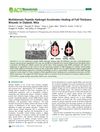
March 2018 in “ACS Biomaterials Science & Engineering” This study found that MDP hydrogel significantly accelerated wound healing and improved tissue formation in diabetic mice compared to a standard clinical hydrogel and control buffer.