1 citations
,
April 2023 in “American Journal of Clinical Dermatology”
1 citations
,
April 2023 in “American Journal of Clinical Dermatology” This review determined that chronic telogen effluvium lacks a consistent definition and may often be misdiagnosed, as it could represent either early female pattern hair loss or secondary telogen effluvium without identified causes.
 4 citations
,
January 2021 in “Skin appendage disorders”
4 citations
,
January 2021 in “Skin appendage disorders” This review discusses the complex causes of trichodynia and reports no clinical results; the authors call for more research into neural and immune interactions in scalp conditions.
 56 citations
,
August 2019 in “Clinical, Cosmetic and Investigational Dermatology”
56 citations
,
August 2019 in “Clinical, Cosmetic and Investigational Dermatology” This essay discusses telogen effluvium, the issues surrounding its diagnosis and differentiation from other forms of hair loss, and emphasizes the need for empathetic patient care; it reports no new clinical findings.
 18 citations
,
January 2016 in “Skin appendage disorders”
18 citations
,
January 2016 in “Skin appendage disorders” The paper suggests improving diagnosis and treatment of telogen effluvium but does not recommend a new classification system.
 14 citations
,
January 2013 in “International Journal of Trichology”
14 citations
,
January 2013 in “International Journal of Trichology” This review discusses physician-patient dynamics in managing hair loss and highlights the emotional impacts, emphasizing the need for effective communication and patient education, but it reports no new clinical findings.
 45 citations
,
January 2012 in “International Journal of Trichology”
45 citations
,
January 2012 in “International Journal of Trichology” This study reported that trichoscopy is a more effective diagnostic tool than the trichogram for early diagnosis of FAGA, regardless of hair shaft diversity cut-off levels.
 60 citations
,
October 2009 in “Dermatology”
60 citations
,
October 2009 in “Dermatology” This article proposes a hypothesis for alopecia areata hair loss patterns and provides epidemiological evidence supporting distinct hair loss characteristics between general cases and those with androgenetic alopecia; it presents no new clinical results.
 37 citations
,
January 2009 in “Dermatology”
37 citations
,
January 2009 in “Dermatology” This study reports that hair growth and shedding in healthy women show annual seasonal patterns, with the highest shedding in summer and a less pronounced peak in spring.
 19 citations
,
December 2008 in “Journal of The American Academy of Dermatology”
19 citations
,
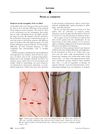
December 2008 in “Journal of The American Academy of Dermatology” This study suggests that yellow dots observed in scalp videodermoscopy are not highly specific to alopecia areata, as they appear in various types of alopecia.
 48 citations
,
January 2002 in “Dermatology”
48 citations
,
January 2002 in “Dermatology” In this study, hair pain (trichodynia) was reported by a significant portion of patients with hair loss, but it did not correlate with the cause or activity of the condition.
 59 citations
,
January 2002 in “Dermatology”
59 citations
,
January 2002 in “Dermatology” This study suggests the existence of a new subtype of alopecia, called 'acute diffuse and total alopecia of the female scalp (ADTAFS)', characterized by acute, diffuse hair loss primarily in women and a rapid recovery.
 42 citations
,
September 2000 in “British Journal of Dermatology”
42 citations
,
September 2000 in “British Journal of Dermatology” This report describes two children with congenital hypotrichosis and found their short hair is due to a shortened anagen phase, with the condition resolving spontaneously during puberty.
 214 citations
,
March 1993 in “Archives of Dermatology”
214 citations
,
March 1993 in “Archives of Dermatology” This article proposes five different mechanisms for telogen effluvium, supported by clinical findings, based on changes in different phases of the hair cycle.
 83 citations
,
April 1992 in “Clinical Endocrinology”
83 citations
,
April 1992 in “Clinical Endocrinology” This study found that treatment with cyproterone acetate and ethinyl oestradiol increased hair density in women with diffuse androgen-dependent alopecia, particularly when serum ferritin levels were above 40 μg/l.
 124 citations
,
August 1990 in “British Journal of Dermatology”
124 citations
,
August 1990 in “British Journal of Dermatology” Diffuse alopecia in women may be related to androgens and iron deficiency, and basic hormone and nutrient screening is useful.