3 citations
,
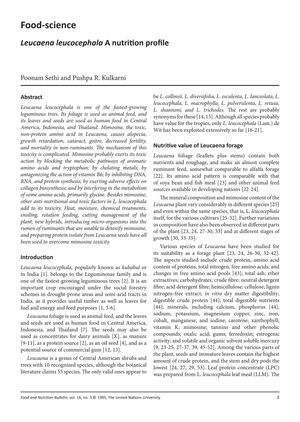
December 2020 in “Pharmaceutical Sciences and Research” This study found that using 70% ethanol as a solvent for extracting unsoaked Leucaena leucocephala seeds produces a high extract yield while managing mimosine levels, indicating potential for nutraceutical use.
May 2018 in “Pakistan journal of nutrition” This study found that feeding sheep rations with up to 30% Leucaena leucocephala leaf meal did not significantly affect mimosine concentrations or alter blood metabolites and thyroid hormones, suggesting it can be used without detrimental effects in these aspects.
 4 citations
,
July 2023 in “Legume Research - An International Journal”
4 citations
,
July 2023 in “Legume Research - An International Journal” This review integrated findings on the nutritional, pharmacological, and techno-functional properties of Leucaena seeds, highlighting their potential benefits and challenges for human nutrition, particularly due to the presence of the antinutrient mimosine, which can cause adverse effects.
 10 citations
,
March 2015 in “American journal of primatology”
10 citations
,
March 2015 in “American journal of primatology” This study found that ringtailed lemurs consuming leucaena in Berenty absorb mimosine, which causes alopecia without affecting body condition or organ toxicity; this may increase infant mortality due to alopecic mothers.
 December 2019 in “University of Malaya Students Repository”
 This study found that Soxhlet extraction is more effective at removing the toxin mimosine from Leucaena leucocephala, and mimosine shows promise as a biodiesel additive due to its antioxidative properties.