TLDR Low-level light therapy safely increases hair growth in various types of hair loss.
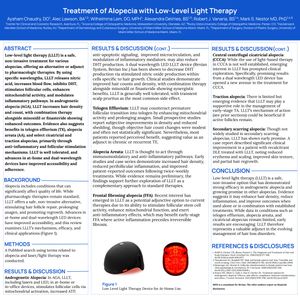
Low-level light therapy (LLLT) is a safe and non-invasive treatment for various types of alopecia, including androgenetic alopecia (AGA), telogen effluvium (TE), alopecia areata (AA), and some cicatricial and traction alopecias. It works by releasing nitric acid, increasing blood flow, inhibiting DHT, stimulating follicular cells, enhancing mitochondrial activity, and modulating inflammatory pathways. LLLT has been shown to increase hair density and count, especially when used in combination with minoxidil or finasteride. The therapy is well tolerated, and advancements in at-home and dual-wavelength devices have made it more accessible and improved patient adherence.

17 citations
,
November 2021 in “Journal of Cosmetic Dermatology” Combination therapies for androgenetic alopecia work best but can have significant side effects and costs.
11 citations
,
March 2021 in “Cleveland Clinic Journal of Medicine” Treating hair loss in both men and women is effective and improves quality of life.
37 citations
,
May 2016 in “Deutsches Arzteblatt International” Hair loss requires customized treatments based on its various causes and types.
100 citations
,
June 2006 in “British Journal of Dermatology” Hair loss severity relates to increased miniaturization in female pattern hair loss.
47 citations
,
December 2020 in “Journal of the European Academy of Dermatology and Venereology” The document concludes that understanding and treating hair loss requires recognizing its various types and using appropriate diagnostic tools and treatments.
7 citations
,
March 2019 in “Medicine” Combining light therapy and microneedling shows promise for treating female hair loss.
November 2024 in “Health Science Reports” Light/laser therapy can effectively increase hair density in some types of alopecia, especially androgenic alopecia and alopecia areata.
21 citations
,
May 2016 in “The Cochrane library” Topical minoxidil helps treat female pattern hair loss, but more research needed for other treatments.
40 citations
,
July 2017 in “Frontiers in Medicine” Early and personalized treatment for hair loss in young people is crucial to prevent permanent damage and should include psychological support.
43 citations
,
November 2019 in “American Journal of Clinical Dermatology” FAGA diagnosis uses blood tests and trichoscopy, with treatments like topical minoxidil, oral anti-androgens, and hormone-modulating drugs.