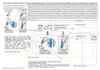
TGF-Beta. Good or Bad? Help for treatment investment Treatment 7/26/2022
TGF-B affects hair growth, both causing stem cell division and death depending on amounts. Amplifica's treatment injects Scube3 to increase TGF-B for hair growth.
View this post in the Community โ
Similar Community Posts Join
5 / 86 results
community Compressed part of research of theory of androgenic/anabolitic balance. AGA h-responders analytic. Theory of physio-metabolitic method of anti AGA treatment
The treatment for androgenetic alopecia involves using finasteride and minoxidil with intense exercise and cold exposure to boost metabolism and reduce androgenic effects, potentially leading to hair regrowth. This approach may activate biological pathways for improved hair and overall health.
community Why is Minoxidil not enough for hair loss? (No fin)
Minoxidil alone is often insufficient for treating hair loss because it doesn't address the DHT-related cause. Combining it with finasteride, a DHT blocker, is generally more effective.
community HLT Megathread on HMI-115 (key takeaways in comments)
HMI-115, a newly discovered hair loss treatment that could potentially be effective for those with diffuse thinning and telogen effluvium. It is based on prolactin receptor antagonist signaling and has already undergone Phase I trials in women, with potential commercialization by 2027.
community A new study by Deng and colleagues set out to explore differences between balding and non balding scalps...
Balding scalps have more androgen receptors, leading to increased TGF-beta, which causes blood vessel loss and hair follicle miniaturization. Blocking androgen signaling and TGF-beta may help prevent hair loss.
community Possible topical option for preventing BDNF-related hair loss
The conversation discusses hair loss linked to BDNF-increasing nootropics like Semax and Lions Mane. Suggested topical treatments include capsaicin, beta-glucan, and ginseng to counteract TGF-B activation.
Related Research
6 / 1000+ results
research Hedgehog signaling reprograms hair follicle niche fibroblasts to a hyper-activated state
Overactivating Hedgehog signaling makes hair follicle cells in mice grow hair faster and create more follicles.
research Progress on mitochondria and hair follicle development in androgenetic alopecia: relationships and therapeutic perspectives
Maintaining healthy mitochondria may help treat hair loss.
research Human Fetal Scalp Dermal Papilla Enriched Genes and the Role of R-Spondin-1 in the Restoration of Hair Neogenesis in Adult Mouse Cells
Certain genes are more active in baby scalp cells and can help grow hair when added to adult mouse skin cells.
research Signal Peptide-CUB-EGF-like Domain-Containing Protein 3 (SCUBE3): From Molecule to Therapy
SCUBE3 is a potential target for cancer and alopecia treatment but is challenging to target due to its varied roles.
research Hair Dermal papilla maintain its hair inducing characteristics via autocrine exosomal miR-23a-3p
Hair growth is maintained by specific cell signals.
research Self-Assembled Peptide Hydrogels in Regenerative Medicine
Peptide hydrogels show promise for healing skin, bone, and nerves but need improvement in stability and compatibility.