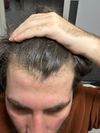
Switched from FIN to DUT, hairline/temples worse Finasteride/Dutasteride 1/28/2026
Switching from finasteride to dutasteride and oral minoxidil worsened hair thinning at the hairline and temples. The user is considering returning to finasteride, as dutasteride may not be effective for them.
View this post in the Community →
Similar Community Posts Join
5 / 5 resultscommunity A friend suggested I post here. I've been using tretinoin .05% for 3 months and I've had regrowth in my temples and hairline. Just tretinoin, no Minoxidil or fin/dut
Tretinoin alone has led to hair regrowth in the temples and hairline. The user is considering oral minoxidil or dutasteride but prioritizes health first.
community Another update. Almost a year on Dutasteride and Oral Minoxidil, after several years on finasteride and topical minoxidil. I’m fairly certain my hair is objectively worse than it was 5 months ago.
A user's experience with hair loss treatments, including Dutasteride, Oral Minoxidil and Finasteride; potential side effects; and the potential of using anti-androgens or microneedling.
community i got more results 1 month 5 mg oral minoxidil and 1 mg dutasteride then i did 6 months on finasteride and topical minoxidil
A user reported better hair regrowth with 5 mg oral minoxidil and 1 mg dutasteride than with finasteride and topical minoxidil, calling topical minoxidil a scam. Replies varied, with some defending topical minoxidil, questioning the user's application method, and suggesting that previous treatments might be contributing to the observed results.
community Seeking Advice on Dutasteride and Oral Minoxidil Effectiveness After 1 Year, Considering Finasteride
The user is experiencing continued hair loss despite using dutasteride and oral minoxidil, and is considering adding finasteride or adjusting their current treatment. They are seeking advice on whether to change their approach due to lack of improvement, especially at the temples and crown.
community 6.5 months on oral fin + topical min - still losing ground at the hairline. Time to consider dutasteride?
A 23-year-old male has been using oral finasteride and topical minoxidil for 6.5 months but is concerned about continued hairline recession and thinning. He is considering switching to dutasteride, while others suggest being patient, trying oral minoxidil, or using topical finasteride.
Related Research
6 / 6 results
research Hair Restoration—Nonsurgical and Surgical Approaches
Hair restoration can be achieved through non-surgical treatments like minoxidil, antiandrogens, phototherapy, and PRP procedures, or through surgical methods like hair transplantation. Continued treatment is needed to maintain results, and full results are visible after 12-18 months.

research Androgenetic, Diffuse and Senescent Alopecia in Men: Practical Evaluation and Management
This review discusses the evaluation and management of male baldness and related conditions, but reports no new clinical results.

research Androgenetic Alopecia: a Review and Emerging Treatments
This review covers the pathogenesis, diagnosis, and potential new treatments for androgenetic alopecia but reports no new clinical findings, highlighting an ongoing need for effective therapies.

research Interventions for female pattern hair loss
This review found that while topical minoxidil is effective for treating female pattern hair loss, finasteride showed no more effectiveness than placebo, and low-level laser therapy increased hair count but with inconsistent results.
research The state‐of‐the‐art in the management of androgenetic alopecia: A review of new therapies and treatment algorithms
This abstract outlines a guide reviewing both FDA-approved and off-label therapies for androgenetic alopecia and proposes treatment algorithms based on scientific research, highlighting a gap in common treatments for this prevalent condition.

research Frontal Fibrosing Alopecia: A Review
This review compiles existing data on frontal fibrosing alopecia and highlights the promise of 5-alpha reductase inhibitors as a treatment option, while noting the need for clarity on its cause and progression.