Finasteride journey from 18-21 9/26/2026
Similar Community Posts Join
5 / 5 resultscommunity M21. Fin/Dut/Minox hair loss jorney
A 21-year-old shares their hair loss journey, starting treatment at 18 with finasteride, oral minoxidil, biotin, and vitamins, later switching to dutasteride and increasing minoxidil dosage due to receding temples. They experienced shedding phases but report overall hair health improvement and no side effects from the medications.
community My experimental hair loss journey under medical supervision: finasteride/dutasteride, oral/topical minoxidil+tretinoin (3-month progress and hair transplant insights for those considering it)
A 23-year-old discusses their hair loss treatment using finasteride, dutasteride, oral and topical minoxidil, and topical tretinoin under medical supervision. They stress stabilizing hair loss before a hair transplant and plan to continue the regimen for at least 18 months.
community 4 years apart (17-21) on treatment
A user shared their hair loss journey, starting treatments with topical minoxidil and finasteride at 17, and later adding oral versions and dutasteride by age 20, but still experiencing hair loss. Others suggested that the treatments have likely slowed the progression, and some recommended considering a hair transplant or adjusting medication, while expressing concerns about the potential side effects of starting such treatments at a young age.
community Hairline getting better each day.
An 18-year-old shares their successful hair regrowth journey using finasteride 1mg daily, topical minoxidil twice a day (mixed with tretinoin 0.025% at night), ketoconazole shampoo 2-3 times a week, and occasional dermarolling. They report no side effects and emphasize the importance of consistency and early intervention.
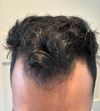
community M26 - Day 1 Fin + Min Hairloss Journey - Updating weekly for 6 months
A 26-year-old is starting a hair loss treatment using 1mg oral finasteride daily, 5% topical minoxidil foam twice daily, 2% ketoconazole shampoo weekly, and microneedling once a week. They noticed worsening hair loss over the past year and are seeking advice.
Related Research
6 / 6 resultsresearch Topical Delivery of Atraric Acid Derived from Stereocaulon japonicum with Enhanced Skin Permeation and Hair Regrowth Activity for Androgenic Alopecia
In this study, researchers developed a new topical atraric acid formulation, AA-TF#15, which showed a significantly higher drug penetration and increased hair regrowth in mice compared to minoxidil and finasteride treatments, suggesting its potential effectiveness for treating scalp androgenic alopecia.
research Testosterone Down-regulates Expression of αVβ3-integrin, E-cadherin and Mucin-1 during Uterine Receptivity Period in Rats
This study found that testosterone administration reduced the expression of uterine receptivity molecules in ovariectomized rats, which may negatively affect early pregnancy establishment and female fertility.
research The genetically programmed hair growth cycle and alopecia: what is there to know?
This review discusses recent advances in hair follicle research, highlighting therapeutic and cosmetic applications, but reports no new study results.
research Human Hair Follicle: An Update on Biology and Perspectives in Hair Growth Disorders Treatment
This review explores the molecular controls of hair follicle cycling and highlights the challenge of developing effective treatments for common hair disorders without providing new clinical results.
research Farmácia São Lázaro - Porto e nos Serviços Farmacêuticos do Hospital Privado de Vila Real (Grupo Trofa Saúde) - Vila Real
This report covers an internship at a pharmacy and hospital where multiple pharmaceutical activities were examined, including the preparation of individualized medication and the comparison of drugs for hypercholesterolemia treatment.
research Therapeutic Effect of Superficial Scalp Hypothermia on Chemotherapy-Induced Alopecia in Breast Cancer Survivors
This article reviews the pathophysiology of chemotherapy-induced alopecia and reports that scalp cooling can reduce hair loss by 50% in patients with early breast cancer receiving chemotherapy, without compromising survival or increasing scalp metastasis risk.