12 Months DUT and MIN. Is this a normal amount of regrowth for this timeframe? 9/1/2026
The user has been taking oral dutasteride (DUT) and minoxidil (MIN) for 12 months, seeing some hair regrowth but questioning if it's typical for this timeframe. Suggestions include adding microneedling, topical minoxidil, or considering a hair transplant for further improvement.
View this post in the Community →
Similar Community Posts Join
6 / 6 results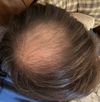
community Dutasteride and Minoxidil User Considering Microneedling vs HT for Crown
The user is considering microneedling versus a hair transplant (HT) for crown hair loss while currently using dutasteride and oral minoxidil. They are hesitant about microneedling due to potential scarring but are open to trying it before deciding on a hair transplant.
community Anyone having little results with dutasteride and oral minoxidil
Dutasteride and oral minoxidil are not yielding noticeable results for some users, with some considering alternatives like microneedling or hair transplants. Others report slowed hair loss but no regrowth, and some experience side effects or minimal improvement, leading to frustration and consideration of different treatments.
community 23M - 6 months of Oral Dutasteride and Minoxidil
A 23-year-old male has been using oral Dutasteride and Minoxidil for six months to address hair loss but sees no improvement. Users suggest continuing the treatment for at least a year, considering a hair transplant, or trying additional treatments like microneedling or topical Minoxidil.
community 10 months Minoxidil 2.5mg and 8 months Dutasteride 0.5mg - Before/After
A 29-year-old man used oral Minoxidil and Dutasteride for hair loss, seeing significant regrowth, especially in the crown area, but plans a hair transplant for the temples. Users suggest waiting longer before a hair transplant and trying additional treatments like microneedling and topical Minoxidil.
community Progress after 5 months of 0.5 mg Dutasteride and 2.5 Mg oral minoxidil. I am considering a transplant eventually so strengthening the base area and doner areas. Suggestions on if I should continue the dosage for sometime before opting for a transplant or should I immediately go for it?
OP is using 0.5 mg Dutasteride and 2.5 mg oral Minoxidil for hair loss and considering a hair transplant. Most users suggest waiting 1-2 years to maximize results from the medication before opting for a transplant.
community 2 years on Dutasteride/Minox, so much hair loss, not sure where to go from here
The user has been experiencing increased hair loss despite using Dutasteride, Minoxidil, and microneedling, and is considering switching back to Finasteride. They are exploring other options like hair transplants, oral Minoxidil, and red light therapy but are concerned about side effects and effectiveness.
Related Research
6 / 6 resultsresearch O IMPACTO DO USO PERIOPERATÓRIO DA DUTASTERIDA (ORAL E MESOTERAPIA) NOS RESULTADOS ESTÉTICOS DO TRANSPLANTE CAPILAR: UMA REVISÃO DE LITERATURA
This study reports that perioperative use of dutasteride, both orally and through mesotherapy, may enhance hair graft survival and reduce shock loss in patients undergoing hair transplantation for androgenetic alopecia.
research Minoxidil: a comprehensive review
This study reported that while topical minoxidil exhibits hair regrowth in androgenetic alopecia, oral minoxidil 5 mg/day was more effective than topical forms after six months, with low doses also potentially effective for women and other hair loss types.
research Platelet-rich plasma in androgenetic alopecia
This expert group provided recommendations for preparing and using platelet-rich plasma in treating androgenetic alopecia, suggesting a manual double-spin method and specific dosing, although further studies on injectable platelet-rich fibrin are needed.
research Female pattern hair loss—An update
This article discusses the causes, diagnosis, and treatment options for female pattern hair loss, emphasizing the role of topical minoxidil as a primary treatment, but provides no new clinical results.
research Treatment of frontal fibrosing alopecia: literature review 2020-2025
In this narrative review, researchers evaluated existing literature on the treatment of frontal fibrosing alopecia, finding that while no curative treatment exists, clinical improvements can be achieved through personalized and combined therapy approaches.
research Beard Alopecia: An Updated and Comprehensive Review of Etiologies, Presentation and Treatment
This review provides a detailed overview of the causes, prevalence, pathophysiology, clinical presentation, and treatment of beard alopecia, highlighting conditions such as alopecia areata, pseudofolliculitis barbae, and tinea barbae, and aims to serve as a resource for clinicians handling such cases.