5 citations
,
July 2014 in “Journal of X-Ray Science and Technology” This study suggests that hair analysis could serve as a diagnostic tool for detecting calcium channel activity, which influences hair calcium levels and may indicate calcium deficiency or related disease states.
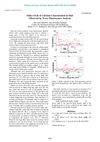
Hair can show daily calcium changes, linked to body calcium levels and influenced by hormones, and can help assess calcium metabolism issues.
5 citations
,
January 1997 in “Journal of Occupational Health” The method effectively maps lead and zinc in hair, aiding understanding of heavy metal exposure risks.
11 citations
,
March 2023 in “Frontiers in Nutrition” This study found that a modest increase in dietary zinc over six months resulted in a detectable increase in sulfur and zinc counts in individual hairs, suggesting a non-invasive method to monitor zinc intake effects.
 September 2001 in “PubMed”
 This study developed a non-destructive X-ray fluorescence technique to quantitatively analyze elemental content in human hair and constructed a database of element concentrations in healthy Swedish, Caucasian individuals.