 1 citations
,
December 2020 in “Journal of Experimental Biology and Agricultural Sciences”
1 citations
,
December 2020 in “Journal of Experimental Biology and Agricultural Sciences” This article reviews the structure, genomic organization, and pathogenesis of SARS-CoV-2 and discusses current efforts in prevention and treatments for COVID-19 without reporting new clinical results.
 December 2025 in “Al-Iraqia Medical College Journal”
 This study explored the relationships between virus susceptibility to infection and several factors, finding that higher heat tolerance and larger virus size correlated positively with infection susceptibility, while high humidity and higher mutation rates correlated inversely among eight RNA viruses, including SARS-CoV-2 and influenza.

Custom skincare can be made based on genes, fewer cats in Lublin have FeLV/FIV than national average, and studies also looked at small water bodies, river pollution, guppy growth, toxins in biochars, palm oil issues, and pumpkin seed oil for hair strength.
 September 2023 in “Small animal advances”
 This case report from Veterinary Clinical Complex, Kurumbapet, India, described a kitten with superficial dermatophytosis caused by Microsporum spp., which was successfully treated using itraconazole syrup, cetirizine, and a liver-supportive syrup, achieving complete recovery by the third week without adverse effects.
 32 citations
,
June 2017 in “Journal of infection/The Journal of infection”
32 citations
,
June 2017 in “Journal of infection/The Journal of infection” This source discusses the diagnosis and treatment of Tinea capitis in children, highlighting that Trichophyton tonsurans is the prevalent cause in the UK and that terbinafine is an effective treatment option.
 26 citations
,
August 2020 in “Dermatology Research and Practice”
26 citations
,
August 2020 in “Dermatology Research and Practice” This review discusses the various skin manifestations and problems related to COVID-19 and associated treatments, but it reports no new clinical findings.
 20 citations
,
September 2020 in “Journal of Translational Medicine”
20 citations
,
September 2020 in “Journal of Translational Medicine” This overview highlights the exploration of mesenchymal stromal cells as potential treatments for COVID-19, noting their regenerative and immunomodulatory properties for reducing ARDS severity in critically ill patients, but it provides no new clinical results.
 10 citations
,
January 2016 in “Global Dermatology”
10 citations
,
January 2016 in “Global Dermatology” This study observed that zinc deficiency in humans and mice was associated with diminished allergic contact dermatitis but increased severity and duration of irritant contact dermatitis.
 7 citations
,
December 2011 in “Elsevier eBooks”
7 citations
,
December 2011 in “Elsevier eBooks” The document concludes that early diagnosis and treatment are crucial for managing skin diseases in ferrets.
 6 citations
,
May 2015 in “Veterinary Clinics of North America: Equine Practice”
6 citations
,
May 2015 in “Veterinary Clinics of North America: Equine Practice” This article reviews common skin diseases in horses, organized by clinical feature, and highlights the need for more comprehensive comparative research; no new clinical results are presented.
 3 citations
,
June 2021 in “Iraqi Journal of Pharmaceutical Sciences ( P-ISSN 1683 - 3597 E-ISSN 2521 - 3512)”
3 citations
,
June 2021 in “Iraqi Journal of Pharmaceutical Sciences ( P-ISSN 1683 - 3597 E-ISSN 2521 - 3512)” This review highlights phytochemicals, particularly flavonoids and phenolics, as potential supportive treatments for SARS-CoV-2 by interfering with viral proteins and providing anti-inflammatory effects; it suggests a foundation for future therapeutic and vaccine development efforts.
 2 citations
,
January 2005 in “Elsevier eBooks”
2 citations
,
January 2005 in “Elsevier eBooks” The document describes skin diseases affecting the outer ear in dogs and cats, their spread to other body parts, and treatment options.
 1 citations
,
January 2008 in “Elsevier eBooks”
1 citations
,
January 2008 in “Elsevier eBooks” The document concludes that various disorders can cause hair loss in dogs, each requiring different treatments, and some may heal on their own.

In this expert consensus, the authors aimed to address the challenges of diagnosing and treating uncommon dermatophytoses due to their distinct characteristics and lack of standardized protocols, by providing scientific guidance on their epidemiology, clinical features, diagnosis, and treatment.
 January 2026 in “Pediatria Polska”
 In this case series, five pediatric patients with tinea capitis showed varied clinical presentations, emphasizing the need for early diagnosis and prompt systemic antifungal therapy to prevent permanent outcomes such as alopecia and scarring.
 January 2026 in “International Journal of Advanced Biochemistry Research”
 This case report describes a 4-year-old dog successfully managed for primary hypothyroidism and concurrent Babesia gibsoni infection, treated with thyroxine, Diminazine aceturate, antibiotics, and supportive therapies, resulting in clinical improvement and negative blood smear for Babesia by day 30.
 January 2025 in “Journal of Pharmacognosy and Phytochemistry”
 This review highlights the potential of marine-derived nutraceuticals for treating skin and hair disorders, focusing on Viviscal, a supplement shown to be safe and effective in enhancing hair growth by improving cellular function and strengthening hair.
 January 2025 in “Epsilon Archive for Student Projects (University of Southampton)”
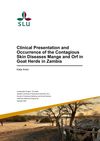
 In this study investigating goat herds in Zambia, both mange and orf were detected, but with low occurrence linked to diagnostic challenges and mild clinical signs; further research, especially in conditions favoring mange mites, is recommended to better understand and manage these diseases.

This research explores if COVID-19, analogous to SARS-CoV, may result in long-term pulmonary fibrosis in recovered patients, although current evidence on the persistence or resolution of lung changes over time remains unknown.
 May 2024 in “International journal of nanomedicine”
 This review highlights the potential of extracellular vesicles derived from medicinal plants as therapeutics for diseases such as cancer and inflammation, suggesting they may enhance the clinical use of herbal preparations, despite the challenges posed by extract complexity and individual variability.
This study suggests that bioactives like Curcumin, Quercetin, and "Tulsi" may relieve chemotherapy-induced adverse drug reactions in cancer patients, potentially reducing resistance and recurrence.
 March 2023 in “Journal of Veterinary Medicine and Animal Health”
 This study in Kitui County, Kenya, identified histopathological lesions due to Cordylobia anthropophaga infestations in dogs, including parasitic granulomas and eosinophilic lymphadenitis, leading to severe health effects such as emaciation and potential death.

This article discusses the organizational aspects of the II National Academic Congress of Dermatology in Brazil and reports no new research findings.
 January 2022 in “Dermatology Review”
 This study found that patients with chronic kidney disease-associated pruritus had elevated serum levels of interleukin 31, suggesting a possible role of this cytokine in the condition.

This article provides an overview of conditions that can cause hair loss in dogs and cats and offers guidance on diagnostic approaches, but it presents no new research findings.
 April 2018 in “Asian-Australasian journal of bioscience and biotechnology”
 This study conducted at Madras Veterinary College found that tick infestation was the most frequent diagnosis among hospitalized dogs with dermatological issues, with ectoparasiticides prescribed in 73% of cases.
September 2025 in “International Journal of Biological Macromolecules” In an animal study with a skin defect model, this research reported that curcumin-loaded hydrogels made from recombinant humanized collagen and an eco-friendly crosslinker enhanced wound repair by promoting angiogenesis, granulation tissue formation, and hair follicle neogenesis, while providing antioxidant benefits.
September 2026 in “Food Bioengineering” This review highlights how utilizing unconventional and non-traditional cell sources for cultivated meat production could overcome manufacturing challenges, with distinct biological advantages potentially improving bioprocess efficiency and enabling the creation of novel meat products, according to the authors.
 11 citations
,
December 2020 in “Journal of Drugs in Dermatology”
11 citations
,
December 2020 in “Journal of Drugs in Dermatology” This study reported that COVID-19 skin manifestations, such as exanthema and chilblains, varied in timing but resolved positively with proper treatment.
13 citations
,
September 2022 in “International Journal of Molecular Sciences” This study identifies five compounds, including gemcitabine and methylene blue, that inhibit SADS-CoV and suggests their potential for developing antiviral drugs against future outbreaks.