 19 citations
,
June 2020 in “Animals”
19 citations
,
June 2020 in “Animals” This study found that maternal sub-maintenance nutrition reduced the density and branching ratio of secondary wool follicles in Merino sheep fetuses and identified genes potentially involved in these processes.
 5 citations
,
October 2022 in “BMC genomics”
5 citations
,
October 2022 in “BMC genomics” In this study, researchers identified key miRNAs and target genes involved in hair follicle development in Merino sheep, providing insights that could aid in improving sheep breeding for wool quality.
2 citations
,
July 2012 in “PubMed” In this study, the use of internal wool lipid liposomes was shown to improve the lipid composition and increase the resistance to breaking in both untreated and chemically treated hair fibers.
1 citations
,
September 2020 in “Leonardo” This exhibition explored the intersection of art and biotechnology, encouraging discussions on genetics and societal roles through provocative contemporary art installations.
May 2025 in “Apollo Medicine” This study found that trichoscopy can be a helpful, noninvasive tool for identifying specific patterns that correlate with the clinical activity and severity of alopecia areata, enhancing its diagnosis and monitoring.
 October 2023 in “Journal of Molecular Liquids”
 This study demonstrated that imidazole-based ionic liquids, particularly [Emim]DEP, effectively dissolved yak hair keratin, maintaining its structure better than other tested solvents, and also performed well on human hair and goat wool, with consistent performance even after five recycling cycles.
91 citations
,
July 2020 in “JAMA Dermatology” This study suggests that minoxidil may improve hypotrichosis in patients with ARWH due to LIPH variants, but a possible genetic factor could affect its efficacy within families.
 89 citations
,
September 2010 in “Annual Review of Genomics and Human Genetics”
89 citations
,
September 2010 in “Annual Review of Genomics and Human Genetics” This review discusses the genetic factors involved in hair follicle morphogenesis and cycling and reports no new clinical results; it emphasizes the role of genes in hereditary hair diseases.
 7 citations
,
March 2015 in “British Journal of Dermatology”
7 citations
,
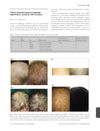
March 2015 in “British Journal of Dermatology” Applying minoxidil can help improve hair growth in people with hair loss caused by LIPH gene mutations.
 2 citations
,
January 2013 in “Elsevier eBooks”
2 citations
,
January 2013 in “Elsevier eBooks” The document explains the genetic causes and characteristics of inherited hair disorders.
December 2022 in “The Turkish Journal of Pediatrics” This study reported that hair microscopy can help diagnose rare pediatric neurological diseases, as specific hair characteristics were linked to conditions like giant axonal neuropathy, Griscelli syndrome, and Menkes disease.
 September 1998 in “JEADV. Journal of the European Academy of Dermatology and Venereology/Journal of the European Academy of Dermatology and Venereology”
 The document concludes that individualized treatments for hair issues are effective, certain hair changes can indicate neurocutaneous diseases, specific lotions improve skin health, laser hair removal works but needs more study on long-term effects, men's cosmetics are diverse, peeling is effective but can have side effects, and facial pigmentation is often due to overactive skin cells.
71 citations
,
September 2013 in “Materials Science and Engineering C” Keratin-based hydrogels from human hair and wool are promising for wound dressings and are more eco-friendly.
39 citations
,
December 1998 in “Journal of Cell Science” This study found that the LEF-1 binding site acts as an enhancer element for the wool keratin intermediate filament gene promoter in hair follicle cortex, with specificity regulated by additional factors.
16 citations
,
January 2021 in “BMC Genomics” This study found that high wool-producing Wan Strain Angora rabbits had higher hair follicle density and identified potential regulatory long noncoding RNAs that may influence this trait.
7 citations
,
September 2020 in “International Journal of Cosmetic Science” This study investigated the effects of wool-derived hydrolysed keratin peptides on relaxed textured hair and found that mid- and high-molecular weight peptides improved mechanical strength and reduced breakage in different humidity conditions.
 October 2014 in “Springer eBooks”
 Rabbit hair fibers are similar to wool and have a hollow center like feathers.
84 citations
,
April 2002 in “Archives of Dermatology” This study found that a keratin mutation may cause diffuse partial woolly hair associated with loose anagen hair syndrome in some families, but other genetic factors could play a role in different cases.
55 citations
,
December 2021 in “BMC Veterinary Research” This study identified several candidate genes related to wool production traits and adaptation to hot, arid environments in Iranian sheep, highlighting potential targets for future inbreeding programs.
12 citations
,
December 2003 in “Gene” This study characterized the Hoxc-13 gene from sheep wool follicles, noting its potential autoregulatory role and potential influence on skin function beyond hair keratin regulation.
5 citations
,
February 2023 in “Frontiers in Veterinary Science” This study found that ovine dermal papilla cells exhibit robust aggregation and alkaline phosphatase activity, regulated by Wnt/β-catenin signaling, providing insights for improving wool performance and hair regeneration therapies.
 4 citations
,
February 2025 in “BMC Genomics”
4 citations
,
February 2025 in “BMC Genomics” This study identified 71 SNPs linked to black wool traits in Qira sheep and found that specific mutations in the TYRP1 gene significantly correlate with coat color variations, providing insights for their genetic selection and conservation.
2 citations
,
January 2025 in “Veterinary Dermatology” This study found that Pomeranian dogs with a woolly coat type and male dogs had a higher risk of developing Alopecia X in the Netherlands and Belgian regions studied.
 1 citations
,
October 2022 in “PubMed”
1 citations
,
October 2022 in “PubMed” This study identified 674 differentially expressed proteins in the skin tissues of male and female Chinese merino sheep, suggesting gender-specific molecular mechanisms that may affect wool traits.
This study found that a bio-based repair solution containing hydrolysed wool keratin, serine, and transglutaminase improved the physical and chemical properties of damaged hair, increasing its strength, flexibility, and thermal stability while offering long-lasting protection against chemical damage.
 January 2021 in “Research Square (Research Square)”
 This study found that Wan strain Angora rabbits with high wool production exhibited higher hair follicle density and identified long noncoding RNAs that may regulate this trait.
 September 2020 in “Research Square (Research Square)”
 This study found that Wan strain Angora rabbits with high wool production had higher hair follicle density and identified five long noncoding RNAs as potential regulators of this trait.
 21 citations
,
January 1995 in “Journal of the American Institute for Conservation”
21 citations
,
January 1995 in “Journal of the American Institute for Conservation” This study describes a new method for extracting red mordant dyes from wool fibers using ethylene diamine tetraacetic acid and N,N-dimethyl formamide, preserving the fibers for further examination.
16 citations
,
January 2018 in “Advances in experimental medicine and biology” This review discusses the diversity of keratins and keratin-associated proteins in wool and hair, noting significant variation in their families, with no new results reported; the authors detail known protein structures without experimental findings.
 13 citations
,
January 1995 in “Journal of the American Institute for Conservation”
13 citations
,
January 1995 in “Journal of the American Institute for Conservation” This study introduced a new method for extracting red mordant dyes from wool fibers that preserved the fibers for further analysis and allowed for spectrophotometric examination of the dyes' absorption curves.