2 citations
,
January 2023 in “Skin Appendage Disorders” In this study, chemotherapy-induced alopecia in cancer patients showed specific trichoscopic patterns and abnormal hair shaft morphology, suggesting intermittent follicle damage from chemotherapy, but larger studies are needed for confirmation.
 March 2021 in “Revista Medicina Cutánea Ibero-Latino-Americana”
 This review discusses diagnostic tools for scarring alopecias, emphasizing trichoscopy as a low-cost, non-invasive method for more accurate diagnosis, although it reports no new clinical results.
 March 2021 in “CRC Press eBooks”
 This chapter reviews trichoscopic features of primary cicatricial alopecias, particularly lichen planopilaris and frontal fibrosing alopecia, and reports no new results.
 January 2018 in “Indian Dermatology Online Journal”
 This case report highlights the importance of considering artefacts like artificial hair fibers during trichoscopy, as they can interfere with the accurate diagnosis of hair conditions.
 September 2023 in “Skin Research and Technology”
 This article presents a new method using dermoscopy to evaluate the severity and treatment effectiveness of androgenetic alopecia in men by capturing images of specific scalp regions.
 15 citations
,
February 2003 in “British Journal of Dermatology”
15 citations
,
February 2003 in “British Journal of Dermatology” This study demonstrated that using morphometric and 3D reconstruction software to evaluate scalp biopsies in non-cicatricial alopecias may be feasible and sensitive for detecting subtle follicular changes.
10 citations
,
January 2011 in “Journal of biomedical optics” This study found that optical coherence tomography provides highly reproducible and less variable measurements of hair shaft thickness compared to standard light microscopy, offering a promising noninvasive tool for clinical practice.
 September 2014 in “Proceedings of SPIE, the International Society for Optical Engineering/Proceedings of SPIE”
 This study found that high-speed optical coherence tomography may be a promising non-invasive tool for analyzing human hair conditions.
November 2024 in “Journal of Microscopy” This study found that micro-computed tomography (micro-CT) was highly effective for analyzing the cross-sectional geometry of hair fibres, including the medulla in highly curled hair, but less effective than scanning electron microscopy for surface details.
3 citations
,
January 2017 in “Dermatology online journal” This case report describes the diagnosis of monilethrix in a 2-year-old boy using trichoscopy, highlighting its rarity and the challenge of diagnosing it without a family history.
 41 citations
,
December 2008 in “International Journal of Dermatology”
41 citations
,
December 2008 in “International Journal of Dermatology” This study observed that hair density and thickness were significantly reduced across multiple scalp sites in South Korean women with hair loss, highlighting potential patterns that could aid in differentiating hair disorders.
This study demonstrates that the trichohyalin gene is located at chromosomal region 1q21, where several other genes related to epidermal differentiation also map.
 28 citations
,
November 2018 in “Journal of structural biology”
28 citations
,
November 2018 in “Journal of structural biology” This study found statistically significant patterns in hair morphology and ultrastructure linked to biogeographic ancestry among European, African, and East Asian populations.
 41 citations
,
January 2014 in “Annals of Dermatology”
41 citations
,
January 2014 in “Annals of Dermatology” This study found that dermoscopy showed distinctive patterns for different types of alopecia, supporting its clinical usefulness for diagnosing diseases with small round or oval hairless patches on the scalp.
 12 citations
,
September 2020 in “Journal of cosmetic dermatology”
12 citations
,
September 2020 in “Journal of cosmetic dermatology” This study found that trichoscopy aided in assessing treatment responses for patchy alopecia areata, with both intralesional corticosteroids and platelet-rich plasma showing effectiveness, but only PRP significantly improved patient symptom impact scores.
 February 2026 in “Clinical Cosmetic and Investigational Dermatology”
 This study found that a family history of androgenetic alopecia and specific trichoscopic signs are strong predictors of female pattern hair loss, leading to a nomogram model for risk prediction.
1 citations
,
September 2023 in “Portuguese Journal of Dermatology and Venereology” This case report describes a 50-year-old man with folliculotropic mycosis fungoides stage IB, noting trichoscopic findings like dilated follicular openings, black dots, and dystrophic hairs, which are less commonly documented in this condition, suggesting trichoscopy could aid in early diagnosis.
 1 citations
,
January 2022 in “Electronic Imaging”
1 citations
,
January 2022 in “Electronic Imaging” This study introduces a novel method for digitizing hair color that accurately captures and renders the color appearance of physical hair samples in synthetic images.
July 2019 in “Indian dermatology online journal” This case report highlights an unusual trichoscopic appearance in alopecia areata due to dithranol staining, which may obscure typical patterns and reveal atypical vascular features in the interfollicular spaces.

This study found significant differences in facial heat distribution patterns among different types of alopecia, with androgenic, areata, and telogen types showing a T-type pattern, while seborrheic alopecia showed a diffused pattern.
 January 2021 in “International journal of dermatology, venereology and leprosy sciences”
 This study found that, among 100 patients with alopecia areata, the most prevalent subtype was patchy alopecia areata, with characteristic trichoscopic features including black dots, yellow dots, and empty hair follicles.
In this study, trichoscopy was diagnostically useful in 97.5% of alopecia cases at a rural Indian hospital, confirming initial diagnoses in most cases and reducing the need for invasive scalp biopsies.
July 2024 in “Skin Appendage Disorders” This review discusses the role of trichoscopy in diagnosing lichen planopilaris and reports no clinical results; the authors emphasize early recognition to potentially prevent permanent scarring.
24 citations
,
June 2003 in “Journal of Structural Biology” This study suggests that varying intersheet interactions may explain the differences between the two polymorphic forms of macrofibril assembly in Merino wool and hair.
26 citations
,
November 2005 in “Journal of Investigative Dermatology Symposium Proceedings” TrichoScan effectively measures hair growth improvements in people using minoxidil.
 6 citations
,
January 2016 in “JAMA Dermatology”
6 citations
,
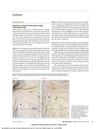
January 2016 in “JAMA Dermatology” This article discusses the presence of dirty dots as a normal trichoscopic finding in children, noting they are not observed in adults or other age groups, and reports no new results.
 January 2020 in “Clinical dermatology open access journal”
 This study highlights the variation in clinical findings of traction alopecia and emphasizes that changes in hairstyles may prevent progression to scarring alopecia.
 25 citations
,
April 2007 in “Journal of The American Academy of Dermatology”
25 citations
,
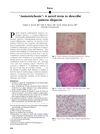
April 2007 in “Journal of The American Academy of Dermatology” This article introduces the term "anisotrichosis" to describe the significant variation in hair shaft diameters observed in pattern alopecia, drawing a parallel to anisocytosis seen in blood smears, but reports no new research findings.
 March 2021 in “CRC Press eBooks”
 This review discusses the importance of physical examinations in trichology, emphasizing their role in diagnosing conditions like alopecia and hair dystrophies, and reports no new clinical results.
4 citations
,
March 2024 in “Journal of the American Academy of Dermatology” Clinical signs don't match inflammation levels in lichen planopilaris and frontal fibrosing alopecia.