 February 2016 in “The journal of allergy and clinical immunology/Journal of allergy and clinical immunology/The journal of allergy and clinical immunology”
 This study reports a novel mutation in the TP63 gene associated with T and B cell lymphopenia in an EEC patient, suggesting that EEC diagnosis should include TREC assay and evaluation for immunodeficiency.
January 2026 in “Pediatrics International” This report examines the cautious approach to administering live vaccines to an infant with a heterozygous FOXN1 variant, noting the importance of monitoring TREC levels and immune function indicators in guiding vaccination decisions in such cases.
 53 citations
,
August 2019 in “American journal of human genetics”
53 citations
,
August 2019 in “American journal of human genetics” This study found that FOXN1 haploinsufficiency is a significant genetic factor causing T cell lymphopenia at birth, linked to reduced thymic function in both humans and mice.
 33 citations
,
September 2017 in “Journal of clinical immunology”
33 citations
,
September 2017 in “Journal of clinical immunology” This review summarizes recent findings on FOXN1's essential role in thymus and skin biology and discusses emerging therapeutic approaches for immune disorders with athymia, but reports no new clinical results.
 32 citations
,
January 2017 in “Orphanet journal of rare diseases”
32 citations
,
January 2017 in “Orphanet journal of rare diseases” This article reviews the genetic basis, diagnostic approaches, and treatment options for nude severe combined immunodeficiency, but does not present any new research findings.
 October 2025 in “Turkish Journal of Biochemistry”
 This study found that patients with tropical chronic pancreatitis exhibited significantly reduced plasma amino acid levels and antioxidant capacity, with folate deficiency identified as a key factor in hyperhomocysteinemia.
 103 citations
,
January 2011 in “Blood”
103 citations
,
January 2011 in “Blood” This study found that thymus transplantation in infants with FOXN1 deficiency led to T-cell reconstitution and functional immunity, resolving serious infections and cytopenias.
 69 citations
,
January 2013 in “Frontiers in Immunology”
69 citations
,
January 2013 in “Frontiers in Immunology” This review summarizes existing knowledge on the role of FOXN1 as a key regulator of thymic epithelial cell lineage and function, reporting no new experimental results.
 32 citations
,
May 2012 in “PloS one”
32 citations
,
May 2012 in “PloS one” This study found that despite the persistence of aberrant double-negative T-cells, functional immune-competence was maintained after thymic transplantation in a patient with a rare FOXN1 mutation.
 3 citations
,
September 2020 in “Molecular Brain”
3 citations
,
September 2020 in “Molecular Brain” This study reports that Elvitegravir, a drug currently approved for other uses, shows potential as a neuro- and mitoprotective agent by attenuating mitochondrial damage caused by NMDA receptors in primary mouse cortical neurons.
 November 2025 in “Frontiers in Immunology”
 This study introduces stem cell activity as a key factor influencing the effects of IFN-γ and TGF-β1 on autoimmune disease dynamics, showing that varying cytokine levels can modulate stem cell activity and immune privilege, impacting tissue regeneration and disease flares.
 January 2006 in “Advances in developmental biology”
 This review discusses the roles of the hairless (HR) protein as a corepressor, particularly its impact on RORα-mediated transcriptional repression, and reports no new experimental findings.
 March 2026 in “Journal of Zhejiang University (Medical Sciences)”
 This study reported that in mice with rapamycin-induced thymic atrophy, Angelica sinensis promoted thymic cortical regeneration and functional recovery by activating the Wnt/CTNNB1/Foxn1 signaling pathway and improving inflammatory microenvironment, suggesting its potential benefit against immune aging.
February 2024 in “Medicina” In this study, researchers used atomic force microscopy to capture and analyze morphological changes in the surface of healthy hair, identifying features such as pitting and rod-shaped macro-fibrillar elements, which could inform future research on hair conditions and care.
4 citations
,
August 2020 in “bioRxiv (Cold Spring Harbor Laboratory)” This study developed the iCOUNT tool, which provides insights into stem cell behavior by tracking cell division events and molecular consequences in human and mouse neural stem/progenitor cells.

This study introduced a novel framework called SL-HyDE that significantly improved zero-shot dense retrieval accuracy in medical information retrieval without relying on labeled data.
 145 citations
,
May 2008 in “Cancer Science”
145 citations
,
May 2008 in “Cancer Science” This review discusses how increased gene copy number for telomerase components may contribute to telomerase up-regulation in cancer cells, although the exact mechanisms are not fully understood.
 July 2014 in “Journal of the Portuguese Society of Dermatology and Venereology”
 This review covers current knowledge of tricoscopy's applications in diagnosing and monitoring scalp and hair disorders but presents no new clinical results.

This study investigated dual TCR Treg cells in mouse tissues, revealing a high proportion and diverse pairing patterns compared to single TCR Tregs, providing insights into their origins and characteristics across different tissue locations.

In this study, researchers analyzed over 5,000 T cells per sample using scRNA+TCR-seq technology and found that dual TCR Tregs are present in high proportions across various mouse tissues, showing unique TCR pairing patterns, V(D)J usage, and mRNA expression compared to single TCR Tregs.
January 2013 in “edoc (University of Basel)” This study found that TRF1 plays a crucial role in maintaining pluripotency and stem cell compartments, but it is not a suitable in vivo telomere length marker.
7 citations
,
May 1979 in “Medical & biological engineering & computing” The trichometer accurately measures hair growth and is easy to use.
 January 2024 in “Lecture notes in networks and systems”
 In this study, a system was developed utilizing advanced image processing to analyze hair and scalp conditions, aiding professionals in diagnosing diseases like alopecia and monitoring treatment by extracting and comparing key parameters from microscopic images.
January 2026 in “Indian Journal of Paediatric Dermatology” This study found trichoscopy to be a quick and effective method for diagnosing and monitoring tinea capitis in children, with improvements in trichoscopic features observed by week 2 and full recoveries confirmed mycologically by week 8.
8 citations
,
October 2020 in “Clinical Psychopharmacology and Neuroscience” This case series found that low-frequency repetitive transcranial magnetic stimulation may benefit some patients with trichotillomania, although one of five patients experienced worsening symptoms after treatment.
May 2008 in “10th European Congress of Endocrinology” This study discovered that TTR is expressed in the human placenta as early as 6 weeks gestation, with increased levels in the first trimester potentially facilitating thyroid hormone delivery to the fetus.
August 2026 in “International Journal of Advanced Multidisciplinary Research and Studies” In this case study, a 15-year-old girl with multiple trichoepitheliomas on her face saw a 90% reduction in lesions after combined cryotherapy and topical tretinoin treatment, with no scarring or recurrence over four years.
 1 citations
,
December 2018 in “Journal of genetic medicine”
1 citations
,
December 2018 in “Journal of genetic medicine” In this case report, a 20-year-old male with tricho-rhino-phalangeal syndrome was found to have a de novo frameshift mutation in the TRPS1 gene, highlighting the challenges in diagnosing this rare disorder.
 13 citations
,
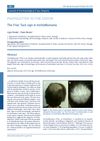
June 2012 in “Journal of Dermatological Case Reports”
13 citations
,
June 2012 in “Journal of Dermatological Case Reports” This report describes an 8-year-old male with trichotillomania, confirmed by trichoscopy showing characteristic hair damage and patterns.
 8 citations
,
March 2011 in “Archives of Dermatology”
8 citations
,
March 2011 in “Archives of Dermatology” This study suggests that corkscrew hair could serve as a new diagnostic marker for tinea capitis and that dermoscopy might help diagnose atypical cases swiftly.