 42 citations
,
January 2021 in “Journal of Clinical Medicine”
42 citations
,
January 2021 in “Journal of Clinical Medicine” This review discusses advancements in the use of microneedle arrays and nanoparticles for transdermal delivery of therapeutics, noting challenges in overcoming the skin barrier and summarizing recent clinical trial achievements in areas like cancer therapy and gene therapy.
 42 citations
,
December 2016 in “Cell Death & Differentiation”
42 citations
,
December 2016 in “Cell Death & Differentiation” This study found that transient mtDNA double strand breaks in mice accelerated aging in certain tissues through increased reactive oxygen species, independent of p21/p53 pathway mediation.
 42 citations
,
December 1990 in “The Journal of Dermatologic Surgery and Oncology”
42 citations
,
December 1990 in “The Journal of Dermatologic Surgery and Oncology” This study found decreased hair density and altered follicular architecture in the balding frontal scalp of patients with androgenic alopecia, with increased vellus hairs noted.
 41 citations
,
August 2024 in “Drug Delivery and Translational Research”
41 citations
,
August 2024 in “Drug Delivery and Translational Research” This review discusses the development and applications of microneedles, particularly through 3D printing, highlighting their potential in transdermal drug delivery but reporting no new results.
40 citations
,
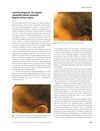
September 2014 in “Journal of cosmetic and laser therapy” This case series found that combining ablative fractional resurfacing and acoustic pressure ultrasound with triamcinolone treatment led to complete recovery in patients with areata alopecia.
 40 citations
,
December 2006 in “Journal of The European Academy of Dermatology and Venereology”
40 citations
,
December 2006 in “Journal of The European Academy of Dermatology and Venereology” This article reports two cases where 2% topical minoxidil showed promise in treating traction alopecia, but it does not offer broader clinical conclusions.
40 citations
,
May 1999 in “International Journal of Dermatology” This article reviews traumatic alopecia, discussing its various causes and characteristics, and reports no new clinical results.
 39 citations
,
August 2017 in “Colloids and Surfaces B: Biointerfaces”
39 citations
,
August 2017 in “Colloids and Surfaces B: Biointerfaces” This study found that 50-nm PLGA nanoparticles delivered with iontophoresis enhanced skin permeation of indomethacin in rats more effectively than 100-nm nanoparticles, suggesting improved targeting of hair follicles.
 39 citations
,
April 2016 in “Case Reports in Dermatology”
39 citations
,
April 2016 in “Case Reports in Dermatology” This study observed initial hair regrowth in a businessman with alopecia areata universalis treated with tofacitinib, but the effect diminished, leading to renewed hair loss.
 39 citations
,
July 2015 in “British Journal of Dermatology”
39 citations
,
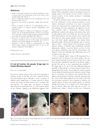
July 2015 in “British Journal of Dermatology” This article discusses the pseudo 'fringe sign' in frontal fibrosing alopecia, highlighting that it is not solely related to traction, and it reports no new clinical results.
38 citations
,
September 2017 in “Cancer Research” This study reports that hair follicles can mobilize ectopic progenitors for regeneration to repair damage from ionizing radiation. Augmenting WNT signaling enhanced this regenerative process and prevented radiation- and chemotherapy-induced hair loss, highlighting a potential approach to manage alopecia during cancer treatment.
38 citations
,
March 2015 in “Journal of controlled release” This study found that transfollicular delivery using surfactant-based nanoparticles significantly enhanced antigen stability and immune response compared to other delivery methods, especially when combined with an adjuvant.
37 citations
,
May 2018 in “Frontiers in physiology” This study identified key long non-coding RNAs and mRNAs involved in primary wool follicle induction in carpet wool sheep, emphasizing their roles in hair follicle development and skin processes.
37 citations
,
May 2018 in “Transgender health” This study found that oral estradiol was generally effective in achieving target 17-β estradiol levels in transgender women, but often failed to suppress testosterone adequately, with variability in individual responses.
37 citations
,
June 2004 in “Human molecular genetics online/Human molecular genetics” This study suggests that the HCR risk allele within the PSORS1 locus may contribute to psoriasis susceptibility by altering gene expression related to skin structure and differentiation, although these changes alone might not result in clinical symptoms.
37 citations
,
April 1977 in “Journal of Cutaneous Pathology” This study found that specific histologic features in skin biopsies can help support a diagnosis of traumatic alopecia (trichotillomania), but not all markers are distinct to the condition.
36 citations
,
August 2020 in “Polymers” The researchers developed semi-dissolving microneedle patches using TEMPO-oxidized bacterial cellulose nanofibers, which allow effective transdermal drug delivery by forming micro-channels for large drug quantities, overcoming traditional microneedles' low drug loading.
 36 citations
,
September 2018 in “Dermatologic Therapy”
36 citations
,
September 2018 in “Dermatologic Therapy” This study found that 78% of patients continued taking oral minoxidil for androgenetic or traction alopecia, with 33% reporting decreased hair shedding and 28% noting increased scalp hair.
36 citations
,
July 2017 in “Journal of controlled release” In this study, a new formulation of all-trans retinoic acid bound to polyvinyl alcohol showed reduced skin inflammation and sustained drug release for up to six days compared to free ATRA in vitro and in vivo.
36 citations
,
June 2016 in “Journal of dermatological treatment” This study found that a combination of low-fluence Q-switched 1064 nm Nd:YAG laser, hydroquinone cream, and oral tranexamic acid showed promising results for Riehl’s melanosis in Asian patients, with no serious adverse events reported.
 36 citations
,
March 2014 in “Biomaterials”
36 citations
,
March 2014 in “Biomaterials” This study found that the 11R-No. 10 peptide, delivered transdermally, significantly inhibited melanogenesis and produced a whitening effect in a UV-induced sun-tanning guinea pig model without cytotoxicity.
 36 citations
,
April 2013 in “Cell and Tissue Research”
36 citations
,
April 2013 in “Cell and Tissue Research” Bone-marrow and epidermal stem cells help heal wounds differently, with bone-marrow cells aiding in blood vessel formation and epidermal cells in hair growth.
 35 citations
,
June 2017 in “Pharmaceutical research”
35 citations
,
June 2017 in “Pharmaceutical research” This study presented a new two-dimensional model that successfully predicts transdermal permeation of caffeine, highlighting the significant role of the follicular pathway in increasing systemic bioavailability.
35 citations
,
July 2010 in “The FEBS journal” In this study, researchers identified a highly reactive, isozyme-specific sequence for TGase 3, contributing to understanding its distinct functional role and activity distribution in the mouse epidermis.
35 citations
,
August 2009 in “Differentiation” This study found that transcription factors HOXC13, LEF1, and FOXN1 repress DSG4 transcription, with the Notch pathway possibly involved in maintaining DSG4 expression in hair follicles.
 34 citations
,
August 2016 in “Scientific Reports”
34 citations
,
August 2016 in “Scientific Reports” This study validated a protocol for inducing surface ectoderm differentiation from human induced pluripotent stem cells and highlighted the role of TGFβ signaling pathways in this process.
34 citations
,
April 2023 in “Climacteric” This review discusses the long-term effects of gender affirming hormone therapy and reports no new clinical findings, recommending a shared decision-making approach to balance benefits and risks for transgender individuals.
34 citations
,
July 2020 in “American journal of human genetics” This study identified mutations in the SREBF1 gene that impair SREBP1 function, potentially contributing to IFAP syndrome by affecting skin, hair, and eye development.
 34 citations
,
July 2011 in “International journal of pharmaceutics”
34 citations
,
July 2011 in “International journal of pharmaceutics” This study found that ion-paired solutions significantly improved the skin penetration of risedronate in hairless mice compared to risedronate alone.
 33 citations
,
February 2021 in “Advanced Pharmaceutical Bulletin”
33 citations
,
February 2021 in “Advanced Pharmaceutical Bulletin” This article explains the preparation methods and applications for various vesicle and particle systems used in transdermal drug delivery, highlighting their effectiveness and potential for further development in this field.