 53 citations
,
January 2006 in “The Journal of clinical endocrinology and metabolism/Journal of clinical endocrinology & metabolism”
53 citations
,
January 2006 in “The Journal of clinical endocrinology and metabolism/Journal of clinical endocrinology & metabolism” In this study, reduced androgen receptor gene methylation and shorter CAG repeats in children with premature pubarche may lead to increased hair follicle sensitivity to steroid hormones, potentially causing early pubic hair development.
 52 citations
,
June 2009 in “Current Opinion in Endocrinology, Diabetes and Obesity”
52 citations
,
June 2009 in “Current Opinion in Endocrinology, Diabetes and Obesity” This review discusses the pathogenesis and treatment of androgenetic alopecia, highlighting genome associations and newer topical formulations, but reports no new clinical results.
 50 citations
,
July 2014 in “International Journal of Clinical Pharmacology and Therapeutics”
50 citations
,
July 2014 in “International Journal of Clinical Pharmacology and Therapeutics” This study found that both topical and oral finasteride significantly reduced plasma DHT after one week, with lower finasteride plasma exposure for the topical formulation.
 49 citations
,
February 2019 in “The Journal of Clinical Endocrinology and Metabolism”
49 citations
,
February 2019 in “The Journal of Clinical Endocrinology and Metabolism” This review offers evidence-based recommendations for diagnosing and treating female pattern hair loss, emphasizing clinical assessment and starting treatment with minoxidil, while noting that measurement of certain hormones and vitamins is optional.
 45 citations
,
January 2012 in “The Journal of Steroid Biochemistry and Molecular Biology”
45 citations
,
January 2012 in “The Journal of Steroid Biochemistry and Molecular Biology” This study found that overexpression of AKR1C3 in prostate cancer cells redirected androgen metabolism towards testosterone production, which facilitated cell proliferation, potentially reducing the effectiveness of finasteride treatment.
 41 citations
,
October 2011 in “Clinical and Experimental Dermatology”
41 citations
,
October 2011 in “Clinical and Experimental Dermatology” This meta-analysis suggests that the G allele of AR StuI polymorphism might be a potential risk factor for AGA, particularly in white populations.
 38 citations
,
July 2012 in “international journal of endocrinology and metabolism”
38 citations
,
July 2012 in “international journal of endocrinology and metabolism” This review discusses the clinical use of anti-androgen medications and highlights emerging evidence supporting plant-derived anti-androgens like spearmint tea for managing PCOS, but reports no new clinical results.
 37 citations
,
June 2011 in “Journal of Cellular Biochemistry”
37 citations
,
June 2011 in “Journal of Cellular Biochemistry” In this study, transgenic male mice over-expressing the androgen receptor in mesenchymal stem cells showed reduced fat mass and improved glucose clearance, suggesting enhanced androgen sensitivity may alter body composition.
 24 citations
,
September 2001 in “Journal of The American Academy of Dermatology”
24 citations
,
September 2001 in “Journal of The American Academy of Dermatology” Women's ovarian hormones and adrenal androgens change throughout life, affecting hair loss and health.
 21 citations
,
January 2017 in “European Journal of Obstetrics & Gynecology and Reproductive Biology”
21 citations
,
January 2017 in “European Journal of Obstetrics & Gynecology and Reproductive Biology” This study suggests that acne is often associated with hyperandrogenemia in women, contradicting previous recommendations that acne is not linked to androgen excess disorders.
 18 citations
,
January 2001 in “Annual Reports in Medicinal Chemistry”
18 citations
,
January 2001 in “Annual Reports in Medicinal Chemistry” This chapter reviews selective androgen receptor modulators, discussing their therapeutic potential beyond current androgen applications, and reports no new clinical findings.
 16 citations
,
August 2004 in “Tetrahedron”
16 citations
,
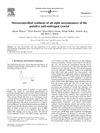
August 2004 in “Tetrahedron” In this study, all stereoisomers of cyoctol were synthesized and tested, revealing that contrary to initial patent claims, cyoctol does not function as an anti-androgen.
 12 citations
,
June 2013 in “The Prostate”
12 citations
,
June 2013 in “The Prostate” This study found that dutasteride more effectively inhibited androgen receptor signaling and reduced cell growth compared to finasteride in prostate cancer cell models, with varying sensitivities across different cell lines.
 10 citations
,
November 2018 in “Physiological Research”
10 citations
,
November 2018 in “Physiological Research” This review examines the methods and challenges in androgen laboratory diagnostics, discussing their advantages, limitations, and evolution; it presents no new experimental results.
 3 citations
,
December 2000 in “International Journal of Cosmetic Science”
3 citations
,
December 2000 in “International Journal of Cosmetic Science” This study established that a human epidermal model can be utilized to assess 5alpha-reductase activity and evaluate enzyme modulators, such as finasteride, for dermatological applications.
 2 citations
,
August 2023 in “Journal of Endocrinological Investigation”
2 citations
,
August 2023 in “Journal of Endocrinological Investigation” In this study, researchers found that pregnant mice exposed to excessive androgen led to thinner ventricular walls and cardiac hypertrophy in offspring, suggesting that prenatal androgen exposure adversely affects cardiac health through reduced cardiomyocyte proliferation.
 1 citations
,
November 2008 in “Acta crystallographica”
1 citations
,
November 2008 in “Acta crystallographica” This study reports the crystallization of the human androgen receptor's ligand-binding domain with nonsteroidal ligands, which may aid in understanding the differences in binding compared to steroidal ligands.
 December 2023 in “Frontiers in endocrinology”
 This review explores the role of hyperandrogenism, including adrenal-derived 11-oxygenated androgen, in the development of polycystic ovarian syndrome and discusses potential therapeutic strategies targeting androgen excess, without reporting new clinical results.
 October 2007 in “Postgraduate obstetrics & gynecology”
 Testosterone therapy can help with androgen deficiency in women but should be used with caution and monitoring due to potential risks.
 October 2007 in “Postgraduate obstetrics & gynecology”
 This article reviews the unapproved use of testosterone for treating female androgen insufficiency and reports no new clinical results.
 April 2006 in “Current Opinion in Endocrinology & Diabetes”
 This review discusses the potential benefits and adverse effects of testosterone therapy in women with androgen insufficiency, and highlights the need for further research on its long-term safety and effectiveness.
 August 2013 in “Fertility and Sterility”
 This in vitro study suggests that factors in the serum of PCOS patients may contribute to ovarian dysfunction, evidenced by higher hormone production and primordial follicle survival compared to control sera.
 196 citations
,
May 2001 in “The journal of investigative dermatology/Journal of investigative dermatology”
196 citations
,
May 2001 in “The journal of investigative dermatology/Journal of investigative dermatology” This study found that SZ95 sebocytes and HaCaT keratinocytes exhibit distinct enzyme expressions and activities, implicating their different roles in androgen metabolism and homeostasis in vitro.
 5 citations
,
January 2005 in “Journal of Enzyme Inhibition and Medicinal Chemistry”
5 citations
,
January 2005 in “Journal of Enzyme Inhibition and Medicinal Chemistry” This study found that certain steroidal compounds, especially 10a–10c, demonstrated strong antiandrogenic activity by binding to the androgen receptor and reducing prostate weight in a hamster model.
 December 2015 in “University of Birmingham Institutional Research Archive (University of Birmingham)”
 This study showed that regulation of adipose androgen generation via AKR1C3 may contribute to a cycle of hyperinsulinaemia and lipid accumulation in women with PCOS.
 157 citations
,
April 1994 in “Clinical endocrinology”
157 citations
,
April 1994 in “Clinical endocrinology” Androgens can cause hair growth in some areas and hair loss on the scalp.
 27 citations
,
January 1984 in “Pharmacology & Therapeutics”
27 citations
,
January 1984 in “Pharmacology & Therapeutics” This review discusses androgen manipulation strategies for conditions like benign prostatic hyperplasia and prostatic carcinoma but reports no new clinical results.
 19 citations
,
October 2017 in “The FASEB Journal”
19 citations
,
October 2017 in “The FASEB Journal” This study established an androgen-responsive human organ culture model using hair follicles, demonstrating that women's intermediate facial follicles grow more hair in response to men's higher androgen levels.
 9 citations
,
September 2014 in “Cancer Epidemiology, Biomarkers & Prevention”
9 citations
,
September 2014 in “Cancer Epidemiology, Biomarkers & Prevention” This study found that men without prostate cancer carrying the A-allele of SNP rs1204038 had a 65% higher risk of PSA levels above 3 ng/mL compared to those with the G-allele, increasing referrals for further examination.
 416 citations
,
September 1997 in “Journal of Investigative Dermatology”
416 citations
,
September 1997 in “Journal of Investigative Dermatology” People with hair loss have more androgen receptors and enzymes in certain follicles, with men and women showing different patterns.