 June 2024 in “Archives of dermatological research”
 In this self-controlled comparative study of 16 women with Female Pattern Hair Loss, MMP® with Minoxidil showed a better response in the parietal-vertex regions in less advanced cases compared to standard Minoxidil treatment, though overall effectiveness was similar.
April 2024 in “Al-Azhar International Medical Journal /Al-Azhar International Medical Journal” This study at Al-Azhar University Hospitals found that combining a fractional CO2 laser or microneedling with topical 5-Fluorouracil (5-FU) is more effective and safe for treating vitiligo than using either treatment alone, offering a new therapeutic option for patients.
April 2024 in “Al-Azhar International Medical Journal /Al-Azhar International Medical Journal” In this study, vitiligo patients treated with a combination of fractional CO2 laser or microneedling followed by topical 5-Fluorouracil experienced more effective and safe outcomes compared to using either method alone.
 November 2023 in “Pakistan Journal of Health Sciences”
 This study found that clobetasol propionate 0.05% was significantly more effective in stimulating hair re-growth in alopecia areata patients compared to topical tacrolimus 0.1%, with an excellent response observed in 74.3% of the clobetasol group versus 40% in the tacrolimus group.
 June 2023 in “Skin Research and Technology”
 This study concluded that, in male patients with mild-to-moderate androgenetic alopecia, injections of PRP prepared by an automated method combined with topical 5% minoxidil were effective and safe, showing superior clinical efficacy and patient satisfaction compared to PRP alone.
April 2023 in “UNESP Institutional Repository (São Paulo State University)” In this study, oral minoxidil at 5 mg/day improved hair density comparably to topical minoxidil 5% in men with androgenetic alopecia over 24 weeks, offering a viable alternative for those intolerant to topical application.
 January 2023 in “International Journal of Medicine in Developing Countries”
 This case report describes a 28-year-old male with androgenetic alopecia who experienced hair improvement after four months of treatment with 5% minoxidil solution.
 April 2022 in “Research Square (Research Square)”
 In this study, both topical clobetasol propionate and fractional Er: YAG laser followed by topical steroids demonstrated significant improvement in patients with alopecia areata, but the combined laser and steroid treatment was found to be more effective and safe.
 December 2015 in “Dermatologic Therapy”
 This article compares the efficacy of topical tea and zinc sulfate in treating acne rosacea but does not present new clinical results.
January 2010 in “Annals of King Edward Medical University” This study concluded that combination therapy with 5% minoxidil and 0.05% betamethasone dipropionate cream was more effective for hair regrowth in alopecia areata than 5% minoxidil alone.
June 2022 in “IP Indian journal of clinical and experimental dermatology” This study found that both intradermal platelet-rich plasma and topical minoxidil with finasteride resulted in similar hair growth improvement in patients with androgenetic alopecia over 12 months.
 April 2020 in “Dermatology and therapy”
 In this study, the novel 5% minoxidil formulation significantly increased scalp hydration and decreased redness in Indian men with androgenetic alopecia compared to alcohol-based formulations.
 August 2019 in “Journal of The American Academy of Dermatology”
 Platelet-rich plasma helps hair regrowth and improves quality of life in women with hair loss, but minoxidil may be more effective.
 December 2014 in “Turk Dermatoloji Dergisi”
 This study found that a hair lotion containing saw palmetto and 10% trichogen veg complex increased total hair count in male patients with androgenetic alopecia over four months, though observer assessments varied.
5 citations
,
May 2017 in “Journal of dermatological science” This study reviewed the genetic and phenotypic aspects of Olmsted syndrome, highlighting pathogenic mutations in TRPV3 and MBTPS2 genes and their association with specific skin manifestations like symmetrical keratoderma and hyperkeratotic plaques.
 2 citations
,
April 2016 in “Journal of The American Academy of Dermatology”
2 citations
,
April 2016 in “Journal of The American Academy of Dermatology” This study found that dutasteride was more effective than finasteride in increasing total and thick hair count and reducing thin hair count in men with AGA, with both drugs having similar side effect profiles.
 July 2023 in “International journal of advanced research in medical and pharmaceutical sciences”
 In this study, researchers formulated and evaluated a gel containing minoxidil and aloe vera for alopecia treatment, finding that it was stable and non-irritant on albino rats, suggesting enhanced topical drug delivery over traditional solutions.
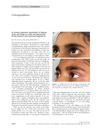
July 2024 in “Journal of Investigative Dermatology” ATR04-484 ointment shows promise for treating skin issues from cancer therapies.
 14 citations
,
November 2009 in “Clinical and experimental dermatology”
14 citations
,
November 2009 in “Clinical and experimental dermatology” This article presents a case report of a child with coexisting alopecia areata and vitiligo showing improvement with topical prostaglandin E2 treatment, without reporting new clinical results.
7 citations
,
March 2023 in “European Journal of Dermatology” Using Selenium Disulfide shampoo weekly helps prevent scalp dermatitis flare-ups.
 1 citations
,
January 2024 in “Journal of Cutaneous and Aesthetic Surgery”
1 citations
,
January 2024 in “Journal of Cutaneous and Aesthetic Surgery” This study found that treating patchy alopecia areata with fractional CO2 laser and topical triamcinolone acetonide was more effective and safer than intralesional triamcinolone, despite higher initial discomfort, as it resulted in greater patient satisfaction and fewer adverse effects like skin atrophy.
1 citations
,
January 2019 in “Journal of the Egyptian Women's Dermatologic Society (Print)” This study observed that while both minoxidil and botanically-derived 5-alpha reductase inhibitors significantly increased hair count and diameter in women with female pattern hair loss, minoxidil was more effective, especially for greater hair diameter increases, but had more troublesome side effects.
November 2022 in “Research Square (Research Square)” This pilot study observed that topical sildenafil 1% significantly increased vellus and terminal hair counts in female pattern hair loss patients, but did not improve hair thickness, while topical minoxidil 5% increased terminal hair count and thickness, making it the preferred treatment option.
16 citations
,
January 2023 in “Journal of Cosmetic Dermatology” This study found that micro-needling combined with topical 5-fluorouracil (5-FU) was more effective in treating vitiligo patches than topical tacrolimus, with significant improvement observed in six patients, although it caused mild side effects like erythema and irritation.
 10 citations
,
May 2007 in “PubMed”
10 citations
,
May 2007 in “PubMed” This study found that 1% topical minoxidil significantly increased hair count and improved hair growth perception among Japanese women with androgenetic alopecia compared to placebo.
 9 citations
,
September 2011 in “Cutaneous and Ocular Toxicology”
9 citations
,
September 2011 in “Cutaneous and Ocular Toxicology” This article presents a case of central serous chorioretinopathy occurring after the use of topical minoxidil solution, but reports no clinical study findings.
6 citations
,
January 2021 in “Journal of Cosmetic Dermatology” This study found that combining follicular unit extraction with topical calcipotriol betamethasone dipropionate showed the best repigmentation results in treating stable nonsegmental vitiligo.
2 citations
,
March 2009 in “Journal of Clinical Dermatology” This study found that topical 5% minoxidil solution is effective and well tolerated for promoting hair growth in Korean men with androgenetic alopecia over 24 weeks.
1 citations
,
January 2021 in “Journal of clinical and diagnostic research” In this study, adding topical calcipotriol 0.005% to topical clobetasol 0.05% significantly improved treatment efficacy for Alopecia Areata compared to using clobetasol alone, as evidenced by a greater reduction in SALT scores over 24 weeks.
 1 citations
,
September 2016 in “PubMed”
1 citations
,
September 2016 in “PubMed” This study found that adding topical finasteride 0.5% to diode laser therapy significantly reduced unwanted facial hair in women with idiopathic hirsutism compared to laser treatment with a placebo.