 17 citations
,
December 2001 in “Dermatologic therapy”
17 citations
,
December 2001 in “Dermatologic therapy” This review discusses various treatment options for alopecia areata tailored by age and severity, providing a practical algorithm, but reports no new clinical results.
 16 citations
,
July 2002 in “Australasian Journal of Dermatology”
16 citations
,
July 2002 in “Australasian Journal of Dermatology” This case report illustrates the risk of skin necrosis in patients with high antiphospholipid antibody levels after stopping anticoagulation therapy, highlighting the necessity for careful monitoring.
14 citations
,
July 2021 in “Journal of the American Academy of Dermatology” Topical dapsone gel reduced flare-ups in folliculitis decalvans without side effects.
 11 citations
,
November 2019 in “Clinical Case Reports”
11 citations
,
November 2019 in “Clinical Case Reports” This study highlights that while there are no FDA- or ANVISA-approved treatments for children with alopecia areata, JAK inhibitors are emerging as a promising therapeutic option for this population.
 11 citations
,
January 2015 in “Current problems in dermatology”
11 citations
,
January 2015 in “Current problems in dermatology” This review discusses the evaluation and management of male baldness and related conditions, but reports no new clinical results.
11 citations
,
January 2009 in “Acta Dermato Venereologica” In this case report, a 37-year-old man with discoid lupus erythematosus experienced around 80% hair regrowth after treatment with a combination of oral and topical therapies.
 8 citations
,
August 2019 in “Journal of The American Academy of Dermatology”
8 citations
,
August 2019 in “Journal of The American Academy of Dermatology” This study found that androgenetic alopecia is a significant yet under-recognized cause of hair loss in children and adolescents, often linked to family history and typically diagnosed by clinical examination.
 8 citations
,
March 1979 in “International Journal of Dermatology”
8 citations
,
March 1979 in “International Journal of Dermatology” Dr. Vera H. Price's 1979 work emphasizes the importance of accurate diagnosis and personalized treatment for hair loss.
 7 citations
,
July 2018 in “Journal of Functional Biomaterials”
7 citations
,
July 2018 in “Journal of Functional Biomaterials” This study evaluated a new anti-baldness product, IPSTiC patch hair, designed to treat androgenetic alopecia, and reported that it effectively inhibits NO radical and 5α-reductase activity while maintaining safety and stability, suggesting its potential for topical use.
7 citations
,
April 2011 in “American journal of obstetrics and gynecology” This case report highlights the importance of considering exogenous androgen exposure, such as transdermal testosterone cream used by a partner, in the diagnosis of virilization among women.
 7 citations
,
April 2011 in “Expert review of dermatology”
7 citations
,
April 2011 in “Expert review of dermatology” This article reviews practical approaches for managing dermatologic conditions in patients with skin of color and reports no new clinical findings.
 7 citations
,
January 1993 in “Rheumatology”
7 citations
,
January 1993 in “Rheumatology” This article discusses suspected skin toxicity from drugs used to treat rheumatoid arthritis but reports no new clinical findings.
 6 citations
,
February 2016 in “British Journal of Dermatology”
6 citations
,
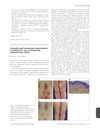
February 2016 in “British Journal of Dermatology” A woman with a drug allergy to anakinra was successfully desensitized, allowing her to continue treatment without allergic reactions.
 6 citations
,
January 2016 in “Skin appendage disorders”
6 citations
,
January 2016 in “Skin appendage disorders” This case report describes a 38-year-old male with scarring body hair loss as the sole manifestation of lichen planopilaris, characterized by progressive alopecia and preceding itching.
 5 citations
,
May 2017 in “Current Opinion in Pediatrics”
5 citations
,
May 2017 in “Current Opinion in Pediatrics” This review found that hormonal therapies, including FDA-approved combined oral contraceptive pills and spironolactone, are effective and well-tolerated treatments for acne vulgaris in adolescents with or without endocrine disorders, providing alternative options to antibiotics.
 5 citations
,
February 2013 in “Expert Review of Dermatology”
5 citations
,
February 2013 in “Expert Review of Dermatology” New acne treatments include combination creams, advanced retinoids, and light therapies, focusing on safety and patient adherence.
 4 citations
,
September 2011 in “Expert Review of Dermatology”
4 citations
,
September 2011 in “Expert Review of Dermatology” This review discusses various treatment options for alopecia areata, noting a lack of consensus on grading and treatment algorithms, and reports no new clinical results.
 4 citations
,
October 1998 in “In Practice”
4 citations
,
October 1998 in “In Practice” This article outlines a practical method for diagnosing and managing feline symmetrical alopecia but presents no new empirical findings.
 3 citations
,
January 2019 in “Annals of dermatology/Annals of Dermatology”
3 citations
,
January 2019 in “Annals of dermatology/Annals of Dermatology” Hydroxychloroquine effectively treated twenty-nail dystrophy in a patient with alopecia areata.
 3 citations
,
June 2010 in “Pharmacognosy journal”
3 citations
,
June 2010 in “Pharmacognosy journal” This study found that a formulated polyherbal antidandruff hair oil containing eucalyptus and ocimum volatile oils, along with hibiscus and phyllanthus extracts, showed both antifungal and hair growth activities in open pilot clinical trials.
 2 citations
,
July 2021 in “Dermatologic Therapy”
2 citations
,
July 2021 in “Dermatologic Therapy” This case study reports a 58-year-old woman experiencing pressure-induced alopecia with concomitant acute telogen effluvium after severe COVID-19, suggesting a potential link between prolonged hospitalization and hair loss.
 2 citations
,
March 2016 in “Obstetrics and Gynecology Clinics of North America”
2 citations
,
March 2016 in “Obstetrics and Gynecology Clinics of North America” This article reviews common dermatologic conditions seen in primary care, such as acne and skin cancer, but reports no new findings.
 2 citations
,
March 1985 in “Journal of The American Academy of Dermatology”
2 citations
,
March 1985 in “Journal of The American Academy of Dermatology” Minoxidil solution used on the scalp did not lower blood pressure in patients without hypertension.
 1 citations
,
March 2024 in “Ophthalmic Plastic and Reconstructive Surgery”
1 citations
,
March 2024 in “Ophthalmic Plastic and Reconstructive Surgery” In this case study, a 34-year-old woman with a rare presentation of pilomatrixoma involving alopecia and skin hypopigmentation showed no improvement in these symptoms despite a 3-month trial of topical steroid treatment, highlighting a potential association between pilomatrixoma and microinflammation.
 1 citations
,
June 2014 in “International Journal of Dermatology”
1 citations
,
June 2014 in “International Journal of Dermatology” This correspondence discusses follicular mucinosis in association with pregnancy but does not report new clinical results, instead calling attention to the observed connection.
1 citations
,
January 2014 This review discusses various methods to assess bioequivalence between dermatologic drugs and highlights the potential of visual inspection and percutaneous penetration research.
 1 citations
,
January 2009 in “Actas Dermo-Sifiliográficas”
1 citations
,
January 2009 in “Actas Dermo-Sifiliográficas” Docetaxel, a chemotherapy drug, was reported to cause psoriasis in a patient for the first time.
 June 2026 in “Frontiers in Allergy”
 In this study, patients with scalp seborrheic dermatitis exhibited distinct patterns of allergen sensitization tied to symptoms, impaired skin barrier, and altered microbiota, emphasizing the need to consider allergen exposure, barrier status, and microbial balance when interpreting patch test results.
 April 2026 in “Frontiers in Medicine”
 This case study reports a 26-year-old male with secondary syphilitic alopecia misdiagnosed as alopecia areata, likely contracted through non-penetrative sexual contact. Effective treatment with intramuscular benzathine penicillin G led to complete hair regrowth within three months.
March 2026 in “Journal of Cosmetic Dermatology” Topical Stemoxydine improves hair density in androgenetic alopecia with few side effects.