 March 2025 in “Drug Development Research”
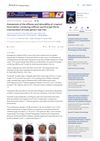
 In this study, researchers developed a novel topical gel combining minoxidil and JAK inhibitor tofacitinib, which effectively enhanced hair follicle growth and reduced local inflammation in mice with alopecia areata, suggesting a new approach for treating this condition.
 November 2023 in “Journal of Cosmetic Dermatology”
 This study found that a 12-week topical treatment with a caffeine and Procapil 3% formulation effectively reduced hair loss by 26.9% and improved hair growth in men with androgenetic alopecia, without any reported adverse effects.
42 citations
,
August 2016 in “Nanomedicine” In this study, TyroSpheres were used to encapsulate adapalene, increasing its solubility and enhancing skin distribution while reducing irritancy compared to a commercial formulation, indicating promise for acne treatment in ex vivo and in vitro settings.
46 citations
,
March 2009 in “Die Pharmazie” This study describes the development of nanostructured lipid carriers for minoxidil as a potential alternative to conventional topical solutions, showing promise for use in topical formulations.
 April 2020 in “Dermatology and therapy” May 2026 in “Mendeley Data”
 This document provides supplementary materials for a study on the efficacy and safety of a topical siRNA-based formulation targeting DKK-1 in treating androgenetic alopecia, but reports no new findings.
May 2026 in “Mendeley Data” This abstract provides supplementary materials for a study on the efficacy and safety of a topical siRNA-based formulation targeting DKK-1 for androgenetic alopecia, but reports no new findings.
May 2026 in “Mendeley Data” This document contains supplementary materials for a study on the efficacy and safety of a topical siRNA-based formulation targeting DKK-1 in androgenetic alopecia, but it reports no new findings.
 August 2018 in “Journal of The American Academy of Dermatology”
 The moisturizing cream used after a chemical peel was well tolerated and effectively moisturized the skin.
September 2022 in “Journal of Cosmetic Dermatology” This article discusses the efficacy of different derma roller sizes compared to topical applications for administering QR678 Neo® in treating androgenetic alopecia, but provides no new clinical results.
32 citations
,
June 2024 in “Pharmaceutics” This review explores the use of topical and transdermal delivery for drugs and cosmetics, highlighting the benefits of avoiding side effects and rapid metabolism, with a focus on nanoparticulate formulations and techniques for studying skin penetration.
 19 citations
,
July 2020 in “Journal of drug delivery science and technology”
19 citations
,
July 2020 in “Journal of drug delivery science and technology” This study found that nano-sized minoxidil formulations significantly increased skin penetration and follicular drug delivery for alopecia areata treatment, compared to conventional ethanol-based solutions, and demonstrated effective controlled release over six hours.
14 citations
,
March 2018 in “Current Drug Delivery” In this study, researchers reviewed literature on topical delivery of finasteride for androgenetic alopecia, finding that liposomal gels with specific additives showed the highest skin permeation rates, suggesting potential for reducing systemic side effects compared to oral formulations.
 7 citations
,
April 2009 in “Bioorganic & Medicinal Chemistry Letters”
7 citations
,
April 2009 in “Bioorganic & Medicinal Chemistry Letters” Diphenyl ethers can potentially reduce excess oil production when applied on the skin, helping treat conditions like acne.
 5 citations
,
January 2022 in “Drug Delivery”
5 citations
,
January 2022 in “Drug Delivery” In this study, a novel topical bimatoprost formulation (BIM-TF#5) significantly enhanced hair regrowth and increased dermal drug deposition in both human skin models and an androgenic alopecia mouse model compared to previous preparations.
5 citations
,
January 2022 in “Asian Journal of Pharmaceutical and Clinical Research” In this review, the authors highlight that emulgels, a combination of gel and emulsion, provide an effective topical drug delivery system for hydrophobic drugs, offering benefits like controlled release and versatility in treating various dermatological conditions.
 5 citations
,
January 2017 in “Journal of Nanomedicine & Nanotechnology”
5 citations
,
January 2017 in “Journal of Nanomedicine & Nanotechnology” This article discusses the formulation of nanoemulsion systems as advanced drug delivery mechanisms, but it reports no new clinical findings.
 June 2026 in “Journal of Materials Science Materials in Medicine”
 This study explored nanoemulsions of minoxidil, revealing that a 5% minoxidil nanoemulsion improved hair growth and follicle count in animal studies compared to commercial minoxidil solutions, even without significant differences in permeation rates.
June 2026 in “International Journal of Advanced Multidisciplinary Research and Studies” In this study, a semisynthetic topical formulation containing Minoxidil and herbal bioactive agents, such as Aloe vera, was developed for alopecia treatment, demonstrating satisfactory stability and enhanced hair growth potential with reduced side effects compared to solely synthetic products.
August 2025 in “Journal of Industrial and Engineering Chemistry” A new topical finasteride formulation effectively promotes hair growth with fewer side effects.
 September 2024 in “Journal of the American Academy of Dermatology”
 In this prospective, placebo-controlled study, the researchers observed a significant reduction in hair shedding in women after applying the combined topical treatment DA-OTC-002, containing synephrine and TAAR agonists, compared to placebo, showing a 62.5% average reduction with no reported adverse events.
October 2018 in “Annals of Reviews & Research” This open-access journal publishes innovative research articles across various fields but reports no new clinical results in this summary.
 December 2023 in “International Journal of Advanced Research in Science, Communication and Technology”
 This study developed and validated a precise and rapid HPLC method to simultaneously determine Minoxidil and Finasteride in pharmaceuticals, demonstrating successful application for routine quality control without interference from excipients.
 June 2023 in “International Journal for Research in Applied Science and Engineering Technology”
 This research highlights the potential of emulgel as an advanced topical drug delivery system, offering improved efficacy for hydrophobic medications in treating dermatological conditions and a range of ailments with its dual release control mechanism of gel and emulsion.
January 2023 in “Pharmaceutics” In this study, researchers developed a new topical atraric acid formulation, AA-TF#15, which showed a significantly higher drug penetration and increased hair regrowth in mice compared to minoxidil and finasteride treatments, suggesting its potential effectiveness for treating scalp androgenic alopecia.
 January 2022 in “International Journal of Health Science”
 The authors of this study aim to evaluate the strategies for using topical products in treating androgenetic alopecia, highlighting topical applications as potentially more effective and convenient compared to oral medications, which often suffer from poor patient adherence.
 February 2020 in “International research journal of pharmacy”
 This study suggests that a topical emulsion containing Camellia sinensis and Allium cepa extracts may show promise for treating alopecia areata in Wistar rats.
93 citations
,
January 2007 in “Skin Pharmacology and Physiology” In this study, caffeine applied in a shampoo penetrated hair follicles faster and more effectively than through the skin surface within the first 20 minutes.
12 citations
,
October 2015 in “PubMed” This study found that topical minoxidil is more effective than placebo in promoting hair growth in androgenetic alopecia, although cosmetically acceptable results occur only in a subset of patients.
2 citations
,
April 2019 in “Pharmaceutical sciences and research” This study found that lotion containing ethanolic extract of Phyllanthus niruri promoted hair growth in rats, with the addition of 1% menthol enhancing this effect compared to the extract alone.