 June 2025 in “International Journal of Nephrology and Renovascular Disease”
 This study suggests that PLA2R1 overexpression in PMN affects the podocyte cycle and may involve an additional immune response, which could provide new directions for PMN treatment development.
 11 citations
,
August 2010 in “Developmental neurobiology”
11 citations
,
August 2010 in “Developmental neurobiology” This study suggests that Ptprq in the hair bundles may exist as multiple isoforms that are differentially expressed throughout development and affect the organization of stereocilia in the chick inner ear.
50 citations
,
November 2021 in “Viruses” This study observed that in vitro exposure to dihydrotestosterone worsened COVID-19 spike protein-induced endothelial injury, while spironolactone showed potential in reducing this effect, suggesting a rationale for further evaluation in treating COVID-19.
 42 citations
,
July 2021 in “Frontiers in Medicine”
42 citations
,
July 2021 in “Frontiers in Medicine” In this study, proxalutamide significantly reduced the 30-day hospitalization rate by 91% compared to placebo in men with COVID-19 treated in outpatient settings.
 23 citations
,
September 2021 in “Frontiers in Cellular and Infection Microbiology”
23 citations
,
September 2021 in “Frontiers in Cellular and Infection Microbiology” This review highlights the mixed roles of testosterone in COVID-19, noting both potential benefits through anti-inflammatory effects and risks due to increased virus entry, with low testosterone linked to increased severity.
 16 citations
,
December 2021 in “Frontiers in Endocrinology”
16 citations
,
December 2021 in “Frontiers in Endocrinology” This review discusses the role of sex hormones in COVID-19 severity and reports no new clinical results; the authors suggest further research for gender-based personalized treatment options.
10 citations
,
March 2022 in “Healthcare” This study found no significant association between mineralocorticoid receptor antagonist therapy and mortality in patients with SARS-CoV-2 infection.
10 citations
,
December 2020 in “Frontiers in Medicine” This review discusses the molecular differences between male and female responses to SARS-CoV-2 infection and highlights the lack of specific guidelines for altering sex-specific COVID-19 prognoses.
 9 citations
,
November 2021 in “Infectious Agents and Cancer”
9 citations
,
November 2021 in “Infectious Agents and Cancer” This study found that the active use of androgen deprivation therapy was not associated with a reduced risk of death in prostate cancer patients with COVID-19.
 9 citations
,
July 2021 in “Essays in Biochemistry”
9 citations
,
July 2021 in “Essays in Biochemistry” This review discusses the roles of steroid hormone receptors in lung function related to COVID-19 and outlines ongoing clinical trials of steroid receptor ligands, but reports no new results.
 9 citations
,
January 2020 in “Critical Reviews in Immunology”
9 citations
,
January 2020 in “Critical Reviews in Immunology” This review suggests that mucosa-associated invariant T cells may regulate the host response to SARS-CoV-2 and could be potential targets for COVID-19 management, but it reports no new clinical results.
8 citations
,
July 2023 in “Frontiers in Pharmacology” This review highlights cepharanthine as a promising candidate for COVID-19 treatment due to its antiviral activity against SARS-CoV-2 and favorable pharmacokinetic and safety profile, but reports no new clinical results.
 5 citations
,
July 2022 in “Journal of Clinical Medicine”
5 citations
,
July 2022 in “Journal of Clinical Medicine” This study found histopathological evidence of hypertrophy in nerve endings that may explain the cutaneous neurosensory symptoms in some long COVID-19 patients.
4 citations
,
October 2020 in “Actas Dermo-Sifiliográficas” This review examines the use of commonly used dermatological drugs like chloroquine, hydroxychloroquine, ivermectin, antiandrogens, and melatonin in COVID-19 treatment, but reports no new clinical findings.
 3 citations
,
September 2021 in “International Journal of Molecular Sciences”
3 citations
,
September 2021 in “International Journal of Molecular Sciences” This study suggests that women with polycystic ovary syndrome may have an increased risk of COVID-19-related cardiac and renal complications, and that weight loss through lifestyle changes could help reduce these risks.
1 citations
,
May 2022 in “IntechOpen eBooks” This review discusses the repurposing of natural products for COVID-19 treatment but reports no new clinical findings, highlighting ongoing research to target host and viral mechanisms.
December 2024 in “Journal of Investigative Dermatology” People with androgenetic alopecia had milder COVID-19 symptoms during the Omicron wave in China.
 June 2023 in “BMC Pharmacology and Toxicology”
 This study is investigating the efficacy and safety of proxalutamide, an androgen receptor antagonist, in treating severe or critically ill patients with COVID-19, aiming to provide new insights into potential therapeutic options. Results are not reported yet.
 July 2022 in “Conjeturas”
 This review explores the role of androgens in both SARS-CoV-2 infection severity and the development of alopecia, concluding that androgens influence hair growth cycles and promote alopecia.
September 2022 in “Frontiers in Immunology” This study reports that comorbidities and anti-androgen therapy were associated with lower SARS-CoV-2 vaccination rates among patients with androgenetic alopecia, emphasizing the need to promote vaccination within this group.
4 citations
,
December 2024 in “European Journal of Medicinal Chemistry” This study reported the development of new pyrazole-based MPC inhibitors that effectively inhibit mitochondrial pyruvate transport, showing potential as therapeutic candidates for conditions like metabolic dysfunction-associated steatohepatitis without activating PPARγ.
 6 citations
,
October 2012 in “Journal of Heredity”
6 citations
,
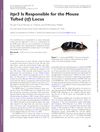
October 2012 in “Journal of Heredity” This study identified the Itpr3 gene as responsible for the tufted hair loss phenotype in the BTBR mouse strain.
5 citations
,
October 2021 in “American Journal of Medical Genetics Part A” This case report identifies a novel maternally inherited MBTPS2 variant associated with an expanded phenotypic spectrum of BRESHECK syndrome, including cytopenias, bone marrow fibrosis, and chronic diarrhea.
 5 citations
,
January 2021 in “IEEE Access”
5 citations
,
January 2021 in “IEEE Access” In this study, researchers demonstrated that treating platelet rich plasma with microsecond pulsed electric fields effectively activates platelets and induces similar or higher growth factor release compared to traditional bovine thrombin, suggesting a potential clinical use that may be more cost-effective and practical.
 January 2011 in “Journal of Human Genetics”
 This study found a severe MBTPS2 gene mutation in a Japanese IFAP syndrome patient, suggesting other factors may influence the syndrome's clinical features compared to previously studied patients.
63 citations
,
February 2010 in “Journal of Neurophysiology” This study observed that electrical stimulation of specific mechanoreceptive afferents in the orofacial region can evoke sensations consistent with their response properties, while others may require multiple afferents to access perceptual levels.
 17 citations
,
October 2006 in “Molecular and Cellular Endocrinology”
17 citations
,
October 2006 in “Molecular and Cellular Endocrinology” This study found that the L457(3.43)R mutation in the human luteinizing hormone receptor increases phosphodiesterase activity, reducing hormonal response despite elevated basal cAMP levels.
 December 2013 in “Appetite”
 This study identified a nonfunctional Itpr3 gene in BTBR mice, attributed to a 12-bp deletion, which likely causes their simultaneous hair loss and taste perception deficits.
8 citations
,
October 2020 in “Clinical Psychopharmacology and Neuroscience” This case series found that low-frequency repetitive transcranial magnetic stimulation may benefit some patients with trichotillomania, although one of five patients experienced worsening symptoms after treatment.
 April 2023 in “Journal of Investigative Dermatology”
 This study found that PX-12 inhibited the NLRP3 inflammasome and reduced psoriasis-like symptoms in a mouse model, suggesting its potential as a treatment for psoriasis.