This study uncovered how Staphylococcus hominis transports an odor precursor molecule, potentially leading to new ways to control body odor production in humans.
15 citations
,
October 1936 in “Archives of Dermatology” This article reviews the role of sulfhydryl compounds, particularly cystine, in sulfur metabolism and the physiology of skin in both normal and pathological conditions, reporting no new findings.
 83 citations
,
July 2008 in “Current Opinion in Chemical Biology”
83 citations
,
July 2008 in “Current Opinion in Chemical Biology” This review discusses the structural and functional advances in understanding sulfotransferases and sulfatases, highlighting new insights into enzyme mechanisms and inactivation by clinically relevant aryl sulfamates, but provides no new experimental results.
June 2026 in “Scientific Reports” This study found that alkyl shikimates with different alkyl group structures can increase or decrease fibroblast proliferation depending on concentration and alkyl chain length, with some variants showing cytotoxic effects due to their hydrophobicity and cell membrane permeability.
![Discovery of 7-Methoxy-6-[4-(4-Methyl-1,3-Thiazol-2-yl)-1H-Imidazol-5-yl]-1,3-Benzothiazole (TASP0382088): A Potent and Selective Transforming Growth Factor-β Type I Receptor Inhibitor as a Topical Drug for Alopecia](/images/assets/9620bd26-3366-4f2a-bcac-f511697bbc41/small/35997.jpg) 6 citations
,
January 2013 in “Chemical & pharmaceutical bulletin/Chemical and pharmaceutical bulletin”
6 citations
,
January 2013 in “Chemical & pharmaceutical bulletin/Chemical and pharmaceutical bulletin” In this study, TASP0382088 showed potent selective inhibition of the ALK5 receptor, significantly reducing Smad2 phosphorylation in mouse skin following topical application.
 15 citations
,
January 1992 in “Sen'i Gakkaishi”
15 citations
,
January 1992 in “Sen'i Gakkaishi” This study suggests that the cell membrane complex in hair cuticles contains hydrophilic regions with disulfide bonds allowing polymer uptake and hydrophobic lamella-like lipid layers.
 8 citations
,
July 2018 in “Analytical sciences”
8 citations
,
July 2018 in “Analytical sciences” This study reported that derivatization with 5-butylpicolinic acid improved the sensitivity for detecting testosterone and DHT in saliva using LC-ESI-MS/MS, with minimal interference from the saliva matrix.
11 citations
,
April 2022 in “Biophysical Journal” In this study, certain cysteine residues in Romney sheep wool fibers were labeled more often during stretching tests, particularly under wet conditions, suggesting variability in their disulfide bond contributions to fiber mechanics depending on hydration.
May 2010 in “Europe PMC (PubMed Central)” This chapter discusses the synthesis and analysis of near-infrared fluorescent activity-based probes for imaging cysteine protease activity, reporting potential benefits for disease diagnosis but noting challenges in imaging specific locations with high cathepsin activity.
 March 2010 in “International Journal of Cosmetic Science”
 This study found that oxidative treatment with peracetic acid dissociates some disulfide bonds in human hair fibers while maintaining the crystalline structure, suggesting different mechanisms stabilize different regions of intermediate filaments.
35 citations
,
July 2010 in “The FEBS journal” In this study, researchers identified a highly reactive, isozyme-specific sequence for TGase 3, contributing to understanding its distinct functional role and activity distribution in the mouse epidermis.
October 2024 in “Cosmetics” In this study, reducing agents like ammonium thioglycolate, L-cysteine, and sodium sulfite in shampoo effectively decreased hair flyaway and frizz without causing damage, as no critical hair damage was observed in structural and tensile strength assessments.
 48 citations
,
July 1996 in “Human & Experimental Toxicology”
48 citations
,
July 1996 in “Human & Experimental Toxicology” Human enzymes can detoxify harmful substances but might also increase their cancer risk.
45 citations
,
February 2011 in “IOP Conference Series Materials Science and Engineering” This study developed a sensor that effectively measures Tl+ cation in solutions with a wide dynamic range and low detection limit, responding linearly within the concentration range 1.0 × 10⁻⁸ to 1.0 × 10⁻¹M.
 June 2026 in “Acta Pharmacologica Sinica”
 This review highlights how integrating medicinal chemistry with delivery science could transform the limitations of PROTACs—such as poor solubility and low cell permeability—into strengths, potentially advancing these compounds from experimental stages to clinical applications by optimizing their delivery and enhancing therapeutic efficacy.
 5 citations
,
January 2018
5 citations
,
January 2018 This study optimized a screening assay to identify molecules that inhibit or enhance TRPM5 ion channel activity, which may have implications for treating dysfunctions linked to cardiac arrhythmias and diabetes.
23 citations
,
June 2014 in “International Journal of Cosmetic Science” This study reported that the treatment of hair with glyoxylic acid straighteners causes major conformational changes within the hair fiber due to interactions between carbonyl and keratin components.
1 citations
,
June 2014 in “[Thesis]. Manchester, UK: The University of Manchester; 2014.” This study found that chemically modifying human hair through esterification or disulfide reduction and alkylation affects the hair's viscoelastic properties, including stability, integrity, and response to moisture.
53 citations
,
June 1983 in “Journal of Investigative Dermatology” This study reports that human epidermal transglutaminase activity increases with treatment using organic solvents and chemicals without significant molecular weight changes, which may allow modulation of the enzyme in skin diseases.
5 citations
,
December 2020 in “International journal of biological macromolecules” This study found that shikimic acid- and maleate-based hair repair agents modified the structure of hair fibers, though they did not increase disulfide bridge content in the hair cortex.
 4 citations
,
January 2014 in “RSC Advances”
4 citations
,
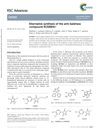
January 2014 in “RSC Advances” A new, less toxic and more efficient method to create the anti-baldness compound RU58841 was developed in 2014.
October 2024 in “UNESP Institutional Repository (São Paulo State University)” This study investigated the effects of ammonium thioglycolate and amino methylpropanol hair straightening followed by permanent coloring, finding significant physical and chemical changes to both the cuticle and cortex of hair fibers.
 January 2013 in “Transactions of the Materials Research Society of Japan”
 In this study, carboxymethylalanyl disulfide keratin was shown to effectively prevent hair damage during repeated bleaching and permanent waving treatments.
4 citations
,
January 2025 in “Pharmaceutics” This study found that spanlastic gel loaded with thymoquinone and ascorbic acid improved skin deposition and tyrosinase inhibition, suggesting potential as a treatment for hyperpigmentation.
16 citations
,
September 1999 in “Journal of Investigative Dermatology Symposium Proceedings” January 2026 in “Colloids and Surfaces B Biointerfaces” This study found that treating damaged hair with maleic-modified amino silicone oil created a highly hydrophobic surface, reducing water content and improving hair's mechanical properties and thermal stability.
43 citations
,
January 2016 in “Oxidative medicine and cellular longevity” This review discusses the biological effects and mechanisms of THSG in antiaging and related disease treatments but reports no new experimental findings.
 15 citations
,
October 1981 in “Archives of internal medicine”
15 citations
,
October 1981 in “Archives of internal medicine” Minoxidil can cause severe skin reactions like Stevens-Johnson syndrome in rare cases.
 August 2018 in “Journal of the American Academy of Dermatology”
 Calcipotriol may effectively treat hair loss in alopecia areata, working better in children than adults.
1 citations
,
August 2014 in “OhioLink ETD Center (Ohio Library and Information Network)” This research provides insights into how keratin hydrogels, modified to control disulfide crosslinking, may function as a treatment platform for bone injuries.