 116 citations
,
December 2017 in “International Journal of Women's Dermatology”
116 citations
,
December 2017 in “International Journal of Women's Dermatology” This review discusses various treatment options for adult female acne, highlighting the need for tailored approaches due to individual patient needs and reports no clinical outcomes.
 151 citations
,
July 2011 in “Archives of Dermatological Research”
151 citations
,
July 2011 in “Archives of Dermatological Research” This review discusses various strategies to enhance drug delivery through the skin barrier, highlighting liposomes as promising carriers for increased dermal concentrations in topical therapies, but reports no new research results.
 94 citations
,
January 2007 in “Cutaneous and Ocular Toxicology”
94 citations
,
January 2007 in “Cutaneous and Ocular Toxicology” This review discusses the long-term cutaneous and ocular complications from sulfur mustard exposure in the Iranian population, identifying pruritus and malignant changes as significant issues and highlighting eye surface damage leading to visual decline.
 72 citations
,
July 2014 in “American journal of clinical dermatology”
72 citations
,
July 2014 in “American journal of clinical dermatology” This review analyzed randomized controlled trials on alopecia areata treatment and found that while several treatments showed effectiveness, most studies had limitations affecting their interpretability.
 37 citations
,
May 1999 in “Australasian Journal of Dermatology”
37 citations
,
May 1999 in “Australasian Journal of Dermatology” This review discusses neutrophil-associated and infiltrative scarring alopecias, as well as promising new treatments, but reports no new clinical results.
 29 citations
,
March 1983 in “Journal of The American Academy of Dermatology”
29 citations
,
March 1983 in “Journal of The American Academy of Dermatology” This article reviews existing and emerging treatments for psoriasis, focusing on therapy modifications due to scientific advancements, but it does not report new clinical results.
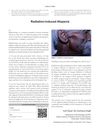 17 citations
,
January 2010 in “International journal of trichology”
17 citations
,
January 2010 in “International journal of trichology” This case report highlights the occurrence of radiation-induced alopecia in a patient undergoing radiotherapy for oropharyngeal carcinoma, emphasizing awareness of this potential side effect.
14 citations
,
June 1982 in “Archives of Dermatology” This letter to the editor shares concerns about possible systemic effects from topical dinitrochlorobenzene therapy in a 25-year-old man treating alopecia areata.
 4 citations
,
September 2011 in “Expert Review of Dermatology”
4 citations
,
September 2011 in “Expert Review of Dermatology” This review discusses various treatment options for alopecia areata, noting a lack of consensus on grading and treatment algorithms, and reports no new clinical results.
 2 citations
,
October 2016
2 citations
,
October 2016 This article discusses the range of skin-related side effects caused by chemotherapy and radiotherapy, including novel patterns emerging with targeted therapies, but does not report new clinical results.
 1 citations
,
October 2018 in “InTech eBooks”
1 citations
,
October 2018 in “InTech eBooks” This article reviews treatment approaches for cicatricial alopecia, describing how medication efficacy varies and suggesting autologous hair transplantation for stable cases; no new clinical data are presented.
 1 citations
,
January 2017 in “Springer eBooks”
1 citations
,
January 2017 in “Springer eBooks” This chapter reviews the hair follicle's role in drug and chemical penetration through the skin but does not present new experimental findings.
 1 citations
,
January 2013 in “Springer eBooks”
1 citations
,
January 2013 in “Springer eBooks” Cosmeceuticals may benefit skin health but need more research for efficacy and safety confirmation.
 1 citations
,
January 2012 in “Elsevier eBooks”
1 citations
,
January 2012 in “Elsevier eBooks” The document concludes that the skin is a complex organ providing protection, sensation, and healing, with challenges in treating conditions like itchiness.
May 2026 in “Mayo Clinic Proceedings” This review article connects key systemic lupus erythematosus pathobiology with current therapies, emphasizes clinical strategies for managing comorbidities, and stresses multidisciplinary care, but it reports no new clinical findings.
 January 2018 in “Springer eBooks”
 Hidradenitis Suppurativa is likely an autoinflammatory disease, and better understanding its causes could improve treatments.
 July 2011 in “Springer eBooks”
 This review discusses both conventional and new pharmaceutical treatments for hair loss, as well as various natural and herbal remedies, but reports no new clinical results.
 November 2009 in “Cambridge University Press eBooks”
 This review discusses the necessity for hair transplant surgeons to be well-versed in both surgical and medical treatments for various forms of alopecia, and it reports no new results.
 95 citations
,
November 2018 in “Australasian journal of dermatology”
95 citations
,
November 2018 in “Australasian journal of dermatology” This consensus statement outlines a treatment algorithm for alopecia areata, discussing when to consider systemic treatment and how to assess outcomes, without providing new clinical results.
 31 citations
,
June 2020 in “Dermatologic Therapy”
31 citations
,
June 2020 in “Dermatologic Therapy” This systematic review reports that for patients with underlying dermatologic disorders who contracted COVID-19, most experienced mild to moderate exacerbation of their skin conditions and were managed similarly to the general population, suggesting treatment discontinuation during acute infection may prevent severe recurrence.
 23 citations
,
January 2010 in “Journal of The American Academy of Dermatology”
23 citations
,
January 2010 in “Journal of The American Academy of Dermatology” This article discusses the efficacy and safety of mycophenolate mofetil and hydroxychloroquine for treating lichen planopilaris and reports no new clinical results.
 16 citations
,
May 2019 in “International Journal of Women's Dermatology”
16 citations
,
May 2019 in “International Journal of Women's Dermatology” This study reviewed and categorized dermatological drugs for pregnancy and lactation according to new FDA labeling guidelines, which replaced simplistic letter categories with detailed information, aiming to improve prescribing decisions by addressing both maternal and paternal reproductive potential.
 2 citations
,
March 2016 in “The Journal of Dermatology”
2 citations
,
March 2016 in “The Journal of Dermatology” The researchers reported that the facial Psoriasis Log-based Area and Severity Index (fPLASI) more reliably and sensitively captured clinical improvement in facial psoriasis than the existing facial Psoriasis Area and Severity Index (fPASI).
 1 citations
,
November 2018 in “Dermatologic Therapy”
1 citations
,
November 2018 in “Dermatologic Therapy” This report describes the use of compounded topical preparations to treat two severe psoriasis patients and calls for further studies on their regulation, protocol, and stability evaluation.
 June 2025 in “ARSHI Veterinary Letters”
 In this case study, a 5-month-old cat with dermatophytosis caused by Microsporum canis showed resolution of skin symptoms and hair regrowth after receiving topical antifungal shampoo and systemic itraconazole treatment for two weeks.
 December 2017 in “Springer eBooks”
 Transplant patients often get skin problems, with treatments varying by condition.
 10 citations
,
January 2016 in “Dermatology online journal”
10 citations
,
January 2016 in “Dermatology online journal” This article highlights that a low suspicion for tinea capitis in adults with scaling and hair loss may delay diagnosis and treatment, urging confirmation through KOH, fungal culture, or biopsy.
 June 2026 in “International Journal of Advanced Biochemistry Research”
 This report from a veterinary clinical case observed a two-year-old Lhasa apso with generalized demodicosis and severe secondary bacterial pyoderma, successfully treated through an integrated approach combining ivermectin, antimicrobials, and supportive therapies, resulting in significant clinical improvement.
 September 2025 in “Australasian Journal of Dermatology”
 In this update, researchers incorporated TGA-approved Janus Kinase inhibitors into the Australian treatment guidelines for chronic, moderate to severe Alopecia areata, aiming to enhance recommended therapies by providing guidance on the use and management of these systemic medications.
 April 2012 in “Journal of the American Academy of Dermatology”
 Clofazimine may be effective for treating ashy dermatosis.