February 2026 in “Journal of the American Academy of Dermatology” Estrogen is not recommended for menopausal hair loss due to insufficient evidence.
 October 2025 in “Clinical Dermatology Review”
 This study reports that sildenafil may benefit various dermatological conditions like Raynaud's phenomenon and pressure ulcers, but more research is needed to confirm its efficacy and determine optimal treatment protocols.
 September 2023 in “Cureus”
 This study reviewed early research on topical finasteride for androgenetic alopecia, finding it appears safe and promising, though further investigation is needed to determine optimal dosing, frequency, and potential applications for other types of alopecia.
 February 2023 in “European Journal of Dermatology”
 In this retrospective study from North France, apremilast was used in patients with psoriasis and recent cancer, showing a good safety profile and improved quality of life, though with 65.2% experiencing non-serious adverse events. The need for further research on oncological safety was highlighted.
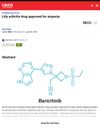 June 2022 in “C&EN global enterprise”
 This source notes that Olumiant (baricitinib), a rheumatoid arthritis drug by Eli Lilly and Company, has been approved as the first systemic treatment for severe alopecia areata.
June 2022 in “Zenodo (CERN European Organization for Nuclear Research)” This review discusses the potential of microneedles as a pain-free drug delivery method that improves medication distribution while addressing issues associated with traditional transdermal formulations.
August 2006 in “Experimental dermatology” This review discusses hormone-related hair disorders and explores potential therapies, including microparticle-based drug delivery systems, without providing new clinical findings.
26 citations
,
October 2017 in “PubMed” According to this study, systemic retinoids, specifically oral isotretinoin and acitretin, were more effective than finasteride in stabilizing the frontal hairline in female patients with frontal fibrosing alopecia, achieving treatment goals in over 70% of cases.
701 citations
,
August 2014 in “Nature medicine” This study found that JAK inhibitors promote hair regrowth in both mice and human alopecia areata cases by blocking key immune pathways involved in disease development.
130 citations
,
February 2019 in “JEADV. Journal of the European Academy of Dermatology and Venereology/Journal of the European Academy of Dermatology and Venereology” This study found that JAK inhibitors for alopecia areata showed promising response rates, with 72.4% of 289 cases responding, and oral administration achieving better outcomes than topical treatment, but recurrence occurred when treatment stopped. Further large-scale studies are needed to confirm these findings.
36 citations
,
January 2010 in “International Journal of Trichology” Intralesional steroids can help regrow hair in some alopecia areata patients but have side effects.
35 citations
,
April 1993 in “Clinics in dermatology” Rosacea is a common skin condition mainly causing facial redness.
 23 citations
,
July 2021 in “International Journal of Pharmaceutics”
23 citations
,
July 2021 in “International Journal of Pharmaceutics” This study describes the development of microneedle array patches for finasteride that released the drug over 7 to 14 days in vitro, suggesting a potential alternative to oral treatments for long-term management of benign prostatic hyperplasia and androgenic alopecia.
20 citations
,
August 2021 in “Journal of Cosmetic Dermatology” This review examines the potential use and challenges of topical cannabinoids for skin diseases and hair growth, highlighting limited clinical data on their efficacy and safety.
12 citations
,
January 2018 in “Breast Cancer Basic and Clinical Research” This study reported that subcutaneous trastuzumab improved certain symptoms and did not negatively impact health-related quality of life in patients with early or metastatic HER2-overexpressing breast cancer.
11 citations
,
October 2021 in “Journal of The European Academy of Dermatology and Venereology” This study found that topical finasteride significantly increased hair count in men with androgenetic alopecia compared to placebo while maintaining similar efficacy to oral finasteride but with lower systemic exposure and a reduced impact on serum DHT levels, potentially minimizing sexual side effects.
10 citations
,
April 2020 in “Journal of Mind and Medical Sciences” Excimer laser therapy can be an alternative for treating superficial morphea when topical steroids don't work.
6 citations
,
September 2022 in “Vaccines” This study described cases of alopecia areata occurring after COVID-19 vaccination and highlights management using both topical and systemic therapies.
2 citations
,
September 2023 in “Cosmetics” This study reviewed existing research on the use of cannabinoids for hair, scalp, and skin conditions, finding moderate evidence for their efficacy in conditions like atopic dermatitis and psoriasis, but noted limited evidence and no standardized guidelines for treatment.
1 citations
,
November 2024 in “JAAD reviews.” This study reviewed literature on patient preferences for severe alopecia areata treatment, finding diverse tolerance for risks like infections and cancer in exchange for effectiveness. Patients favored safe, convenient, and effective topical treatments and valued shared decision-making with healthcare providers.
1 citations
,
May 2023 in “Frontiers in Pharmacology” In this study, a case of a young Chinese female with a specific NUDT15 genetic variant experienced severe azathioprine-induced myelosuppression and alopecia while treating systemic lupus erythematosus, highlighting the need for routine blood monitoring during treatment to manage AZA intolerance associated with genetic factors.
 1 citations
,
November 2013 in “Pediatrics in Review”
1 citations
,
November 2013 in “Pediatrics in Review” This article reviews the management and treatment of acne vulgaris, emphasizing patient education and adherence, but reports no new clinical results; the authors stress the need for individualized therapy.

In this case study, an 80-year-old woman developed lichen planus pigmentosus inversus after receiving multiple intra-articular injections of a homeopathic preparation, suggesting a possible link, though causality remains speculative.
This case study reported that acupuncture therapy successfully resolved long-standing alopecia areata in a 61-year-old male after nine months of treatment, suggesting potential efficacy without pharmacological intervention.
This case report describes a 61-year-old man with long-standing alopecia areata who experienced complete hair regrowth following nine months of acupuncture therapy, suggesting potential efficacy for this non-pharmacological treatment in managing the condition.
 April 2026 in “Biomedicines”
 This study introduces a novel holistic treatment approach for keloid that combines systemic therapies, including Traditional Chinese Medicine, with local interventions to target the inflammatory microenvironment and keloid predisposition for improved management and prevention of recurrence.
January 2026 in “Skin Health and Disease” This study conducted a survey among consultant dermatologists in Ireland to explore their use of JAK inhibitors for treating alopecia areata, acknowledging challenges posed by the lack of global guidelines and long-term safety data.
December 2025 in “International Journal of Innovative Technologies in Social Science” This review suggests that while estrogen-targeted therapies may improve skin quality in postmenopausal women, systemic risks limit hormone replacement therapies, and more research is needed for localized treatments.

In this preclinical study, PA-011 derived from Periplaneta americana showed significant hair regrowth effects in androgenetic alopecia mouse models by inhibiting inflammation and oxidative stress, activating hair follicle stem cell proliferation, and normalizing skin microbiota, suggesting promise as an AGA treatment.
 November 2024 in “International Journal of Research in Medical Sciences”
 This case report describes a 30-year-old woman with severe hypoalbuminemia related to suspected SLE, who showed improvement in albumin levels after three days of treatment including IV albumin and dietary protein.