 November 2024 in “Deleted Journal”
 In this case study, a woman with SLE and severe alopecia showed improved hair growth using intralesional triamcinolone, PRP injections, and tacrolimus ointment, highlighting PRP as a potential adjunct therapy for inflammatory alopecia.
 October 2024 in “Journal of Education Health and Sport”
 This article reviews treatment options for Alopecia Areata, concluding that topical corticosteroids are effective for mild cases, while systemic therapies are advised for moderate to severe cases.
August 2024 in “Bioorganic Chemistry” This study found that oral administration of cedrol, a component of ginger, improved hair regeneration and reduced hair follicle damage in cyclophosphamide-induced alopecia areata in mice more effectively than external administration, by enhancing cytokine expression and modulating key signaling pathways.
 July 2024 in “Clinical Case Reports”
 In this case study, a 25-year-old presented with symptoms of lupus but tested negative for antinuclear antibodies, complicating diagnosis. The researchers emphasize that comprehensive diagnostic approaches, beyond ANA testing, are vital for effectively identifying and treating lupus nephritis to avoid serious outcomes.
This study suggests that using cell-free dexamethasone-primed stem cell media may offer a promising alternative treatment for systemic lupus erythematosus, showing immunomodulatory benefits and therapeutic efficacy in reducing various complications.

This study suggests that targeting the increased expression of SIX1 in systemic sclerosis may be a viable strategy for addressing dermal fibrosis.
 May 2024 in “Journal of Education, Health and Sport”
 This review article highlights the complexity of treating folliculitis decalvans, emphasizing the role of systemic antibiotics like rifampicin and clindamycin as common treatments, while also discussing promising novel therapies, including biological agents, that require further clinical trials to assess their effectiveness and safety.
 April 2024 in “Frontiers in medicine”
 This Delphi study found that moderate-to-severe alopecia areata in Poland, Czechia, Russia, and Türkiye significantly impacts quality of life and highlights an unmet need for more effective treatments.
 March 2024 in “Dermatology and therapy”
 This study analyzed data from 2083 patients with alopecia areata in Europe and found that those with atopic, autoimmune, or psychiatric comorbidities encountered more severe disease and were more likely to require advanced treatments compared to those without comorbid conditions.
 January 2024 in “Frontiers in immunology”
 This review highlights the crucial role of histone modification in the pathogenesis and treatment of chronic inflammatory skin diseases, and explores therapeutic strategies targeting these epigenetic changes to improve management of conditions such as psoriasis and atopic dermatitis.
 December 2023 in “International Journal of Biomedicine”
 In this review, researchers explored the potential of topical finasteride as an innovative treatment for male pattern hair loss, addressing the limitations of oral finasteride, such as side effects and inconsistent effectiveness.
 November 2023 in “Research Portal Denmark”
 This review highlights the variability and unpredictability of alopecia areata, ranging from single scalp patches to total body hair loss, and notes the 2022 approval of the first AA-specific drug, baricitinib, potentially spurring new research into targeted treatments.
 November 2023 in “Clinical, Cosmetic and Investigational Dermatology”
 This study found that both oral and topical formulations of VISPOTM, a saw palmetto oil, significantly reduced hair fall and increased hair density in subjects with androgenetic alopecia, with no serious adverse effects observed.
 September 2023 in “Food and chemical toxicology”
 In this study on Sprague-Dawley rats, 0.60 mg/kg doses of L-Se-methylselenocysteine and sodium selenite were associated with liver toxicity and reduced sperm motility, while Se-enriched peptides showed no observable adverse effects up to 0.60 mg/kg.
 July 2023 in “The Egyptian Journal of Hospital Medicine ”
 This literature review reports that treatments for alopecia areata, including topical and intralesional corticosteroids, provide varied responses, and emphasizes the importance of supporting patients emotionally, given the limited and promising evidence of effectiveness for other treatments.
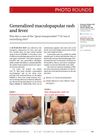 July 2023 in “The Journal of Family Practice”
 This case study describes a 29-year-old man who presented with a fever and a generalized maculopapular rash, alongside symptoms like hair loss and joint pain, leading to an investigation into whether his condition was a case of the "great masquerader.
 September 2022 in “Dermatology and therapy”
 This review summarizes current evidence on the use of contact immunotherapy, excluding alopecia areata, for various skin diseases, discussing its safety, efficacy, and the underlying mechanisms as reported from studies in the PubMed database.
Vitamin D is crucial for skin health and managing skin diseases.
 April 2021 in “Bioscientia Medicina Journal of Biomedicine and Translational Research”
 This report describes a severe COVID-19 case in a patient with SLE and nephritis, where hydroxychloroquine improved outcomes after regular use.
 April 2021 in “Bioscientia Medicina Journal of Biomedicine and Translational Research”
 This case report describes a patient with SLE and COVID-19, where hydroxychloroquine showed a favorable impact on the virus when taken regularly, leading to clinical improvement and discharge after 24 days.
 July 2020 in “International Journal of Research”
 This review examines the development of cardiovascular risk factors related to testosterone levels in PCOS women and reports no new clinical results.
 January 2019 in “Elsevier eBooks”
 This review discusses the evaluation methods for patients with hair loss, emphasizing the importance of history, physical examination, and, when necessary, laboratory tests or biopsy, but it reports no new clinical results.
 January 2019 in “Springer eBooks”
 Acne is linked to inflammation and insulin resistance, and is associated with various syndromes that require different treatments.
 January 2019 in “Springer eBooks”
 Acne can appear or persist in adulthood due to hormonal changes, external factors, or substance use, and requires appropriate treatment.
 April 2017 in “The journal of investigative dermatology/Journal of investigative dermatology”
 This study reports that 71% of patients treated with the gamma-secretase inhibitor PF-03084014 for desmoid tumors experienced dermatologic side effects, such as follicular lesions and pruritic eruptions, which were managed with topical or systemic treatments.
 January 2016 in “Kafkas Journal of Medical Sciences”
 This study observed that dermatologists predominantly prescribed topical treatments for skin disorders in pregnant women, with pruritus and urticaria being the most common conditions.
 October 2015 in “Elsevier eBooks”
 Minoxidil is effective for hair growth and safe for long-term use.

This review examines current treatment options for alopecia areata and highlights the challenges due to limited evidence-based data and unpredictability in disease progression.
 January 2014 in “Journal of Pigmentary Disorders”
 This review discusses age-related and environmental factors affecting scalp hair changes in women, highlighting diagnostic complexities and ongoing research into targeted treatments, without reporting new clinical results.
 November 2010 in “Value in Health”
 Real-life dosing of biologics for plaque psoriasis often deviates from recommended guidelines, especially for high-need patients.